


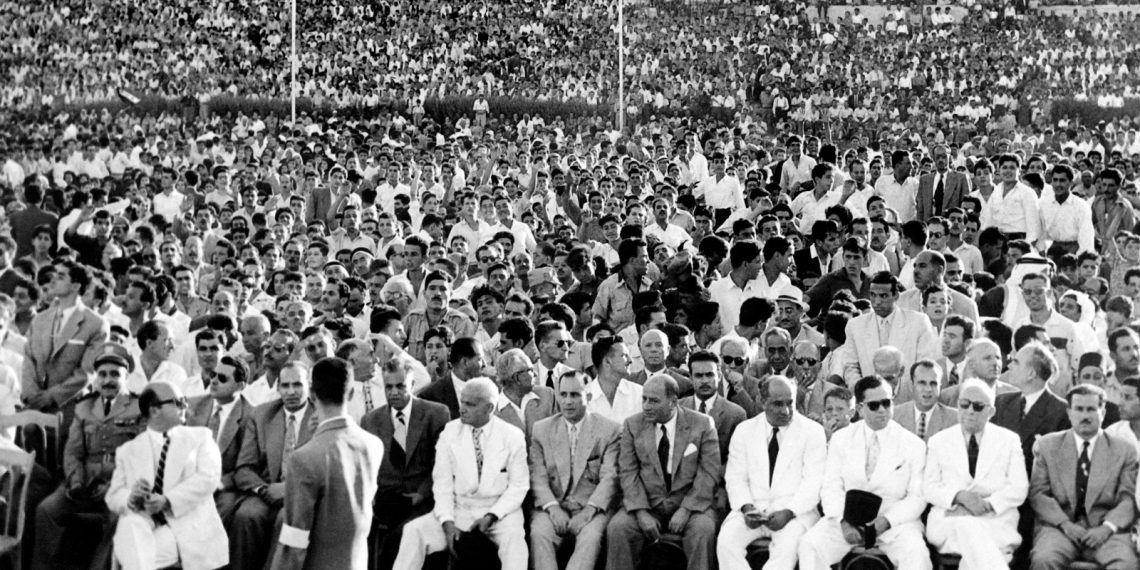
On February 1, 2008, the Israeli newspaper Haaretz published an extensive study by Meir Zamir, a professor in the Department of Middle East Studies at Ben-Gurion University of the Negev, titled “Britain’s Treachery, France’s Revenge” (1). The study focused on the events of May 29–30, 1945, in Damascus, when the French bombarded the city with artillery and aircraft, occupying government buildings, including the parliament. It detailed how this led to an open confrontation between British Prime Minister Winston Churchill and the head of the French government, General Charles de Gaulle, following a letter sent by the former to de Gaulle on May 31 containing a threat of British military intervention. This was followed the next day by an ultimatum issued by General Bernard Paget—commander of British forces in the Middle East and commander of the Ninth Army—ordering the French to withdraw and assemble in their barracks. This withdrawal took place on June 2–3, serving as the prelude to the French evacuation from Syria on April 17, 1946.
Syrians know all of this from school textbooks. However, what they do not yet know is what Professor Meir Zamir revealed based on secret French archives. These archives contain reports sent to the French by a senior official in the Syrian administration under President Shukri al-Quwatli—whose identity remains unrevealed by the documents. These reports indicate that London’s intervention in Damascus against Paris was based on a British project to establish a “Fertile Crescent.” This plan envisioned a Greater Syria (uniting Syria, Lebanon, Transjordan, and Palestine) first, which would then unite with Iraq. It included autonomy for the Jews in areas where they formed a majority in Palestine, and autonomy for the Maronites in Mount Lebanon, similar to their status during the Ottoman era.
According to the documents, Lebanese Prime Minister Riad al-Solh, during his secret visit to Damascus on August 5, 1944, carried this project under orders from British General Edward Spears, the British Minister Plenipotentiary to Syria and Lebanon residing in Beirut. Spears received his orders from Lord Moyne, the British Minister Resident in the Middle East based in Cairo, whose jurisdiction spanned from Iran to North Africa. Al-Solh presented the project to President al-Quwatli, who hesitated regarding the plan due to his well-known ties and friendship with King Abdulaziz Al Saud, an adversary of the Hashemites in Iraq and Jordan, a sentiment shared by King Farouk of Egypt. Meanwhile, Prime Minister Saadallah al-Jabiri (who became Speaker of Parliament in October 1944 and was succeeded as Prime Minister by Faris al-Khoury, while Jamil Mardam Bey retained his post) and Foreign Minister Jamil Mardam Bey were supportive of the British project. However, amid the French bombardment of Damascus, the British managed to persuade al-Quwatli to sign a Syrian-British treaty under which he accepted the project presented by London. This treaty was, and remained, secret. According to Zamir, it explains the actions taken by Churchill and Paget against the French, whose removal from the two Levant states (Syria and Lebanon) was viewed by the British as essential to executing their regional project.
On June 4, the British Ambassador to Paris, Duff Cooper, recounted what he personally heard from de Gaulle regarding the events in Syria: “You have harmed France, and you have betrayed the West. This cannot be forgotten.” According to Zamir, de Gaulle’s conviction that the events in Syria between May 29 and June 3, 1945, “were entirely engineered by the British to execute their old plot of expelling France from the Levant to replace them” was rooted in his knowledge of information leaked to the French by the high-ranking Syrian agent in al-Quwatli’s administration ever since Riad al-Solh’s visit to Damascus last August, in which he carried the British plan.
According to Zamir, the counter-movement to foil the British plan occurred when de Gaulle leaked the British scheme to the Zionist movement in Palestine. This leak prompted the assassination of Lord Moyne in Cairo by the Lehi organization (the Stern Gang) on November 6, 1944. Furthermore, David Ben-Gurion, Chairman of the Executive Committee of the Jewish Agency in Palestine—who also commanded the Haganah military organization—broke the Zionist movement’s quarter-century of cooperation with London in Palestine. He did so by approving the establishment of the “United Resistance Movement” on October 1, 1945, uniting with Lehi (the Stern Gang led by Yitzhak Shamir) and Etzel (the Irgun led by Menachem Begin) to launch a joint Zionist armed resistance against the British. Ben-Gurion was driven by de Gaulle’s revelations, as the French general wagered that the grave of the British project, and even the eventual expulsion of the British from the region, would be dug by the Jews of Palestine. For his part, Ben-Gurion believed that the execution of the British project would lead to the burial of the Jewish state project.
Zamir also notes that US President Harry Truman was hostile to the British project, which de Gaulle had leaked to him in the summer of 1945 during a visit to Washington. This leak led to the summoning of Syrian Minister Nazem al-Kudsi to the US State Department on August 24, 1945, to warn him against being dragged into the British project for unity with Iraq (a project whose details the minister was not fully well-versed in, according to Zamir). This meeting occurred two days after de Gaulle’s meeting with Truman. Zamir adds that the obstruction by the government and parliament in Damascus of Aramco’s Trans-Arabian Pipeline (Tapline) project to the Lebanese coast via Jordan and Syria between 1947 and 1949 was driven by London. Furthermore, Zamir adds that Stalin’s shift in position regarding the Palestine issue and his acceptance of the 1947 Partition Plan was due to his knowledge of the British project to dominate the Middle East via the “Fertile Crescent.” The Kremlin leader calculated that supporting the Zionist movement, which was in conflict with Britain, would open a gateway for Soviet entry into the Middle East, and that the Zionist-British clash would derail London’s plans for regional hegemony.
Looking back, a comparison can be drawn here between the traditional Syrian historical interpretation—which no Syrian has contested until now—and this alternative narrative. The traditional view holds that the events of May 29–30, 1945, which included the bombardment of Damascus and other cities like Hama (where eighty people were killed out of an estimated total of four hundred Syrian casualties across Damascus, Homs, Hama, and Aleppo), were a violent French reaction that failed to achieve its objectives. It came after days of demonstrations and strikes by Syrians demanding the transfer of authority over the Special Troops, gendarmerie, and customs to the Syrian government. The French had refused, demanding a special treaty before withdrawing their forces, along with military and naval bases and facilities. According to this view, Paris’s failure to achieve its goals through armed violence allowed the Syrians to attain evacuation, achieved primarily through local Syrian efforts, with last-minute assistance from London.
Conversely, the French documents, alongside what de Gaulle told the British ambassador, present another perspective: that Churchill was the primary driver of the French evacuation from Syria, rather than unilateral Syrian action. Here, one can compare what occurred on May 8, 1945, in the Algerian city of Sétif, when hundreds of thousands of Algerians took to the streets demanding independence on the day Nazi Germany signed its surrender. De Gaulle’s government massacred thousands of them, plunging Algeria into a state akin to the silence of the graves for nine and a half years until the armed revolution began on November 1, 1954. The Algerians had no external factor to assist them or tip the scales against the French—unlike what happened in Syria three weeks later, where the local, intrinsic Syrian factor was weaker than that of the Algerians in May 1945.
In any case, the British project must be viewed through a lens broader than Syria, and even broader than Anglo-French relations, to understand the vision it held for Britain’s status as an empire during and after World War II, thereby achieving a comprehensive grasp of the matter.
London, which was the actual architect of the Sykes-Picot Agreement in 1916 and presented the Balfour Declaration in 1917, turned its back on and broke its promises to Sharif Hussein bin Ali—promises meant to secure Arab participation in the war effort against the Ottomans. However, between the summers of 1940 and 1941, London found itself isolated following the German occupation of France, the 1939 Molotov-Ribbentrop Pact between Hitler and Stalin, and the United States’ abstention from entering the war. This created a sense of vulnerability quite unlike its position at the end of World War II.
Without this British weakness and London’s need for the Arabs, one cannot explain British Foreign Secretary Anthony Eden’s statement expressing London’s support for “Arab unity” on May 29, 1941. This statement was issued the very same week that British military intervention successfully ousted the pro-German government of Rashid Ali al-Gaylani in Iraq, and ten days prior to the launch of the British invasion of Syria and Lebanon from Palestine and Jordan. This invasion was carried out with symbolic assistance from the Free French forces based in London under General de Gaulle, against the pro-German Vichy French forces controlling both countries. London forced the Gaullists, via General Catroux and with de Gaulle’s approval, to issue a pledge for the independence of Lebanon and Syria in exchange for allowing them to reach the two countries and manage them temporarily under the auspices of British military presence following the defeat of the Vichy forces.
It appears London calculated that the British war effort—which at the time of Eden’s statement extended from Iraq to the Egyptian Western Desert against the Germans and Italians in Libya—could not secure its desired gains without appeasing the Arabs. Most likely, the British capital calculated that only through military success could the British control a strategically vital region stretching from Iraq to Libya. The price for this achievement was satisfying the Arabs, while London viewed the French presence in Syria and Lebanon, alongside the absence of a solution to the Jewish question in Palestine, as the primary obstacles to its project.
Without this context, one cannot explain the Blue Book presented on January 14, 1943, by Iraqi Prime Minister Nuri al-Said, London’s foremost man in the region. This came two months after the British victory over General Rommel at the Battle of El Alamein. The book outlined the “Fertile Crescent” project, with its first step calling for a union between Iraq and Jordan, followed by a second step calling for a union between these two countries and Syria, Lebanon, and Palestine. It proposed a status for the Maronites of Lebanon similar to the Ottoman Mutasarrifate era, and a form of autonomy or self-governance for the Jews in Palestine, specifically within areas where they constituted a majority. Notably, the Blue Book was framed as a letter addressed from Nuri al-Said to Richard Casey, the British Minister Resident in the Middle East, under whom Lord Moyne served as deputy at the time before succeeding him in January 1944.
According to Professor Yehoshua Porath, a professor of the history of Muslim societies at the Hebrew University of Jerusalem, in his 1986 book In Search of Arab Unity 1930–1945 (2), Lord Moyne supported Nuri al-Said’s project submitted in January 1943 (pp. 275, 315). Furthermore, the Orientalist H.A.R. Gibb, who was part of the government apparatus in London, had submitted a proposal to the British government in December 1942 advocating for a “Fertile Crescent federation within the existing states or entities, provided this federation was divided into twelve provinces” (p. 264).
Washington, Moscow, Paris, Riyadh, Cairo, and the Jews of Palestine united against the British project. This concerted opposition helped Shukri al-Quwatli evade his endorsement of, or reluctant consent to, the project. Furthermore, Emir Abdullah bin al-Hussein in Jordan (who became king with the declaration of Jordan’s independence on May 25, 1946, coinciding with the demise of the project) preferred the “Greater Syria” project over the “Fertile Crescent.” He believed the latter would be dominated by his nephew, the Regent of the Iraqi throne Emir Abdul Ilah bin Ali bin al-Hussein, and Nuri al-Said behind him.
All of these factors contributed to burying the project. Subsequent attempts to revive the “Fertile Crescent” scheme failed, as seen in the period following Colonel Sami al-Hinnawi’s coup (August 14, 1949) against Husni al-Zaim. The elections held three months after that coup saw the People’s Party—which possessed a strong base in Aleppo and favored unity with Iraq—win the largest number of seats. This trend continued until the coup of Colonel Adib Shishakli (December 19, 1949), backed by Cairo and Riyadh, aborted the steps toward unity that the elected assembly (the Constituent Assembly, which became a parliament after the ratification of the 1950 constitution) was set to take, supported by the People’s Party and allied deputies.
The events of May 29–June 3, 1945, serve as an example of the decisive role of external factors in Syrian history—a reality most Syrians are disinclined to believe. The state of skepticism and denial regarding what Miles Copeland, the CIA station chief in Damascus, disclosed in his 1969 book The Game of Nations (3) (translated into Arabic the following spring) concerning Washington’s role in Husni al-Zaim’s coup (March 30, 1949) appears to persist. Nonetheless, Douglas Little’s 1990 study (4), which relied on newly opened secret American State Department and CIA archives, confirms Washington’s role in Husni al-Zaim’s coup through declassified 1980s documents (pp. 55–56). Little highlights the strong American motive to push for the ratification of the Tapline agreement, which Husni al-Zaim signed on May 16, 1949, after years of obstruction by both the Syrian government and parliament. Here, one must recall Professor Zamir’s study and his assertion that the British played a role in this obstruction.
Little also reveals Washington’s direct role in encouraging Shishakli’s second coup (the night of November 28–29, 1951) to overthrow the government of Dr. Maarouf al-Dawalibi, who rejected the Middle East Command (MEC) project. Shishakli, by contrast, supported it, as demonstrated in a conversation with Copeland five days prior to the coup (p. 59). The MEC was a project proposed in October 1951 by Washington, London, and Paris to establish a military system in the Middle East for cooperation between the three NATO powers and Middle Eastern states. This coincided with NATO’s acceptance of Turkey’s membership in September 1951. Notably, a month and a half before Shishakli’s coup, Mustafa el-Nahas Pasha’s government in Egypt had rejected the MEC proposal.
In Little’s study, one can find indications that may unravel riddles in Syrian history. Among these is a report dated April 7, 1955 (fifteen days prior to the assassination of Colonel Adnan al-Malki), circulated within the Operations Coordinating Board (OCB)—the body within the US administration responsible for coordinating covert operations. The report discusses “the growing influence of leftists and a few communists in the Syrian army” (p. 63). On April 13, 1955, in a secret letter from US Secretary of State John Foster Dulles to the US Ambassador to Iraq, Waldemar Gallman, Dulles expressed fears that “a takeover by Colonel Malki and left-wing officers, and what this implies for a formal alliance with Nasser in Egypt, would lead, along with this anti-Western development, to the probability of a counter Iraqi military intervention, or a worse probability: an Israeli military intervention against one or more Arab states” (pp. 63–64).
Furthermore, Little’s study provides documentation of American involvement in operations aimed at regime change in Damascus, such as Operation Straggle. Planning for this operation began in March 1956 between the CIA and MI6 (the British Secret Intelligence Service). It was scheduled for execution on October 25, 1956, but the British requested a postponement to October 28. The Americans were subsequently surprised to find that this timing coincided with the Israeli assault on Sinai launched on October 29, followed by Britain and France joining the war against Egypt. All documents confirm that the 1956 Tripartite Aggression caught Dwight D. Eisenhower’s administration in Washington by surprise.
Little also exposes Washington’s unilateral involvement in Operation Wappen, which Colonel Abdel Hamid al-Sarraj exposed on August 12, 1957, before it could occur, mirroring his prior exposure of Operation Straggle through intelligence penetration by al-Sarraj in both instances. The difference here between Little and Patrick Seale in his book The Struggle for Syria 1945–1958 is that Little relies on American documents, whereas Seale relies on the trials of the Syrians involved in Straggle and Wappen, official statements, or contemporary newspaper reports.
While Operation Straggle and Operation Wappen delayed American (and, in the 1956 operation, British) efforts to strike at the influence of the Syrian left—both its Arabist and communist wings—and overthrow it in favor of right-wing Syrian forces, Washington’s objectives were drastically upended. This was illustrated by the appointment of Afif al-Bizri as Chief of Staff of the Syrian Army on August 18, 1957. His appointment signaled the rising influence of Syrian communists within the military, contrasting with the April 7, 1955 US document that noted “the growing influence of leftists and a few communists in the Syrian army” (Little, p. 63). Most likely, the rise of communist influence in Damascus marked the beginning of a rift within the leftist camp: between the Arab nationalist left (with its Ba’athist and pro-Nasserist factions) and the communist left, whose influence swelled in the army with the appointment of al-Bizri and the presence of Khalid al-Azm at the Ministry of Defense, who was sympathetic to the communists.
All indicators suggest that this rift was the primary motive driving Arabists in the army and the Ba’ath Party to seek unity with Egypt. They viewed it as a path of deliverance from a situation that could lead to communist hegemony over the Syrian political landscape, or a repetition of what occurred in Czechoslovakia in February 1948, when communists monopolized power and ousted their coalition partners from other political forces that had allied with them against the Nazi occupation of 1938–1945.
In all probability, this explains why Nasser and the Americans shared an identical outlook regarding the danger of a communist takeover in Damascus. This convergence of interests translated into Washington’s tacit approval of the Syrian-Egyptian unity measures in February 1958. A major hallmark of this union was Nasser’s confrontation with the communists, culminating in their arrest in late 1958 and early 1959. Certainly, it was al-Bizri’s appointment that prompted the Americans in September 1957 to encourage the Turks to mobilize militarily on the Syrian border, triggering an international crisis during which Soviet ultimatums were directed at Ankara warning against an attack on Syria. Washington’s fear of a US-Soviet clash ultimately drove it to defuse the crisis, preventing a direct confrontation between the White House and the Kremlin.
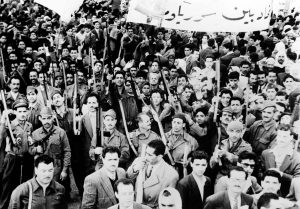 A march in Damascus supporting unity between Syria and Egypt in 1957 | AFP
The recourse of Syrian political factions and influential army officers to Nasser in Cairo seeking Egyptian-Syrian unity—in a manner carrying a tone of pleading—suggests a pattern wherein internal Syrian forces leveraged forces beyond the border to effect internal change or preempt an impending internal shift whose clouds were clearly visible. In a moment of candor on his deathbed in 1960, Faris al-Khoury expressed his regret to Patrick Seale, revealing the real reason various Syrian political factions sought unity:
“It was done in a moment of recklessness. I tell the truth, even if it makes me look like a hypocrite as well, because despite my disapproval of the union, I did not oppose it publicly. I thought at the time it was the only way to block the advance of communism in the country.” (5)
It appears that the resignation of Vice President Akram al-Hourani (alongside Ba’ath Party ministers) on December 30, 1959, and the Ba’athists’ move toward a confrontation with Nasser, practically signaled the end of the utility of unity for the Ba’athists. Their goal had been accomplished: using the Egyptian president to crush the Syrian communists whose influence had been growing since the summer of 1957. This was precisely what Nasser did against the communists in early 1959, during a Syrian political juncture intertwined with the clash of the Arabist trend with communists in Iraq since late 1958. By the spring of 1959, this escalated into an open confrontation between Nasser and Nikita Khrushchev, the leader of the Soviet Communist Party.
One cannot explain the alignment between Washington and Nasser from 1958 until 1964 without addressing his clash with the communists in Syria and Iraq, and his subsequent confrontation with Moscow. Washington’s view of the Egyptian-Syrian unity was heavily governed by this factor, as seen in a secret memorandum submitted by the Assistant Secretary of State for Near Eastern, South Asian, and African Affairs to the Acting Secretary of State on January 25, 1958:
“Over the long run, US long-range and short-range interests regarding Egyptian-Syrian unity are not identical. However, in the immediate term, we have an interest in that Nasser’s power in Syria following the union will lead to curbing the influence of the Syrian Communist Party. In the long run, unity could lead the Syrian state down unnatural paths, reducing the possibility of establishing links between Iraq and Syria, facilitating Nasser’s hegemony over the Arab world, and complicating the relationship of the unified state with Israel and other Arab countries.” (6)
In any case, without this American consensus with Nasser and US satisfaction with the Egyptian-Syrian United Arab Republic—which Washington swiftly recognized upon its establishment on February 22, 1958—one cannot explain the joint US-Egyptian agreement to nominate General Fuad Chehab for the Lebanese presidency in September 1958. This followed internal turmoil in Lebanon since May 1958, characterized by a broad opposition movement backed by Nasser against the rule of President Camille Chamoun. Chamoun was aligned with the Baghdad Pact and the British, and close to Iraqi Prime Minister Nuri al-Said, who was overthrown along with the Hashemite monarchy in Baghdad on July 14, 1958. This brought the rule of Abd al-Karim Qasim to power, heavily backed by strong communist influence in Iraq, leading to the sidelining of Arabists (Ba’athists and others) from positions of authority in the new Iraqi regime since the autumn of 1958, sparking a confrontation between Cairo and Baghdad.
A master’s thesis in history submitted to the University of California in 2006 by William J. Zeman, titled “U.S. Covert Intervention in Iraq, 1958-1963” (7), provides details on US-Egyptian cooperation against the regime of Abd al-Karim Qasim, who was allied with Iraqi communists. It includes an opinion offered by CIA Director Allen Dulles regarding Iraq and the information available to him concerning preparations for an insurrection backed by Nasser in the city of Mosul. During a National Security Council meeting on March 5, 1959, Dulles stated that:
“The United States is faced with a choice between Communism and Nasserism, and the latter appears to be the lesser of two evils.” (Zeman, p. 16)
In that intervention by Dulles regarding the anticipated coup—which took place and failed three days later under the leadership of Colonel Abd al-Wahab al-Shawaf in Mosul, followed by communist massacres against Arabists—the CIA director remarked:
“Developments in Iraq require closer attention from the United States, and may dictate [some] links with Nasser in the face of potential developments.” (p. 16)
Zeman also points to American and Egyptian cooperation in the assassination attempt against Qasim on October 7, 1959, which involved Saddam Hussein. The Egyptian Assistant Military Attaché at the embassy in Iraq, Abdel Majid Farid, had rented an apartment for Saddam in Baghdad prior to the failed operation (p. 18). According to Zeman, the CIA’s role in the attempt on Qasim’s life reached the level of “cooperating with the Egyptians in funding and organizing the operation” (p. 18). Furthermore, Saddam’s escape to Tikrit after the failure of the attempt was executed through cooperation between the CIA and the Egyptians (p. 18), before he was smuggled to Damascus and later to Cairo.
Zeman reveals that the link between the Ba’ath Party and Washington was Colonel Saleh Mahdi Ammash, who served as a military attaché at the Iraqi embassy in Washington, noting that “it is probable that his recruitment by the Americans took place there” (p. 26). Ammash subsequently became “one of the Ba’ath Party’s links with the CIA” in Iraq (p. 26).
Ammash was the head of the military organization of the Ba’ath Party prior to the coup of February 8, 1963. His arrest by Qasim five days before the event did not affect the success of the coup, which overthrew Qasim (who was executed the following day) and was followed by massacres of Iraqi communists.
Zeman confirms, through American documents, that Washington stood behind the Ba’ath Party coup in Baghdad on February 8, 1963 (pp. 29–31). King Hussein of Jordan confirmed in an interview with Al-Ahram newspaper (September 27, 1963) “that the February 8, 1963 coup in Iraq was supported by American intelligence, and that numerous meetings took place between the Americans and the Ba’athists, the most important of which occurred in Kuwait just prior to the coup” (Zeman, p. 28).
Ali Saleh al-Sa’di, who was the Secretary of the Regional Command of the Ba’ath Party in Iraq at the time of the coup, made this explicit confession: “We came to power on a CIA train” (Zeman, p. 28). In another account, Fuad Arif told researcher Sinan al-Zaidi that he inquired from Hana al-Omari, the wife of Ali Saleh al-Sa’di, in the presence of Dr. Kamal Mazhar Ahmad in 1989, about the veracity of her husband’s aforementioned statement. She replied: “Yes, my husband said it in Paris during a meeting with a group of Iraqis, and he repeated it on several occasions.”
It is important to note here that al-Sa’di informed Younis al-Taie in 1976 in Cairo, and repeated it in Baghdad, that they had inadvertently arrived on a train whose engine was American. When Ismail al-Arif asked him in Beirut how they lost power, al-Sa’di replied: “Not everything was in my hands, and we knew that, but those behind it bested us; we were on an American train.” In a conversation with the poet Mudhaffar al-Nawab, al-Sa’di asserted that he and his immediate faction were never in contact with any foreign entity, but within minutes on February 8, he discovered that he and his group were moving against their will on a train with an American engine. This stands in contrast to what he mentioned to the Kurdish leader Mahmoud Osman during their meeting in Paris, where al-Sa’di asserted to him that “the end justifies the means” when asked about the validity of his statement, “We came on an American train” (8).
Here, if the Ba’ath Party came “on an American train” to power in Baghdad on February 8, 1963, on what train did the Ba’ath Party arrive at power in Damascus on March 8, 1963, just one month after the coup it led in Baghdad?
Here, one must remember that Iraqis (9) were tasked by the National Command of the Ba’ath Party, following the party’s Fifth National Congress held in Homs in May 1962, with rebuilding the Syrian organization of the Ba’ath Party. This occurred after the National Command had dissolved the Syrian Regional organization during the first days of the 1958 union. This reconstructed Syrian Regional organization, rebuilt under the supervision of Iraqis, was the entity whose Military Committee—linked to the party’s Secretary-General Michel Aflaq and leaders like Salah al-Bitar—formed the backbone of the military coup on March 8, 1963. This took place before the Ba’athists monopolized power in Syria by ousting their Nasserist partners in the coup, following the Nasserists’ failed coup attempt against the Ba’athists on July 18, 1963.
The question that poses itself is: Can the driving factors behind the trajectory of the Syrian March 8, 1963 coup be separated from the Iraqi February 8, 1963 coup, given that the executing entity was the same in both cases?
This question will remain open, awaiting the availability of documents on the Ba’athist coup in Damascus, just as American documents became available regarding the Ba’athist coup in Baghdad.
Research Footnotes
(1) – Professor Meir Zamir’s complete study (in English) can be found at the following link:
https://middleeasttransparent.com/britains-treachery-frances-revenge/
(2) – Professor Yehoshua Porath’s book can be found at the following link:
https://www.academia.edu/38705453/IN_SEARCH_OF_ARAB_UNITY
Yehoshua Porath: In Search of Arab Unity 1930–1945 (in English) (385 pages). The book was first published in 1986. The PDF version available at the link is a copy of the edition published in London – Routledge, 2013.
(3) – Miles Copeland: The Game of Nations, Al-Waqfeya Library, Beirut 1970, p. 56. Copeland held the post of “Cultural Attaché” in Damascus as a cover for his intelligence role.
(4) – Douglas Little: “Cold War and Covert Action: The United States and Syria, 1945-1958” (in English), Middle East Journal, Vol. 44, No. 1, Winter 1990, pp. 51-75.
[https://www.jstor.org/stable/4328056]
(5) – Patrick Seale: The Struggle for Syria, Dar al-Anwar, Beirut 1968, p. 423.
(6) – https://history.state.gov/historicaldocuments/frus1958-60v13/d187
(7) – The text of William Zeman’s thesis can be found at the link:
https://docs.google.com/document/d/1IZxTATmoknBlrmW5n4-plXmMndvUzXehMgsD-uc_jrk/edit?tab=t.0
(8) – July 17, 2023, “InfoPlus”
(9) – Muta’ Safadi states in his book The Ba’ath Party: The Tragedy of its Birth, the Tragedy of its End (Dar al-Adab, Beirut 1964):
“Aflaq entrusted the task of re-establishing the party to a committee of Iraqi Ba’athists, among them colleagues of al-Sa’di. Thus, the Homs Congress of the National Command was held in May of that year (1962), and it was decided to exclude the Houranists from the party, and re-form its branch in Syria under the supervision of that Iraqi committee.” (p. 290)