

Syria is facing one of the most complex political challenges in its modern history: how can a state that has been devastated by wars be rebuilt, especially when it includes diverse ethnic, religious, and cultural groups? This challenge is clearly evident in the ongoing conflict between the transitional authority in Damascus and the Autonomous Administration in northern and eastern Syria, as well as with the Syrian Democratic Forces (SDF). While the central authority in Damascus insists on integrating the SDF into the regular army structures, the SDF emphasizes its organizational independence and its multi-ethnic, multicultural identity—elements that form its core and reason for its existence.
This issue is not merely administrative or military; it raises a profound philosophical question about the meaning of integration: Is it a reciprocal participation that preserves differences, or a forced assimilation that swallows diversity under the banner of unity and peace?
Reflecting on the concept of “integration” and its philosophical roots, we see that political philosophy has approached this concept from various angles. In classical thought, Aristotle considered the human being as a “political animal” whose full existence is realized within the polis (city-state). For Aristotle, integration into the community was essential for achieving citizenship and active participation in public life. However, this integration did not mean erasing individual or group particularities but rather engaging them in the common civic life as a condition for human completeness.
In contrast, Jean-Jacques Rousseau presents the concept through the lens of the “general will” articulated in his book The Social Contract, where individuals surrender their personal wills to a collective will that reflects the common interest. Although this notion aims at equality and collective agreement, it has been misinterpreted in subsequent experiences as a justification for centralized authority that can dissolve individuals and groups into a single entity under the guise of unity.
On the other hand, contemporary and critical schools of thought offer a different perspective. Jurgen Habermas, for instance, conceptualizes integration as the outcome of “rational communicative action” within the public sphere, where political legitimacy is based on mutual understanding rather than coercion. Similarly, multicultural theorists like Charles Taylor argue that recognizing different identities within the state is a fundamental condition for protecting the dignity of individuals and groups.
From this brief review, a crucial question emerges: Does the transitional authority in Damascus seek integration of the SDF, or does it aim at assimilation that destroys its organizational and cultural identity?
Members of the SDF are not just soldiers; they are sons and daughters of Syria from diverse ethnic, religious, and cultural backgrounds—men and women representing the pluralistic fabric of Syrian society, which has long been attempted to be homogenized by central regimes through exclusionary policies. Therefore, the insistence of Damascus on a mechanical integration of the SDF—despite the ongoing devastating circumstances across the country—represents a fundamental problem. This calls for a transformation in the structure of the state itself—requiring political openness, constitutional reform, and legal amendments. Without these, meaningful democratic integration remains impossible, as true integration entails that the state must also change in tandem with the parties joining it.
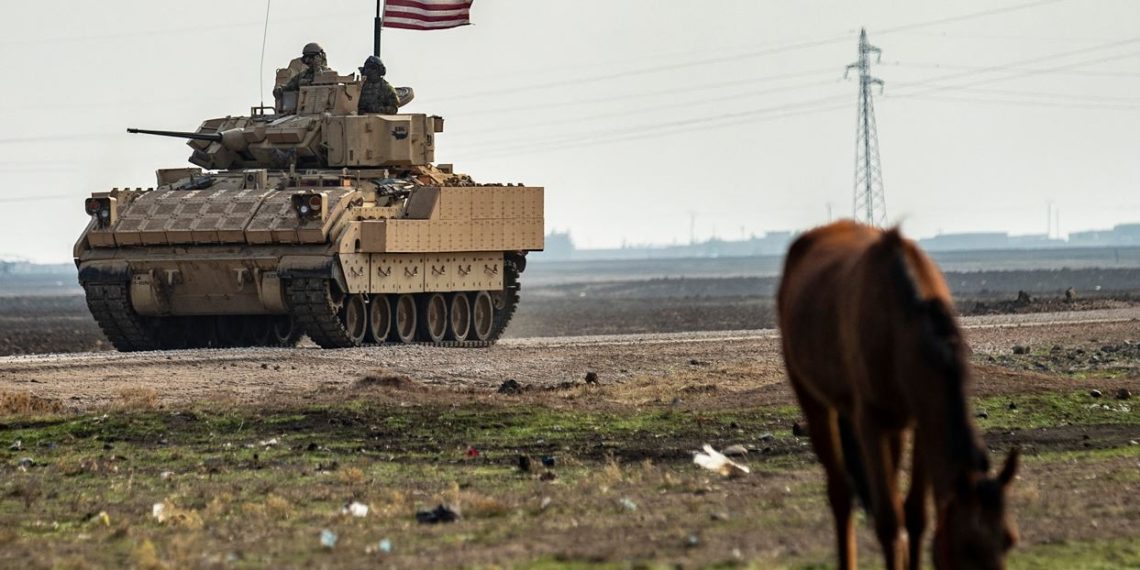
The most dangerous aspect of the transitional central authority’s logic is that it imposes a “peace without horses”—a metaphor for superficial peace that sow seeds of profound division and deprive diverse communities of their right to self-defense. Continuing this mindset could lead to catastrophes and even genocides, as has happened in places like Sweida and the Syrian coast.
From the perspective of the transitional authority, the concept of integration appears to favor “taming” over “partnership.” It treats the SDF as if they are knights whose horses must be taken away before entering the Syrian state’s space. This reflects a failure to understand the socio-cultural shifts within Syrian society after 2011.
Historical experiences have demonstrated that transitioning from forced assimilation to constitutional integration is a necessary condition for overcoming political tragedies. For example, in South Africa, ending the apartheid system was not merely about repealing discriminatory laws but involved a profound political project culminating in the 1996 constitution, which recognized full equality among citizens regardless of race and laid the foundation for a “Rainbow Nation” that embraces diverse racial and cultural identities. Similarly, in Spain, after the fall of Franco’s dictatorship in 1975, the transition to democracy included recognizing regional languages like Catalan, Basque, and Galician within the 1978 Constitution, granting autonomous regions broad powers to preserve their identities.
In Yugoslavia, neglecting the democratic integration condition after Tito’s death in 1980—while maintaining a centralized structure—accelerated national and linguistic tensions, leading to bloody civil wars in the 1990s and the disintegration of the Yugoslav federation.