


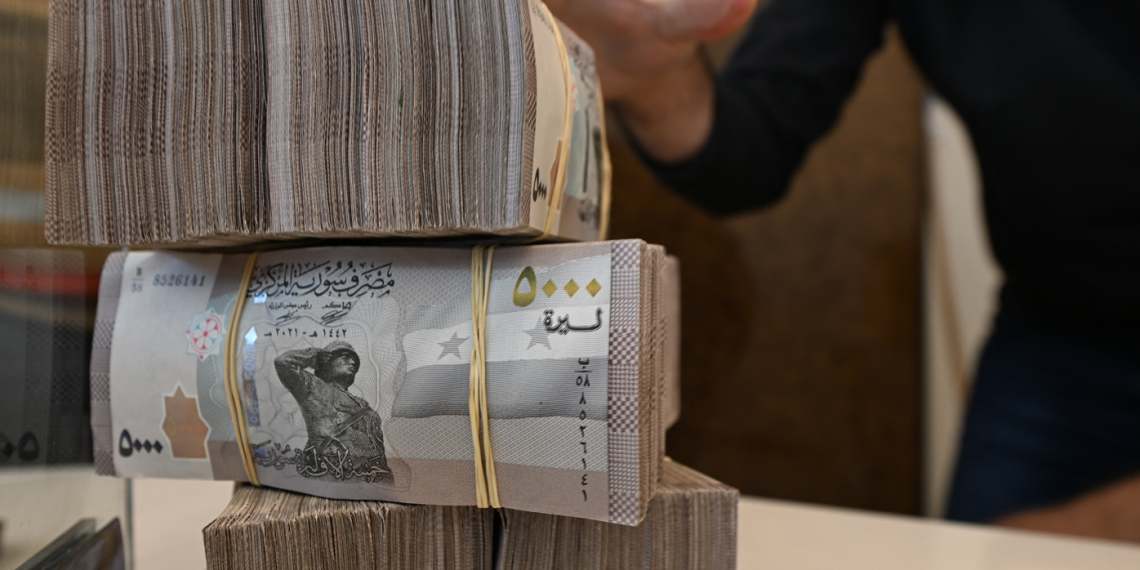
The simple term “removing zeros from currency” generally means that the state redefines the value of its national currency by removing a certain number of zeros from its monetary unit.
Typically, countries undertake this procedure for several reasons, including combating hyperinflation, simplifying transactions and financial calculations, restoring confidence in the local currency, and preparing the economy for future reforms. This means that the process of removing zeros is part of a package of reforms that include effective monetary and fiscal policies to achieve the desired result: genuine economic stability.
Some countries have succeeded in this process completely, such as Georgia in 1995; others have achieved partial success, like Turkey in 2005; while some have failed, such as Zimbabwe in 2009 or Venezuela in 2018. In these cases, economic problems remained unresolved, leading to the rapid collapse of the currency and a resurgence of inflation.
The success of this process depends on what accompanies the removal of zeros—namely, effective economic reforms and sound fiscal and monetary policies. Therefore, we can define the process of removing zeros from currency as a formal, technical, and psychological monetary procedure, during which the nominal value of the monetary unit is recalibrated without changing the actual value of the currency.
Thus, removing zeros from the currency is not considered a sufficient solution to contain inflation and restore confidence in the national currency unless effective economic reforms are in place to support sustainable economic stability.
These economic reforms are divided into fiscal reforms, such as controlling the budget deficit—reducing the government deficit by balancing expenditures and revenues without resorting to printing money as a solution—alongside rationalizing public spending, directing expenditures toward productive sectors, reforming the tax system, and other financial measures.
On the monetary side, reforms include controlling inflation, unifying the official exchange rate, strengthening the independence of the central bank, and other policies aimed at stimulating productive sectors and supporting small and medium-sized enterprises.
Consequently, the success of the process of removing zeros requires a comprehensive economic reform program that includes clear, coordinated fiscal and monetary policies, along with a stable economic framework and strong institutions that can support and implement any new monetary or financial measures. But what if we apply all of the above to the Syrian situation—the war-torn country suffering from conflicts, wars, and divisions? Surely, many questions would arise, such as: Is there a stable economic environment in Syria today? Are there strong financial institutions? Is the monetary market developed? Or is there real production in Syria, whether agricultural or industrial?
Today, Syria is experiencing significant economic destruction, with financial losses estimated at hundreds of billions of dollars, a sharp decline in revenues, and an increase in the budget deficit. In this context, what does it mean to announce the removal of zeros from the currency or to issue a new currency? Does this imply a decrease in inflation and an increase in productivity? Does it mean reducing unemployment and creating large job opportunities? Does it mean raising the purchasing power of the Syrian pound? The answer is (no), unless this process is accompanied by effective economic measures. But what are the economic reforms that can be achieved and yield results in a destroyed environment (wars, sanctions, security risks, absence of production)?
First, Fiscal Reforms
International reports emphasize that restoring confidence in the Syrian pound requires sound fiscal policies. The most important ones are:
- Controlling expenditures and reviewing the budget, meaning restructuring spending to rationalize costs. In this context, the IMF mission focused on protecting salaries, basic services, and social spending as top priorities in the budget implementation.
- Redirecting public spending toward productive sectors such as education and benefiting from international aid and low-interest loans offered to support essential productive projects.
- Enhancing revenue collection through tax system reforms, expanding the tax base, reducing tax evasion, and most importantly, developing modern collection methods like electronic payments. This would increase the state’s financial resources without needing to finance the deficit through money printing.
- Strengthening financial administration procedures to effectively monitor the implementation of the budget and oversee expenditures. This includes developing financial and administrative systems to monitor the performance of economic institutions and evaluate results.
Second, Monetary Reforms
Monetary policy tools are more severe than fiscal policy in fighting inflation. Therefore, the necessary measures or reforms can be outlined as follows:
- Empowering the Central Bank of Syria by granting it greater independence to control inflation. This would enable decision-makers to make sound monetary decisions. From a personal perspective, implementing contractionary monetary policies—such as raising interest rates, increasing reserve requirements, and selling securities like stocks and bonds—can play a significant role in preventing the currency from collapsing later.
- Unifying the exchange rate by gradually aligning the official exchange rate with the black market rate, as the gap between the two and the existence of a parallel market damage confidence in the Syrian pound.
- Controlling liquidity, which is the most critical monetary measure. Alongside reforms, it is essential to regulate the circulating money—meaning the Central Bank must control the total amount of Syrian pounds in the market in line with production and services. The solution involves withdrawing liquidity from the market rather than expanding it. To curb the local money supply and liquidity, the Central Bank should tighten lending conditions and government spending by raising reserve requirements, especially on deposits in Syrian pounds.
In fragile environments like Syria, the Central Bank should focus on short-term impactful steps, such as controlling liquidity and stabilizing inflation expectations linked to interest rates. Stabilizing expectations is half the battle. Additionally, publishing targeted inflation paths and periodically explaining interest rate decisions within the framework of transparency and central bank data sovereignty are urgent steps—particularly given that inflation currently stands at approximately 15.87% as of February 2025, according to Trading Economics. To implement a contractionary monetary policy, interest rates need to be raised above or near the inflation rate. Therefore, interest rates should be gradually increased, monitoring liquidity and banking sector strength, as rapid tightening could cause credit crunches.
Unifying the exchange rate, empowering the Central Bank, establishing an appropriate monetary framework to achieve price stability as a primary goal, and improving payment infrastructure and data systems.
Third, Administrative Reforms and Social Measures
- Stimulating productive sectors or sectors with a comparative advantage, requiring monetary reform to support the real economy by encouraging local production, such as facilitating investment in agriculture and energy—like rehabilitating irrigation infrastructure. The agriculture sector alone employed 20% of the population and covered one-third of Syria’s exports before 2011, according to the NEWSECURITYBEAT program.
- Supporting small and medium-sized enterprises by providing facilities and temporary exemptions for startups, especially in the food and textile industries.
- Maintaining a social safety net and preventing the deterioration of citizens’ livelihoods. Any monetary measure should be accompanied by support plans for impoverished families. This includes reinstating those who have been dismissed from their jobs, at least until they find alternative sources of income through new economic programs—potentially supported internationally or through grants or employment opportunities in innovative sectors. There are countless solutions that can be applied and benefited from, instead of dismissing people irresponsibly.
- Rebuilding vital infrastructure based on well-studied plans and clear priorities, rather than randomly or arbitrarily. The process should start with sectors that are recoverable and have the greatest productive impact, such as energy and transportation. Recently, the World Bank provided Syria with $146 million to be used for repairing the electricity sector, which directly impacts the activation of industrial and agricultural sectors. Similarly, supporting the rehabilitation of roads, ports, and water stations aims to gradually restore productive activities.
In conclusion, the process of removing zeros will not be the Syrian miracle that Syrian citizens hope for. There are many other actions, steps, and continuous work needed in a stable and secure environment to achieve the desired results—something that is currently lacking.
Removing zeros is essentially a symbolic monetary measure to restore confidence in the national currency. Without restructuring and modernizing the economy to match Syria’s critical phase, the new currency will remain unable to achieve the trust hoped for.
Many lessons, experiences, and insights exist, but success depends on genuine reforms that every Syrian family is waiting for—reforms that go beyond simple monetary procedures.