


It has been claimed—though no definitive proof or historical evidence has yet been produced to confirm it—that Yazidism may be traced back to around 4750 BCE. The history of Yazidism has been both tragic and painful.
Few subjects have provoked such animated and prolonged discussion as the complex task of defining the fertile and intricate spiritual terrain of Yazidism, with all its branches and traditions. Yet, without the slightest doubt, this non-missionary faith is among the most ancient monotheistic religions to emerge from Mesopotamia.
From a glorious and enduring past—one that survived the Medes and the Mitanni—Yazidism now appears as little more than a stranded vessel in the stream of history. Today, it struggles to defend itself against the fatal arrow of extinction even within its stronghold of Sinjar.
Both at home and abroad, Yazidis cherish a deep and passionate attachment to the venerable Lalesh Temple in Sheikhan—the faith’s holiest site—where they make their annual pilgrimage and affirm their identity as a people.
Like the Jews, Armenians, and Assyrians, the modern history of the Yazidis is marked by repeated persecution, displacement, and genocide. Associated above all with Sinjar, the faith has long been targeted by the Ottomans, by former Iraqi dictator Saddam Hussein, and, most recently, by the so-called Islamic State in Iraq and Syria (ISIS).
Ironically, the U.S.-led invasion of Iraq in 2003, the eventual collapse of Saddam Hussein, and the false dawn of the so-called Arab Spring in 2011—with all its far-reaching consequences—seem to have played into the hands of the oppressors of minorities, including the Yazidis.
While the genocidal campaign against Sinjar on August 3, 2014, marked the culmination of policies of extermination, the seeds of this evil can be traced back a decade earlier, to 2004—one year after Saddam’s fall—when Islamist extremists began gaining ground in the so-called “resistance” against U.S. forces.
Since 2003, relations between Yazidis and their Arab neighbors—staunch supporters of the dictator—deteriorated sharply, as the latter perceived the Yazidis as having welcomed the U.S. invasion. The unprecedented rise of Iraqi Kurds, following the humiliating fall of the Baathists, further inflamed tensions.
This backdrop lends weight to the interpretation of the twin suicide bombings carried out by al-Qaeda (many of whose leaders were former Baathists) in mid-August 2007 against the Yazidi villages of Gir ‘Izer (Arabized Qahtaniye) and Siba Sheikh Khider (Arabized Jazira), killing nearly 800 people. While ostensibly triggered by the stoning to death in April of a Yazidi girl who had eloped with a Sunni Arab, the scale of the carnage revealed a deep-seated intent to eradicate the Yazidi population.
The last great calamity of such magnitude had struck in 1892, when the notorious Ottoman officer Omar Pasha seized hundreds of Yazidi women and girls and took them to Istanbul as slaves. Saddam Hussein’s campaigns would prove equally horrific—too grim, perhaps, to fully recount.
In more recent history, it is important to note that Sinjar’s fate was shaped not only by radical Islam but also by the failed, misshapen political system created in post-Saddam Iraq, particularly under Article 140 of the Iraqi Constitution. Administratively, Sinjar lies in the so-called “disputed territories” between the Iraqi central government and the Kurdistan Region of Iraq. In 2014, as ISIS was rapidly seizing territory and both Baghdad and Hewlêr (Erbil) were preoccupied with their own battles, Sinjar was given scant priority—each side able to shirk responsibility for its defense.
This neglect provided ISIS with the perfect opportunity to impose its perverse ideology. Strategically, the Sinjar region—mountain and plain alike—has long stirred the covetous ambitions of regional and global powers. From antiquity, the mysterious tenets of Yazidism have drawn scholarly curiosity; tragically, this same uniqueness has often been the pretext for persecution.
In June 2014, Abu Bakr al-Baghdadi declared the formation of his so-called caliphate from the al-Nuri Mosque in Mosul—the first of its kind since the Ottoman Caliphate was abolished by the Turkish parliament some ninety years earlier. In the same sermon, he called on all Muslims to pledge allegiance to “Caliph Ibrahim,” himself.
Not far from Mosul, in Sinjar—a place where the word “caliphate” has always been intertwined in collective memory with death warrants and punitive expeditions—people watched the unfolding events with mounting dread. That nightmare soon became reality.
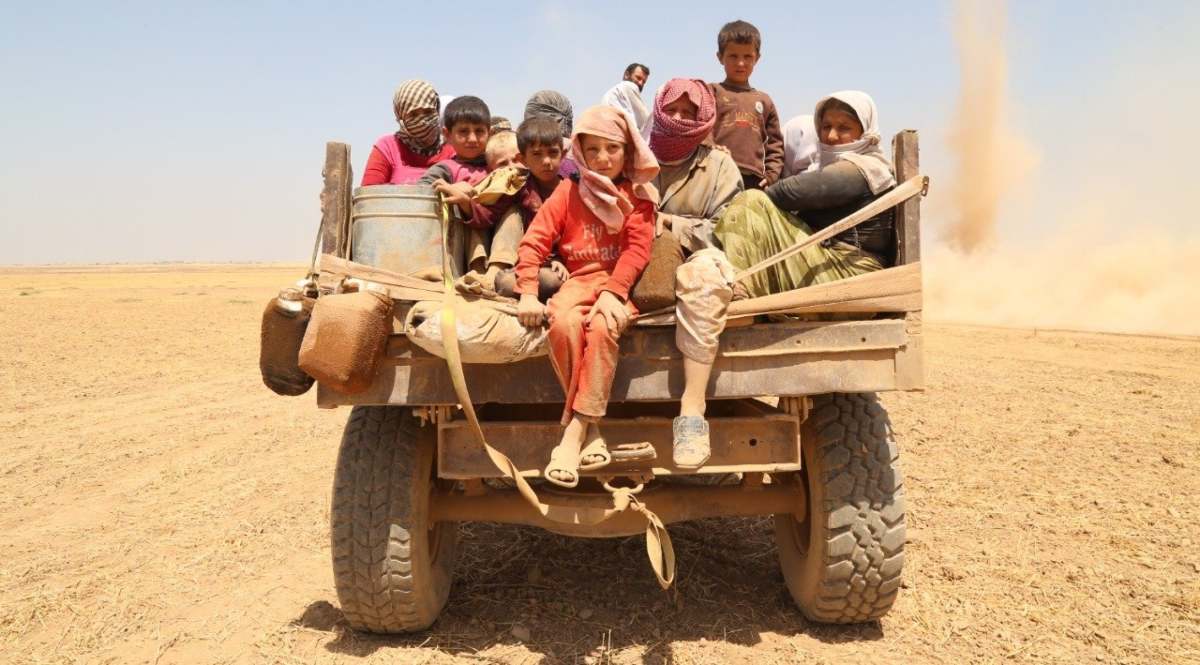
The modest resistance put up by residents of the southern villages of Gir Zerik and Siba Sheikh Khider on August 3, 2014, bought precious time for many to flee toward Mount Sinjar. Thousands, however, would die of thirst on the mountain and along escape routes.
While Gir ‘Izer and Siba Sheikh Khider resisted against impossible odds, the village of Kocho surrendered without firing a shot—apparently after assurances of safety were given by Ahmed Khatouni, a local ISIS commander known for his cruelty.
Estimating the death toll from those few days is difficult. Various sources put the number of Yazidis killed at roughly 10,000, with around 7,000 kidnapped—nearly half of whom remain missing.
On August 6, ISIS announced its full control of Sinjar. In Kocho, some 1,200 people were under siege; about 400 managed to escape to the mountain, while the rest remained. The most credible account holds that a local Arab commander from a nearby village persuaded them to stay, promising their lives would be spared. But snakes have always had venom.
For many, Kocho remains one of the unresolved puzzles of the Yazidi genocide—a grim episode where the most abominable cruelty was displayed in an almost indescribably horrific way. For ISIS, however, it became a stage on which the group’s ravenous fighters enacted their ideology through the indiscriminate slaughter of Yazidi inhabitants.
Later, revolving around the ultimatum to either convert to Islam or face death, intense negotiations were initiated. These lasted twelve days, during which men laid down their arms while women surrendered all their jewels and valuables.
Regarding women, an important fact must be noted: non-Muslim women are considered inferior to Muslim women. Breaking this norm, ISIS female propagandists, via Dabiq, declared that women could travel to the caliphate without a male guardian.
Ideologically, ISIS differed from all other extremist and Salafist groups regarding women. While Yazidi women were subjected to oppressive and dehumanizing roles—concubines and childbearers—Sunni women, particularly the muhajirat, were given authority in certain societal spheres.
ISIS sought to project an image that women in the caliphate could influence matters concerning their lives and the application of Sharia. This became a central theme in their propaganda—and was, to some extent, implemented in practice.
The all-female morality police, the al-Khansaa’ Brigade (established in February 2014), exemplifies this. When ISIS later went on the defensive in 2017, these women were deployed to the frontlines. Their ferocity would later be witnessed in al-Hol Camp, Hasaka.
To further motivate Sunni men to defend the caliphate, ISIS mandated migration to its lands, drawing thousands of foreign fighters—including women—to Syria and Iraq.
To satisfy the “God-inspired” warriors, ISIS set its sights on a suitable prey. Sinjar, within the caliphate’s claimed territory, became the target. For ISIS, it represented both a temporal reward and a stepping stone to the hereafter—a sensual paradise attainable through martyrdom, with rewards proportional to the degree of hardship endured.
The rape and enslavement of Yazidi women served as a global recruitment tool. The promise of female slaves to male recruits, advertised online, reflected this strategy. This is why Sinjar was attacked and pillaged.
Tapping into the fighters’ desires and providing religious justification, Dabiq’s October 2014 issue, titled “The Revival of Slavery Before the Hour,” presented the enslavement of non-Muslim women as a revival of a prophetic practice. The issue emphasized that taking women of the kuffar as concubines is firmly sanctioned in Sharia.
Under Sharia, Christians—“People of the Book”—could live in the caliphate under the humiliating jizya tax, which ISIS rarely enforced. But for Yazidis, there was no such allowance. Why?
In the months preceding the caliphate’s declaration, ISIS jurists thoroughly studied Yazidism to determine their approach to Sinjar. They concluded that: first, since Yazidis had never converted to Islam, they could not be considered apostates; second, because their faith predates Islam, they were polytheists and, unlike Christians, could not be subjected to jizya.
Either way, Yazidis were declared enemies of God. Their lands could be seized, their properties appropriated, and their women violated. ISIS sought to establish publicly that killing Yazidis and enslaving their women was a charitable act in the eyes of God.
On August 15, following failed negotiations, residents of Kocho were rounded up and taken to the village school, used by the emir as headquarters. Four hundred men and adult males were bundled into pickup trucks, taken northward, and killed on the spot. Survivors later recounted the horrors.
From Kocho, hostages were transported to Solagh village, where, at dawn on August 16, women past childbearing age and those heavily pregnant were separated, executed, and thrown into a pit—some buried alive. This site would later be called the Mother’s Cemetery, in memory of 71 women and 12 children killed. Particular attention was given to minors, both male and female.
Earlier, boys under seven and unmarried girls, mostly aged 13–16, were taken to various ISIS-controlled areas in Syria and Iraq. Boys were indoctrinated, converted, and recruited into the Cubs of the Caliphate, to be deployed on the frontlines—many as suicide bombers or executioners. Girls were exploited as sex slaves and sold repeatedly in marketplaces across Syria and Iraq, sometimes for as little as a pack of cigarettes.
Many of these children were abducted as young as four or five and subjected to years of indoctrination. Even those who later returned to their families often struggled to reintegrate.
In conflict zones, violations against women are often deliberate tools of genocide and ethnic cleansing. The Yazidi case, however, differs. ISIS did not seek merely to kill Yazidi women; rather, it sought to exploit them as spoils of war. This was the commodification of human beings.
Within the context of the Yazidi genocide, all forms of sexual violence were perpetrated, including rape, sexual slavery, forced marriage, and the buying and selling of women. Evidence shows that ISIS systematically raped Yazidi women and girls as young as nine or ten.
A remarkable report from March 2015 by the Office of the High Commissioner for Human Rights, highlighting sheer hatred and contempt, stated that ISIS members had raped girls as young as six.
Under Sharia, the people of Kocho could theoretically have been spared as captives, yet no respect was shown for age or sex. The elderly, the young, and infants were treated alike—they were hacked to pieces with swords and bayonets.
The aim was simple: to eradicate the communal identity and erase the group’s national memory. In a patrilineal society, where women safeguard family honor, and a non-missionary faith where no initiations are allowed, rape destroys the bonds of the family and community. This is categorically true of the Yazidi case, and the Yazidis were among the first to recognize it.
Six months and three days after the onslaught, on February 6, 2015, Khurto Haji Ismail, the Yazidi Religious Reference, issued the Family Re-unification Call. In a historic decision, he declared that all Yazidi women, girls, men, and children who had been forced to convert to Islam should be accepted and reintegrated into the community after being rescued from ISIS slavery.
In the same vein, following the battle of Baghouz, the Yazidi Supreme Spiritual Council, on April 24, 2019, broke with ancient tradition, declaring that the community would accept children born to mothers raped by ISIS militants—paving the way for hundreds of women to return home.
However, under intense pressure from Yazidi traditionalists and political groups, the decree was retracted. In Yazidi culture, marrying outside the faith is not only forbidden, it is considered fatal. Such a reversal would have proven unwise.
In practice, re-unification with family for the desecrated girls was rare, owing to the prevailing cultural and social norms governing the closed Yazidi community. Yet, after Baghouz, such reunification could have made a difference.
It must be noted—supported by evidence—that many Yazidi women preferred to remain in al-Hol Camp rather than start anew without their children. Even those returning from captivity often struggle to reintegrate into the community, especially when separated from loved ones. Many have chosen to move to a third country, where they can live safely and be reunited with family.
Eleven years after the Yazidi massacre, as the genocide has become a widely acknowledged tragedy, news in August made headlines: the deportation of a six-member Yazidi family from Germany to Iraq, sparking heated debate even within German state institutions.
The Potsdam court rejected the family’s asylum application, as the Federal Office for Migration and Refugees claimed that Sinjar no longer posed a risk of individual persecution. Yet the family asserts they cannot safely return to Iraq. A closer look at both claims suggests neither is entirely sound—an illustration of the ongoing Yazidi tragedy.
Historically, Yazidism has endured under relentless oppression: first by Ottoman valis and pashas, later through silent Islamization. Today, in the post-ISIS era, the prospect of a safer or better life elsewhere continues to draw adherents away from their ancestral land.
Promises of reform from the Iraqi government and the international community have been numerous but largely unfulfilled, remaining little more than ink on paper. Genuine, sustained efforts are needed to remedy this ongoing crisis.
ISIS reduced Sinjar to ruins as part of its de-Yazidization policy. Not a house remains intact in the once-thriving plain. Yet it is equally true that Yazidis themselves must rebuild their lives, as they have after every historical firman.
Tragically, most post-genocide newborns know nothing of Sinjar except through stories told by elders. Of the nearly 400,000 driven from Sinjar, about 150,000 have returned; the rest remain in IDP camps in Kurdistan or have sought refuge as far away as Australia.
Once numerous in ancient times, the Yazidis are now scattered across the globe. If the calamity continues unaddressed, the doom of Yazidism in its own birthplace may soon be declared. The dead tell no tales. Would they?