


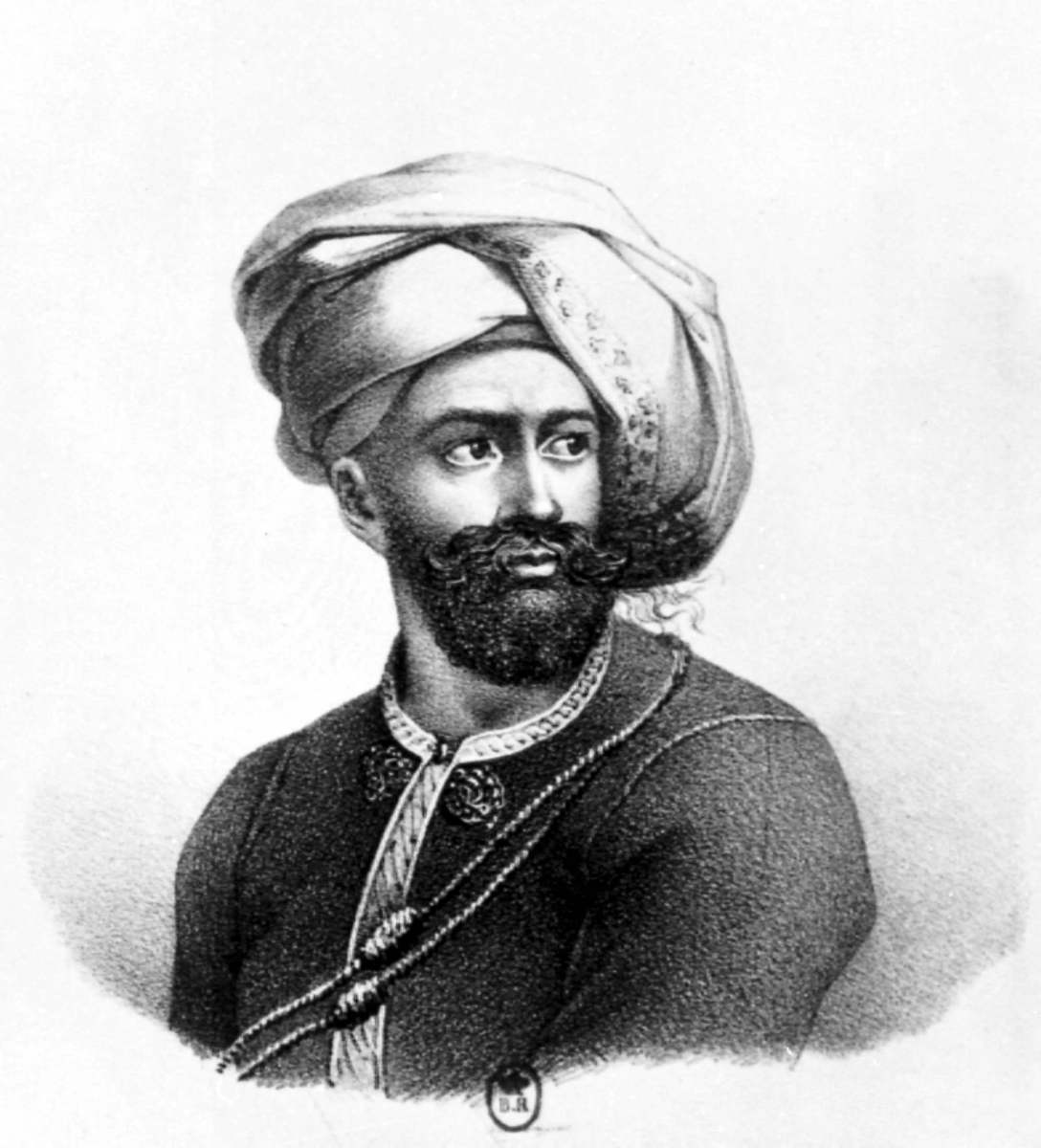
Over the course of six years, six months, and two weeks (December 1832–June 1839), the Ottoman Empire was twice crushed in total defeat at the hands of Ibrahim Pasha, son of Muhammad Ali, the powerful Ottoman vassal in Egypt, pushing the centuries-old empire to the brink. The whole state of affairs of the world’s history would have been changed.
On both instances, had Ibrahim marched instantly on Constantinople – which he could have done so swiftly – nothing would have hindered him to unseat the Sultan, and consign the house of Osman to history. The sultan was entirely defenseless.
However, while on the first incident Mahmoud was saved by Russia, Great Britain rallied Russia and whole Europe to the rescue of Mahmoud’s recently installed boy-sultan, Abdul Majid, on the second.
The narrow survival of the Ottoman Empire in 1830s is a maze of historical complexities, complications, and ironies. Yet, the story of the two battles of Konya (December 21, 1832) and Nazib (June 24, 1839) is much bigger than the mere notion of military defeats.
In retrospect, the pasha had rendered Mahmoud life-saving services in return for which the latter was to grant him Syria. Felt mocked by the Sultan, who demurred, he floated the idea of a Syrian campaign. Not so long, he would put his plans into full execution unimpeded.
On May 27, 1832, Ibrahim captured Acre, the key to Syria, the very same city which had precluded Napoleon some thirty years ago from completing his adventure in the east. On June 16, Damascus opened its gates to the conqueror. July witnessed two Ottoman defeats in Homs and near the Bailan Pass.
Aleppo closed its gates in the face of the disgraced Hussein Pasha. That was not an isolated act of disobedience. The bonds of allegiance to the resolute spirit of Osman drew weaker and weaker in proportion to the rapid advance of Ibrahim.
Unstoppable, he routed the dispirited Ottomans in Konya, Asia Minor. As soon as the news of Konya reached Smyrna, its population expelled the governor, and on his seat, they installed a new one in Ibrahim’s name.
High whispers travelled with the winds across the empire to the effect of Mahmoud’s dethronement. Many renounced their allegiance to the Sultan, and acknowledged Ibrahim as their sovereign. The vassal has dwarfed the suzerain. The world’s largest empire, seemed fracturing into successor states. That was, apparently, the case.
No one now could have put encumbrance to Ibrahim’s march on Constantinople had he mobilized his army. There is no historical justification given why Ibrahim had for so long a time tarried at Konya. Retrospectively, it was the most grievous of all faults. Hi poisoned chalice.
Elsewhere, the sultan, without a moment’s loss of time, was not idle. He appealed for aid. He had, before Konya’s defeat, sent his advisor Mohamed Namiq Pasha on a mission to London to bring Great Britain on the scene.
British Foreign Secretary, Henry John Temple, aka Lord Palmerston, unfortunately, was not, as yet, in a position to undertake prompt action. So, just as he had rejected the Sultan’s formal request for naval assistance in October, he cited this time lack of British resources to be deployed abroad.
In Constantinople, the Tsar’s envoy, Nicholai Muravieff, conveyed the undisguised intention to obstruct the pasha from converging on the capital. He assured the Sultan Russia will not permit his empire be dismembered, in case he accepted Russian aid.
Ibrahim, in the meantime, was tightening the screw on Mahmoud. On January 20, he gave order to his men to march on Kutahya, which he reached on February 2. That same day, confirmed reports arrived at the Porte that London was not coming to his aid. The die is cast.
Mahmud basically preferred British assistance to the Russian one. He had a conviction that the former wanted to preserve the caliphate, while the latter had always sought to break it to pieces.
Not knowing Ibrahim’s next move, Ibrahim humbled himself to the very same man, who four years ago, had broken his never-failing pride. The English folly played into the hands of the expansionist Tsar. Russian ships on February 20, dropped anchor at Buyukdere.
Still, Ibrahim was not deterred. Spring offered an irresistible chance for him to advance against his enemy. In March, he pointed his columns towards the Bosporus. It was too late. To deter him, the Tsar deployed soldiers to Scutari.
With the Treaty of Kutahya (May 14,) the First Syrian War comes to conclusion. The Pasha was confirmed in the government of Crete, and Egypt, and added to them Syria and Adana. He retired to the defiles of Mount Taurus.
With great reluctance, had to give up the whole of the Pashalic of Orfa, which had fallen to him by the right of conquest. He tried to keep the boundary of the Euphrates; but through the interference of France and England, he was compelled to yield. River Sajur marked his frontier with the Turk.
Now, Russian troops and ships had to withdraw, but not without a reward. On July 8, a treaty for eight years, with a renewal option was signed, the Treaty of Hünkâr İskelesi. It bound Mahmoud to a defensive and offensive alliance with Russia of which a secret clause entailed the closure Dardanelles against men-of-war of all other foreign powers. Though it saved his throne, the treaty was a big blow to Mahmoud’s pride.
Peace was gained at so dearly a price. The sultan himself, to all intents and purposes, was made a vassal. Such was the cost paid to evict a disobedient vassal from Asia Minor. The empire was perceived a dead corpse. Mahmoud was determined to resuscitate that corpse.
He so passionately dedicated the period 1834-1839, to two main objectives. On the first place, he brought the Prussian Captain Helmut von Moltke, among others, to superintend the reform of his army. He also sent Ottoman officers to the abroad to be informed on latest military developments.
On the second place, a campaign of buried genocide and scorched-land policy was carried out in Kurdistan in preparation for the long- awaited and the much-sought battle. In 1837, Kurdistan was in ruins.
As the year 1838 turned, the Syrian Question, regarded by the public with but little interest at first, became, as it would involve the prospect of war with France in 1840, one of the burning topics of the day in the East and the West alike.
In January 1839, Hafiz Mohamed Pasha, who had been assigned to build the army, assured the Sultan of victory. Moltke told him the otherwise. However, Hafiz, acting on his suzerain’s firm orders, mobilized his troops. Moltke’s diagnosis of the situation was the most accurate, left, right and center, yet he was a voice in the wilderness. Once again, Ibrahim would carry the day.
In the build-up to the battle, Great Britain and France, fully apprehensive a Russian aid would come to the aid of the Sultan, in case of his defeat, which they highly expected, endeavored to dissuade the latter from his long-announced intention, and rather sought to persuade him to come to terms with his vassal. To no purpose.
Once again, as in 1833, Mahmoud’s high hopes of British support were dashed. In March, Palmerston told his ambassador to the Porte, John Ponsonby, that the Cabinet had agreed only on the principle of the defensive treaty, which the Ottoman Ambassador, Mustafa Rashid Pasha, had proposed.
London advised the Sultan to remain quiet. It made it clear that if the Sultan was the aggressor, it might change the whole face of the affair. Yet, evidence reveals Ponsonby, with his deep- seated contempt for the existing state of things in Syria, made no effort to dissuade the Sultan from invading it.
Intensely critical of the pasha and his Syrian successes, Ponsonby declared him the aggressor. He sided with Russia. Ponsonby had one conviction; ‘the pasha had grown too big for his boots.’
Russia, much to the countenance of Austria, proposed that the pasha sign peace on condition of conceding Orfa and Diyarbakir to the latter’s Syrian domains. Prussia, quite disinterested, was only a lukewarm in the matter.
France in the main, was trying to get Mohamed Ali to make peace with the Porte. To the Pasha, that was ideal. He declared if Hafiz Pasha withdraws to the other side of Euphrates, he would order his to retrograde, and direct Ibrahim to return to Damascus. He wanted assurances which France could not afford. It was a reasonable supposition. But not appealing, however, to everyone.
When Ponsonby, a violent Russophobe, who overtly casted aspersion on Ibrahim, discovered that appeasement was to be the master of the situation, he reported to London the Ottoman Empire was delivered to the Pasha, and that the Tsar was the chief director of such a delivery.
Events in the meantime have developed at so disconcerting a rapidity. The patience of the Sultan was wearing thin. Hafiz Pasha had crossed the Euphrates. At this point, then, history of the Second Syrian War commences. The epic of battles was fought near Nazib, June 24.
Moltke, a military strategist, could not persuade Hafiz to his tactics nor to hinder the routing defeat. Once again, the Ottoman Army was devoured, shattered, and dispersed. The Egyptian victory was so complete in that the idea of overthrowing the newly installed Sultan was considered a question of time.
Yet the drama was to be played out in full action. In the most inconvenient moment of history, Mahmoud died (June 29), leaving his throne to an unfledged son. He left behind so many wailing a mourner.
To add more to the difficulties, on July 13, Superintendent of Ottoman Marine, Captain Ahmed Fawzi Pasha, purportedly with French connivance, instead of making for Syria, delivered his ships into the hands of the Egyptian Pasha in Alexandria.
The empire encountered now its gravest existential threat. It was dangling by a thin thread- if any. Mahmud had put great faith in his old natural friend, Great Britain. He was correct. Though he never lived to see it.
War Minister, Khusrew Mohamed Pasha, established the Grand Vizier in his own person. He was to make deal with the prowling enemy at the door. Fawzi’s act of betrayal, put that disposition to the grave.
In London, one mind-blowing belief prevailed. Nazib would either make the Abdul Majid prostrate at the feet of Mohamed Ali, or reduce him to a Russian protégé. Either case, unconceivable.
In 1833, Britain had flatly rejected an Ottoman appeal for help. Now, the alpha and omega of the British policy has become the maintenance of the Ottoman Empire. To this end, all other considerations were subordinated.
The French press depicted Nazib as a French victory over Britain and her Ottoman protege. That was an injury to national pride. Britain was in a precarious position. Hurriedly, to avert a new awkward situation, it assembled its squadrons at the Besika Bay in Constantinople.
Yet quite unexpectedly, the Tsar did not put Hünkâr İskelesi into effect for reasons that could only be justified on his economic predicaments. He was to leave matters alone. However, when Russia knew Mahmoud was dead, it advocated for a compromise, by which Orfa could be restored, and Diyarbakir be added to Syria. This, though erroneously, lent credence to an implicit Russo-Egyptian understanding.
Yet quite conversely, Europe has decided to put a stop to the conquests of the Pasha. Palmerston was unshakably firm. Mohamed Ali Pasha and his son, Ibrahim, ought to give Syria up. On July 27, the Collective Note was signed. It invited the Porte to withhold any decision on Mohamed Ali’s demands without their advice. So gladly consented the sultan.
However, proverbially true, one man’s loss is another man’s gain. France was not to put curb Ibrahim advances, which implicitly were hers. Yet for many reasons, the horse she bet on ought to be hobbled. No power wanted to intervene alone. Palmerston, eager to preserve London’s dominant position, shouldered the task.
On August 11, he had a meeting with Mustafa Rashid. The core of the conference was never brought to light. However, three months later, the so-called Gulhane Edict would see light. Delighted, Palmerston, in December, informed Ponsonby that the Cabinet had so satisfactorily approved the edict.
Great Britain was to play so important a role in the making of the Ottoman politics. London’s influence at the Porte became second to none. It left no stone unturned to render aid and advice to the Porte.
Palmerston’s valiant efforts were not futile. In mid 1830s, it must be remarked, he had little time to devote to Turkish affairs as his attention was fully absorbed in Spain, Belgium, and Portugal. He amply declined to intervene. In 1839, he was not to let the chance slip. But what lies at the root of such a shift?
In 1805, Russia had annexed Georgia and obtained considerable Persian territories. The Russian- Persian war came to a close by the Gulistan Treaty, 1813, hereby Russia annexed Azerbaijan, including Baku. Russian expansion was irritating London. The pressure on Persia would affect the British interests as far as India. Worse still to come.
The vague wording of Gulistan pushed Persia to a new war with Russia in 1826. The war came to an end by the Treaty of Turkoman Chai, 1828. Now, Russia grabbed Yerevan and Nakhichevan. The bell of alarm was ringing non- stop.
Ironically, it was Napoleon that adverted attention to Persia. His ambitious expedition to trace the footsteps of Alexander to India, called attention to Persia. Now, with the Pro- British Shah dead, and a new Russophile in place, all the riverine and land routes to the Persian Gulf and to India were open for Russia.
The effect of Russian bayonets could be felt as far as the banks of the Araxes. At the very same time, her flag alone flew on the waves of the Caspian Sea. Syria was not unrelated. British reports claimed Syria was replete with French Consular Agents whose influence was felt as far as Persia.
Disquieting again, at least as a portent. In 1836, members of the British Military Mission at the royal camp were dismissed with insult. The following year, Mohamed Shah, a Russophile, who had succeeded Fatih Ali Shah, sought to wrest control over Afghanistan by first occupying Herat- the stepping stone to India. Herat was Great Britain’s Fulda Gap. It was imperative to block it.
Persia occupied so unique a position in the British policy. “Of the factors of the Middle Eastern Question, which most affect closely our position in India, Persia is, with Afghanistan, the most important,” remarked historian Valentine Chirol. In 1838, Union Jack was hauled- down and all British officers left Persia. Great Britain had only Syria via which it could reach the Persian Gulf. It was now under a Francophile.
In 1833, Palmerston voiced fears if the Pasha acquired the command of Mesopotamia down to the Persian Gulf. He also raised reservations over the Pashalik of Aleppo. At the time, London and Paris convinced the Pasha to retire from Orfa. Why?
Since 1831, British Colonel Francis Rawdon Chesney was surveying the Euphrates to ascertain by actual experiment the supposition whether the river (from Birecik to Basra) was navigable for small steamers or not.
Basically, the navigation of the Euphrates River was proposed an alternative to the Red Sea route. The project, in 1837, was sealed a failure. However, Britain was not to let France succeed where it had failed. The scheme was abandoned but not the idea. In 1856, Chesney would survey the area between Mediterranean and Aleppo for a railway to the Persian Gulf.
Yet, on top of that all, the Egyptian Pasha, in May 1838, began to give ample utterance to his long-thought independence. So open and resolute, he conveyed his intention to the Consuls. London objected the idea in essence. Though there was no tangible evidence, London was so weary that the Pasha was behaving under Russian directives.
Palmerston forbade the Pasha to do so. If translated into reality, the bid would have made a Turko-Egyptian war inevitable to which the Sultan was not prepared. The Cabinet laid its plan. It suggested to give naval assistance to Mahmoud than let him be devoured again by the Tsar.
Yet, personal enmity often shapes politics. Tsar Nicholas I had never disguised his distasteful contempt for Louis-Philippe. In December 1839, he conveyed to London a message that he was ready to tear Hünkâr İskelesi into shreds, to reduce the Pasha to his shell in Cairo. He was serious in avoiding every point of friction of which the treaty was the most irritating of all. That was the only means to check French ambitions in the east.
Palmerston was surprised at the views, yet the Tsar was not mincing words. For the very first time in history, Great Britain and Russia were brought onto one side. The belief was that advantages of maintaining the Sultan’s dominion were greater than the disadvantages it presented. Russia in particular, with Circassia unstable, was not to tolerate the Pasha on its confines.
On one hand, Europe was not to let the ambitious adventurer replace that feeble youth. On the other hand, to keep Ibrahim in Syria meant to partition the empire. That meant utterly other partitions in European Turkey. Besides, with Ottoman fleet delivered to the Pasha, that in a way or another strengthened French naval dominance which already was second to none. This would make the Mediterranean a French lake.
On July 15, Great Britain, Russia, Austria, and Prussia, unbeknown to France, agreed to use force against the pasha in case he refused their terms. He was to have only Egypt and Acre. Incensed, the fiery Thiers called up reserves and fortified Paris. Palmerston made it known that if Paris throws down the gauntlet, London would pick it up.
Paris was edging to an armed conflict with London. In February 1840, Adolphe Thiers became Prime Minister. He was a staunch patriot and an ardent nationalist. Furtively, he tried to hold talks between the vassal and his suzerain. In October, however, Thiers was forced to resign. Francoise Guizot became Foreign Affairs Minister. France’s face has turned pale to Egypt.
Likely unaware of that recent change, the pasha, still relying on French support, refused to accede to the terms. With an epic victory in hand, he obeyed the dictates of his own reason. With no thinking long, he resorted to sword. Honesty, ironic to say, is not good a card in politics. It was a gross mistake.
Yet, the situation enjoined caution upon Palmerston. He was not to take action deemed a necessity alone. While he rallied powers to his cause abroad, he needed the official go-ahead at home. The cabinet, somewhat oddly arranged, was utterly divided in opinion.
He was convinced, but his conviction was not shared by many Britons, that interests of Great Britain, in this encounter, correspond to those of Russia. He had to reconcile Francophiles and Russophobes of his hard- to- comprehend shift. He has always been Russophobe. He now switched sides. He was to be supported right or wrong.
Turn now to another episode. The last and probably most important of all. He came across a new line which stirred emotions and required undefiled devotion. On August 1, he dined with Anthony Ashley-Cooper, an influential pro-Zionist Tory. Ashley asked the “God’s chosen-instrument” of his good offices to help His ancient people be restored to the Holy Lands.
He must have never been surprised for the proposal was not a hit-or-miss one. In 1838, Ashley had recommended him appointed William Young, Vice-Consul to Jerusalem. More recently, in May, Palmerston protested to both the Porte and Mohamed Ali about the recent persecution of the Jews over the so-called Damascus Affair.
Yet no one felt keener an interest in the Land of Promise than Frederick William IV, who, by a “special providence,” in June 1840, had acceded the Prussian throne. It was an additional moral and material boost.
Before August drew to sunset, Ponsonby had the accurate knowledge of the behind-the-scene conference. In late February, London Jews Society had laid the foundation stone for a church on Mount Zion. Ibrahim was not unchivalrous to the society, yet the war had altered it schemes.
Now, no one could disturb Palmerston to enforce the Quadrupole Agreement on Egypt. He called on British officers willing to join the Levantine adventure to go to the lands of the Caliphate. Many did.
In October, Sir Charles Smith was appointed Commander-in-Chief of the Ottoman forces in Syria to help arrange the Turkish troops in there. Syrian fortresses submitted under fire. The sequel to drama was completed with the bombardment in November of Acre.
British arms, which were put into lavish use, played no inconsiderable a role in the eviction from Syria its supreme master. Syria was now – by British not Ottoman bayonets – restored to the sultan.
Before the year drew to a close, Ibrahim Pasha, Syria’s unopposed conqueror, evacuated the scene under the cover of darkness. Palmerston – and Palmerston alone – had laid the ghost of the colossus to rest. The war was over. Or so it was presumed.
Selected references:
-British Foreign Policy in Europe to the end of the 19 th century, A Rough Outline, by Hugh Edward Egerton, M.A. 1917.
-England and the Near East, the Crimea, by Harold Temperley, F.B.A. 1936.
-England and Russia in Central Asia, by Demetrius Charles Boulger, 1879.
-Essays, Speeches, and Memoirs of Field- Marshal Count Helmuth von Moltke. Two volumes. 1893.
-Kars and Erzeroum: with the Campaigns of Prince Paskiewitch in 1828 and 1829; by Lieutenant- General William Monteith, 1856.
-Lord Palmerston’s Policy for the Rejuvenation of Turkey, 1839-1841: Alexander Prize Essay, 1830- 1841, by Fredrick Stanley Rodkey.
-Palmerston 1784- 1865, by Philip Guedalla, G.P. Putnam’s Sons New York- London 1927.
-Syria and Syrians or Turkey in the Dependencies, by Gregory M. Wortabet, of Bayroot, Syria. 1856.
-The Eastern Question, a Historical Study, by John Arthur Ransome Marriott, 1940.
-The Life of Henry John Temple, Viscount Palmerston with selections from his diaries and correspondence by the Right Honorable Sir Henry Lytton Bulwer. Three volumes. 1870.
-The Foreign Policy of Palmerston, 1830- 1841, by Sir Charles Webster. K.C.M.G., Litt., F.B.A.
-The Middle Eastern Question or Some Political Problems of the Indian Defence, by Valentine Chirol, 1903.
-The War in Syria, by Commodore Sir Charles Napier, K.C.B. 1842. Two Volumes.
-The Short Cut to India, The Record of a Journey along the Route of the Baghdad Railway, by David Fraser, 1909.