


Wars are scouts for the hidden and latent conditions of the warring parties and for the international and regional climate surrounding them. They are like earthquakes that reveal what lies beneath the earth and the fragility of its surface. Sometimes, and in fact often, the scenarios set before the war do not match its process and outcomes.
Therefore, what wars reveal strikes like a thunderbolt. This is what we saw with the Arabs, who were stupefied by what the defeat in the June 1967 War revealed about the fragility of the Arab regimes, foremost among them the Egyptian regime led by President Gamal Abdel Nasser. If one wants to be precise, the Israelis were also surprised by the ease with which they achieved that victory. Those who scrutinize Israeli history see that David Ben-Gurion faced fierce opposition when he wanted to declare the State of Israel, only obtaining approval by a single-vote majority, while his opponents feared defeat at the hands of the Arab armies, which it was announced would enter Palestine if that declaration was issued just before the British military withdrawal deadline on May 15, 1948.
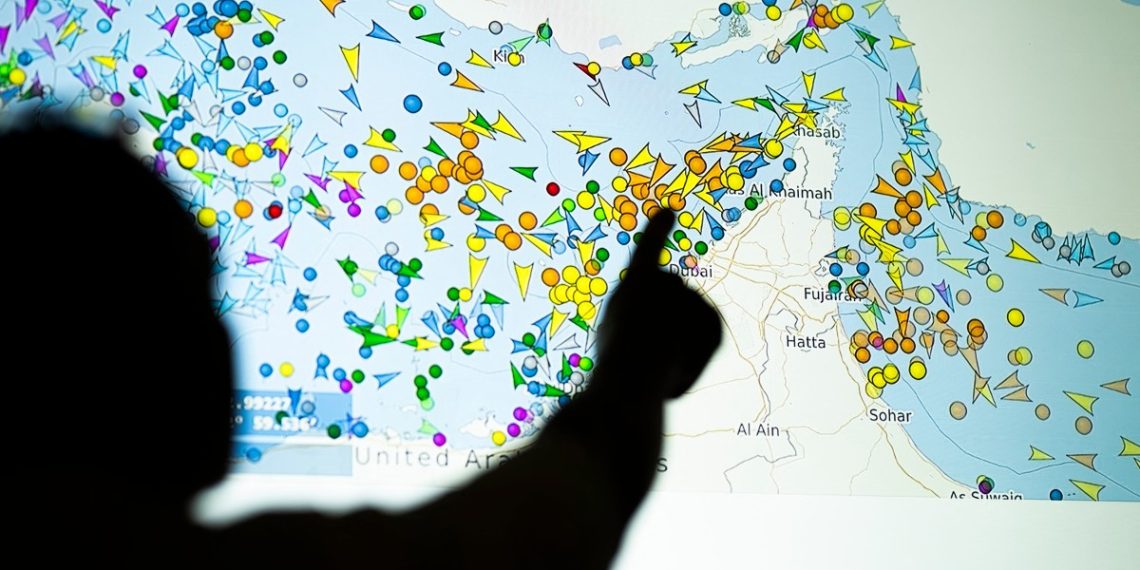
In all likelihood, in the recent war on Iran, US President Donald Trump, when he began his first strike by killing Iranian Supreme Leader Ali Khamenei, assumed that the “Maduro scenario” was applicable to Iran, and that killing Khamenei would do to the Iranian regime what the arrest of the Venezuelan president did – leading the decapitation of the head to the surrender of the body of the regime. This did not happen in Tehran, even though the first days of the war, with the killing of Khamenei, led to the killing of the first and second tiers of the Iranian leadership. The truth is that the forty days of war, and the three weeks after that of the American naval blockade on Iran, showed that the Iranian system of power is not based on an individual, even if the powers of the “Supreme Leader” exceed those of any individual ruler in modern politics, but rather on a complex network of institutions. Even if Khamenei’s death represented the beginning of the transition from the authority of the “Supreme Leader,” who rules and manages that network, to the authority of the “Revolutionary Guard” management of that network, the latter was certainly not something the Americans expected, nor did they want it, but their action is what led to it from where they did not calculate. Trump entered a war according to a scenario that the war did not follow; rather, its course led the author of the scenario to hit a wall. Anyone observing Trump over the past two months sees him bewildered, searching for an exit after falling into an unexpected hole – a hole that was not only represented by the failure to repeat the Caracas scenario in Tehran, but also by the Iranian regime’s ability during the war to strike Trump’s Achilles’ heel, represented by creating a global economic crisis extending to the American interior through the closure of the Strait of Hormuz, which the US president apparently did not consider possible.
This war can remind one here of what Edward Said presented in his book “Orientalism” in 1978 regarding the fragility of Western knowledge of the East. Not to mention the two experiences of Afghanistan 2001-2020 and Iraq 2003-2026, which provided two images of this cognitive fragility among the Americans, something that can be generalized to all of European-American West, with the astonishing exception represented by the British in their dealings with the East since the 18th century.
Likewise, this war has revealed the fragility of the structure of the NATO alliance between its two wings on the Atlantic shores. The Ukraine war had already revealed the American-European divergence towards Russia in the post-Trump’s return to the White House phase last year, something that did not exist in the era of Joe Biden, who wanted to turn Putin’s invasion of Ukraine in 2022 into something similar to what the Americans did to the Soviets after their invasion of Afghanistan in 1979, which turned into a quagmire in which the Kremlin rulers sank, and that invasion was a primary precursor to the collapse and then disintegration of the Soviet Union. It seems that the isolationist tendency carried by Trump, which is a continuation of a strong tendency among Americans dating back to the Monroe Doctrine of 1823, and because of which there was strong societal American resistance to engaging in the two world wars, is not limited to turning the back of the immigrant society to the old world and its problems and being confined in an isolated cage surrounded by oceans, but rather extends among American isolationists to hostility towards the United Nations, cross-border international agreements, NATO, and external American military interventions.
Also, the fragility of the Gulf Cooperation Council has been exposed through this war. Some manifestations of this fragility rose to the surface during the blockade of Qatar in 2017 by the Riyadh-Abu Dhabi-Manama trio, and then with the clash in Yemen this past month between Saudi Arabia and the UAE. It can be said that the UAE’s withdrawal from OPEC is an expression of a new divergence from Riyadh, and that Abu Dhabi’s accelerated rapprochement with Tel Aviv, New Delhi, and Addis Ababa also comes in the same context, while Saudi Arabia, disappointed by the ineffectiveness of the American umbrella that did not protect it from Iranian strikes, is moving towards a Pakistani nuclear umbrella, and towards forming a quadruple axis with Pakistan, Egypt, and Turkey, the extent of Washington’s satisfaction or dissatisfaction with which is unknown. Meanwhile, Israeli Prime Minister Benjamin Netanyahu, a week before the start of the war, announced drawing his sword against this “Sunni axis,” whose precursors appeared since last September, when Riyadh concluded a mutual defense agreement with Islamabad two weeks after the Israeli raid on the Qatari capital, which is located a few kilometers away from the headquarters of the US Central Command (CENTCOM) at Al Udeid Air Base southwest of the Qatari capital Doha.
One of the surprising manifestations of this war could be what the leader of the Israeli opposition, Yair Lapid, said in his speech on the ceasefire day of April 8: “Netanyahu’s loss of decision-making independence.” Anyone reading the Israeli newspapers notices the repetition of this statement in recent weeks – that Netanyahu, who was in the same camp as Trump at the start of the war, and was likely the greater instigator of it, had no say in stopping it, and that he has no influence whatsoever on the course of Trump’s negotiations with the Iranians after the ceasefire, nor on their outcome. One can also sense something of a distancing of the new American right, which supported Trump in the 2024 elections, from Israel. This right, especially within the MAGA movement, is hostile to American wars abroad, and some of it has begun to express its convictions about Netanyahu having involved Trump in this war, not to mention similar opinions found among leftists of the American Democratic Party.
Here, some manifestations may cause bewilderment, including China’s weak behavior during the course of this war, even though many see the American main objective as controlling energy sources (oil and gas) and maritime energy corridors in the Middle East, in order to strangle China and control the key to the flow of Middle Eastern energy pipelines (and their land corridors, including through Syria) to Europe, which has declared weaning itself off Russian energy after the Ukrainian war. China is the country that imports half of its oil needs (16 million barrels consumed daily, 11 million of which are imported, according to 2024 figures) from the Middle East, and most of its oil imports pass through the Strait of Hormuz. Here, one can note Russian opportunism in seeking to play the role of broker to persuade Iran to hand over its stock of uranium enriched to 60 percent to Russia, which embarrasses Iran, which does not want that or demurs showing its acceptance of it at the beginning of negotiations, while the Russians have their eyes on Ukraine to extract concessions from Trump there in exchange for assisting services in taming Iran.
In conclusion: whether the war of February 28, and its ceasefire of April 8, ends in an American-Iranian agreement, or renews anew, this war is one of the wars that gives features to the upcoming painting of international relations, and features to the upcoming painting of the entire Middle East region and the Indian subcontinent region. Few are the wars that are as revealing to this extent that this war has revealed.