


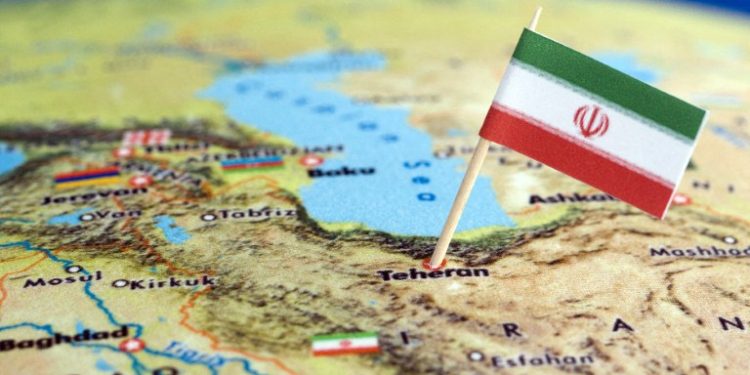
The Achaemenid Empire (550–330 BC) in Persia (Iran since 1935) was the fourth instance of state formation in the region extending between present-day Pakistan and Egypt with a tendency toward regional dominance. This followed the Akkadian Empire (2334–2154 BC) in Mesopotamia, the New Kingdom of Egypt (1550–1069 BC), and the Hittite Empire (1400–1180 BC) in the Anatolia region.
Prior to the Achaemenid Empire, the Median Kingdom emerged in the seventh and eighth centuries BC in northwestern present-day Iran and eastern Mesopotamia. However, it did not attempt regional expansion; its clash with the Assyrians in Mesopotamia was the sole factor in turning the Medes westward, but only for the purpose of destroying the Assyrian state (616–609 BC). After the establishment of the Achaemenid Empire, the Medes were integrated into it.
The collapse of states with an imperial character and regional extension in Persia, caused by external defeats, was followed by a tendency—varying in duration—toward the re-establishment of a Persian imperial state. This was seen after the collapse of the Achaemenid Empire at the hands of Alexander the Great (330 BC) in the Parthian Empire (247 BC – 224 AD), which extended from present-day Afghanistan to the Euphrates River, and then the Sassanid Empire (224–651 AD), which expanded westward to the eastern Mediterranean (in conflict with the Byzantines), and into the Gulf, Yemen, parts of India, and even Armenia in the north. This was seen again in the Safavid state in 1501, which was the first time the imperial state status was restored to the Persian region with a specific ideology—Twelver Shia Islam—eight and a half centuries after the collapse of the Sassanid Empire before the Rashidun Caliphate (632–661 AD). This is notwithstanding the strong Persian role observed during the interim period between the Sassanids and the Safavids in the Abbasid movement that overthrew the Umayyad state in 750 AD, followed by the emergence of autonomous states with nominal loyalty to the Abbasid Caliph in Baghdad, such as the Tahirid state in the Khorasan region (821–873 AD), the Saffarid state in the Sistan region (861–1003 AD), and the Samanid state in central Iran (819–1005 AD), which was characterized by the revival of Persian language and culture. This occurred before the Buyids appeared in the Daylam region in 934 AD, extending their control to Baghdad in 945 AD, until the Seljuk Turks arrived from Central Asia, seizing control of Persia in the eleventh century before taking Baghdad in 1055 AD and expanding into the Anatolia region after defeating the Byzantines at the Battle of Manzikert in 1071 AD.
This restoration of an imperial state with the will and ambition for regional expansion did not occur in the Hijaz after the Rashidun state moved from the Hijaz during the time of Ali ibn Abi Talib to Iraq in 656 AD, where he made Kufa his capital. Nor did it happen in the Levant after the collapse of the Umayyad state (661–750 AD), which was the only imperial state for the Levant region throughout its history, while outside the Umayyad era, it remained an area for the influence and conflict of others. This also did not happen in Mesopotamia after the collapse of the Abbasid state in 1258 AD at the hands of the Mongols, the Abbasids having entered a phase of weakness since the assassination of Al-Mutawakkil in 847 AD. Meanwhile, we see Egypt—after the collapse of the Ptolemaic state before the Romans at the Battle of Actium in 31 BC and the subsequent control over the Nile Valley by the Byzantines, then the Rashidun, then the Umayyads and the Abbasids after them—becoming the center of a state with a regional expansionist character: the Fatimid state, which came from the Maghreb and seized Egypt in 968 AD, then extended its control to the Levant and the Hijaz. This was repeated with the Mamluks (1260–1517), with Muhammad Ali Pasha in the nineteenth century, and then with Gamal Abdel Nasser in the twentieth century. In Anatolia, this restoration of a state with regional extension occurred for the first time after the Hittites with the Byzantine Empire, through the founder Emperor Constantine (306–337 AD), until the Ottomans seized Constantinople in 1453 AD. The Ottomans then made the capital, Astana (Istanbul)—which replaced Constantinople—the center of a state with imperial extension.
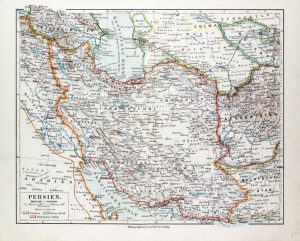
The Safavid state (1501–1736) was a political rival to the Ottoman Empire in the region, contesting it over Mesopotamia, eastern Anatolia, and Azerbaijan. It was a state not limited to westward expansion, as it extended eastward to present-day Afghanistan and to the Caucasus region in the north toward Armenia and Georgia, and to the eastern shore of the Caspian Sea at the present-day Republic of Turkmenistan. We then saw this imperial tendency in Nader Shah (1736–1747), founder of the Afsharid dynasty, who expanded toward India as far as Delhi. Persia only entered a state of weakness with the Qajar dynasty (1796–1925), which became an arena for the struggle for influence between the Russians, expanding southward, and the British, present in India. Persia subsequently regained its strength with the Pahlavi state under Reza Pahlavi (1925–1941) and his son Mohammad (1941–1979), then Khomeini (1979–1989), and after him Ali Khamenei (1989–2026), who extended regional influence to Iraq, Syria, Lebanon, Palestine, Yemen, and Afghanistan, making Iran a “regional superpower.”
Khamenei’s case was a blend of political power and a moral force—the Twelver Shia ideology based on the principle of “Wilayat al-Faqih”—which allowed Khamenei to expand beyond borders, not only through Iran’s economic and military power but primarily through “loyal believers” outside Iranian borders. Additionally, the withdrawal of Arab regimes from the Arab-Israeli conflict allowed Iran to become a primary player in the Palestinian cause, which since 1948 has been the main driver of the geopolitics of the Middle East and even the internal affairs of many countries in the region.
This condition seen in Khamenei (and Khomeini before him) was only found in Gamal Abdel Nasser and, to a lesser extent, the Safavids. At the height of his regional power, when he was dubbed the “Gendarme of the Gulf,” the Iranian Shah Mohammad Reza Pahlavi did not possess political power beyond military and economic strength. The case of Muhammad Ali Pasha was similar to that of the Shah of Iran; therefore, both of their political powers collapsed quickly—the former after his defeat in the war of 1840 against the British, and the Shah when his regime collapsed before an internal revolution led by Khomeini.