

A largely accurate historical maxim, according to the logic of history, is that political movements calculate their actions based on the strength of society and its capacity to endure revolutionary setbacks that lead to prolonged social disasters. In an environment like the Middle East, where claims and signs of genocide loom everywhere, involving both majorities and minorities, political error is extremely costly in the absence of an international system that can prevent genocide. Instead, geopolitical deals often include countless exterminations on the margin, especially given the decline of humanitarian principles in international relations—which were always suspect.
Kurdish analysis, socially speaking, is often severely weak in reading recent history. After World War I, international powers competed over four main societies in the geography now known as the “Republic of Turkey”: the Kurds, Turks, Armenians, and Rums (Greeks), in addition to the secondary Assyrian-Syriac community in the calculations of international powers. A review of documents, events, and narratives suggests—and this requires a different type of research excavation—that the political programs proposed by the most violent representatives of these four societies exceeded the capacity and readiness of these communities to endure them, or even to adopt such programs in the event of defeat. Social reluctance to support the nationalist ambitions of their political movements was one of the most important ways these four societies survived.
In any case, Kurdistan, Armenia, Anatolia, Aegean, and Cilicia were filled with international armies on the eve of the Paris Peace Conference in 1919. Local armies retreated into the interior of Anatolia and Kurdistan, in a chaos that forced everyone to carry two inseparable titles: victim and war criminal.
Kurdish studies concerning the era of the Great War (1914–1922) often touch upon the nationalist movement aspects, such as the missions of General Sharif Pasha, Sayyid Abdul Qadir Nehri, the Bedirkhan family, King Mahmoud Hafid, and other Kurdish leaders. When analyzing the positions of Kurdish politicians, such as Sayyid Abdul Qadir’s stance on Kurdish independence, and how at one point he favored the Ottoman Union (i.e., remaining within the Ottoman state while demanding political decentralization for Kurdistan), it is commonly presented as “short-sightedness” against the calls for complete independence raised by some exiled Kurdish politicians. In all cases, it would have been academically fitting to try and investigate the Kurdish society’s capacity to bear the responsibility of these projects, given the lack of any deterrent against genocide, especially since the Armenian Genocide had occurred only a few years prior.
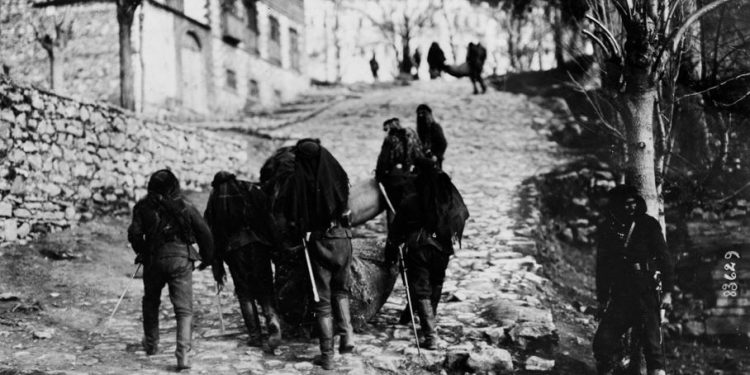
While reviewing issues of the Kurdish magazine “Jîn” (Life), published between 1918–1919, we found articles discussing realities rarely considered when analyzing this period: the general famine that only the military forces could withstand.
Imperial Russia occupied the province of Van in 1916, including the town of Elbak, known as “Başqale” in military and official documents. The Russian advance into Kurdish and Armenian territories until the end of 1917 was accompanied by a compounded famine that destroyed the segments of society that had survived the war among both Kurds and Armenians.
The map of the military front in 1917 shows the failure of all Ottoman counterattacks. The war drained both Kurdish and Armenian societies on the front lines, as military campaigns were self-funded from the resources of peasants and their villages on both sides. Kurdistan had expanded and encompassed all of Western Armenia according to the control map after the Kurdish people were nearly annihilated in the eastern Ottoman state. Conversely, the Turkish presence faced a greater existential challenge in Western Anatolia against the Greek advance.
The British officer, Major E. W. Charles Noel, who was touring Kurdistan after the war in 1919, counted the number of inhabited villages in an area that was densely populated before the war and found only seven villages were inhabited out of 180 before the war. (Hawkar Tahir Tawfiq – The Kurds and the Armenian Question – p. 540). During the war years, Kor Hussein Pasha, chief of the Haydaran tribe, was forced to lead 12,000 of his tribesmen across to Iran to protect the remaining members of his flock from the Russian invasion.
It wasn’t the Ottoman counterattacks, nor the Kurdish popular resistance, that altered the situation and removed the existential threat. Rather, it was the Bolshevik Revolution in October 1917 in Russia that saved both the Kurds and the Turks, acting as a “Night of Destiny” for the two peoples, and a hell for the Armenians. The Russian army advancing up to Bitlis disintegrated, Russia withdrew from the war, and some Russian generals formed Armenian and Georgian forces to defend the areas the Russians had left. The Ottoman forces regained the initiative and restored control over all the Russian army’s gains on the Caucasus front.
The conscription of men from rural areas, ordered by Enver Pasha, led to the “ruining of the plentiful 1914 harvest, creating an appalling situation. For years throughout the war, the conscription of men, draft, and riding animals caused a protracted famine.” (David Fromkin – A Peace to End All Peace: The Fall of the Ottoman Empire – p. 119). By the end of World War I in 1918, the famine and massacres had claimed most of the population in Kurdistan and Armenia. Three major armies had entered Kurdistan: Imperial Russia, Britain, and Turkey. The Russians, during their short incursion into Rawanduz and Khanaqin in Southern Kurdistan, left behind massive devastation that made the majority of the population, across all strata, dream once again of Turkish control.
In November 1918, a census showed that the population of Sulaymaniyah had dropped from 20,000 before the war to 2,500 after the war (David McDowall – A Modern History of the Kurds – pp. 186, 187). Corpses were collected in the market every morning, and in some cases, people were eating the bodies of their dead children. Only ten houses remained in Nehri, the town of the Naqshbandi sheikhs, out of 250. In Rawanduz, 60 houses remained out of 2,000. Only three villages out of 100 villages belonging to the “Balik” tribe were not razed to the ground. Out of nearly a thousand families of the Baradost clans at the start of the war, only 157 families survived.
Despite the human suffering and displacement, Talat Pasha, the Grand Vizier and Minister of the Interior, did not stop his project of manipulating the demographic composition of the state even while it was at war. He went so far as to disperse tens of thousands of displaced people fleeing the Russian attack on the eastern Ottoman Empire.
At the Committee of Union and Progress congress in 1917, an agreement was signed for the resettlement of tribes. The “Directorate for Tribal Settlement” ordered the deportation of tribal men from Diyarbakir to central Anatolia via Urfa, where they were forced to work in the agricultural sector. These individuals constituted 5 to 10% of the total population. Deported refugees who had migrated from the Russian occupation to Diyarbakir were also required to work in agriculture. Orders mandated that these deportees be given animals and plowing tools to settle and work immediately in farming. Due to shortages in Diyarbakir, the Settlement Directorate ordered the cultivation of potatoes in Elazığ (Mamuret-ul-Aziz) to be imported from there. Nevertheless, policies of national assimilation were the main driving force behind the deportations. (Uğur Ümit Üngör – The Making of Modern Turkey – p. 219)
When initiating the deportations, Talat Pasha personally paid attention to the efficiency of the Turkification project. In January 1916, he requested specific information about the Kurds living in over ten provinces. “How many Kurdish villages are there, and their locations? Who are their inhabitants? Do they maintain their mother tongue and original culture? What is the nature of their relationship with Turkish villagers?” In April, he inquired again, this time asking how and where the convoys were being deported, and whether the Kurdish deportees had started speaking Turkish. These examples of correspondence indicate the nature of the deportation operations: they were a large-scale assault on Kurdish culture and language, and the elements that could define Kurds as a nation. (Uğur Ümit Üngör – The Making of Modern Turkey – p. 219)
In these terrifying, Armageddon-like circumstances, the daily death toll in communities was not a matter that drew attention, even after the war ended. Most research on the war neglects the condition of the population and the common people among them, even after the common people became the social army of modern nationalisms. It was notable that one Kurdish magazine addressed the conditions of this group of Kurds through two prominent writers, Memduh Selim Beg Wanli and Kamal Fawzi.
The Kurdish intellectual Memduh Selim Beg Wanli wrote a number of articles in the magazine “Jîn,” which was published in 1919 in conjunction with the founding of the “Kurdish League for the Elevation of Kurdistan.”
The writer Nawaf Abdullah published an article about the personality of Memduh Selim Beg in Hiwar magazine, in the context of reading the novel The Shadow of Love by the Kurdish novelist Mohammed Uzun. Uzun transformed Memduh Selim’s life into an epic of love and war, crafting the story of Memduh’s love for a Circassian girl in Antakya—a love that overturned Memduh Selim Beg’s life when he received an order from the Khoybun Association (leading Kurdish nationalist endeavors) to join the revolution in the Ağrı mountains and place himself under the command of General Ihsan Nuri Pasha, the leader of the Kurdish revolution against the Republic during the years 1926–1930. He lived his life—on the emotional side—in sorrow until his death in Damascus in 1976.
The late Kurdish intellectual Amin Bozarslan collected the issues of the magazine “Jîn – Life” and successfully smuggled them abroad, where he lived in exile and provided a great service to the Kurdish nation by preserving a part of their archival struggle, as the Kurdish leaders were scattered and their financial situations deteriorated as the 20th century wore on. In issues 19, 22, and 24, Memduh Selim Beg writes appeals that seem directed to the wealthy Kurdish class to intervene and rescue their displaced people. The Kurdish poet and intellectual from Bitlis, Kamal Fawzi, also joins Memduh Selim Beg in this criticism of the Kurdish leaders. It is likely that neither of them knew the actual condition of these Kurds who people thought were wealthy, and they never disclosed during their lives that they had become poor and no longer possessed those imagined fortunes. In any case, research into the financial status of the Kurdish elite requires detail, as their conditions were what reflected the extent of Kurdish nationalist activity. At that stage, the matter depended on the pockets of these Aghas, Sheikhs, and the few intellectuals in the academic sense. It is known that Sheikh Said Piran sold the yield of two consecutive years of sheep in Aleppo and collected his debts from merchants before the Kurds declared their revolution in 1925.
What Memduh Selim wrote helps us expand the demand for studying the social conditions of the Kurdish population in general before “burning consciousness” by jumping to conclusions that hold a national figure like Hasan Khairy responsible for the collapse of the Kurdish state project on the eve of the Treaty of Lausanne, July 24, 1923. The conditions of the Kurds were similar to the conditions of the common people in the region generally, from Syria to Lebanon, Iraq, and Anatolia. People did not eat wheat bread for years, except during intermittent periods, throughout the four years of World War I and for two years after the war. According to what the writer-lawyer Alaa Al-Sayyid conveyed from an elderly person who lived through that period in Aleppo, “the poor were collecting barley grains discarded from the dung of soldiers’ mules to make bread from them,” and a German photographer documented aspects of the famine with a number of photos.
In Issue 19, dated May 22, 1919, Memduh Selim Beg wrote under the title “Hawar – The Cry” and issued a distress call regarding the social conditions in Kurdistan on the eve of the War of Independence (1920), writing a text in Turkish in the bilingual magazine (Kurdish-Turkish):
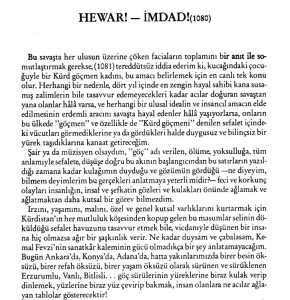
“If the deep grief that swept every nation during this war were to be embodied in a memorial, I would not hesitate to say that the most eloquent expression of this catastrophe would be the image of the Kurdish immigrant woman clasping her child in her arms. If there is still anyone who justifies this war that brought suffering exceeding even the cruelest fantasies of tyrants, and if there is anyone who sees war as a means to achieve any national or human ambition, I assert that they have not seen the misery of those called immigrants, especially the Kurdish immigrants. And if they have seen it, then undoubtedly their hearts have hardened, and their minds have been closed to consciousness and understanding.”
The way Memduh Selim Beg addresses the issue of Kurdish displaced persons from the war suggests a crisis known to everyone; hence, he speaks without detailing or presenting the issue, presuming it is well-known and requires no introduction. However, subsequent research focusing on the political carrier, starting 100 years ago, made the daily suffering of the population a marginal issue. Or perhaps the political leaders and Kurdish chiefs at that time believed that salvation lay in political victory, and they had every right then to consider salvation radically. Ultimately, Kurdish national history has come to be narrated as an “armed tale” where there is no room for the story of Kurdish society. Very little can be found of the daily life of the Kurds during that period.
Therefore, reading these texts today makes their understanding difficult. What are Selim and his friend Kamal Fawzi talking about?! Why are there tens of thousands of Kurds in tents on the outskirts of cities more than a year after the war ended?! This social factor has disappeared from the narratives constructing the story of Kurdish nationalism in the twentieth century, and analysis has become more focused on outside-society factors. The Kurdish historian and politician constructed a historical narrative outside of society, and their criticism is now directed only at the elites and leaders of that time, evaluating their programs in light of what is deemed correct today, without studying the political environment itself when the first Kurdish elites at the beginning of the twentieth century were engaged in policies of national identity and the limits of their intersection with Ottomanism. Little attention has been paid to the calls of Sheikh Said Kurdi (Nursi) before and after World War I regarding what he meant when he told the Kurds that we must consider the conditions of the Kurdish porters (hammalin) in Istanbul. What is the issue of the porters?
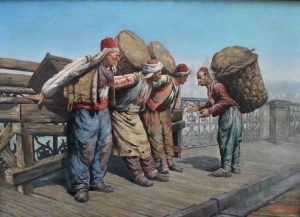
Consequently, the problem with the historical narrative of the Kurdish nationalist movement up to the end of the twentieth century is that it is largely detached from society. Subsequent attempts were made to review the political environment in which Kurdish nationalism was put forth as a political project. For instance, the following question can be posed regarding a problematic incident: Was the advice given by Said Nursi to the envoy of Sheikh Said Piran on the eve of the 1925 revolution disconnected from Nursi’s analysis of society’s capacity to bear the responsibility for such a revolution at that time?
To be continued…