


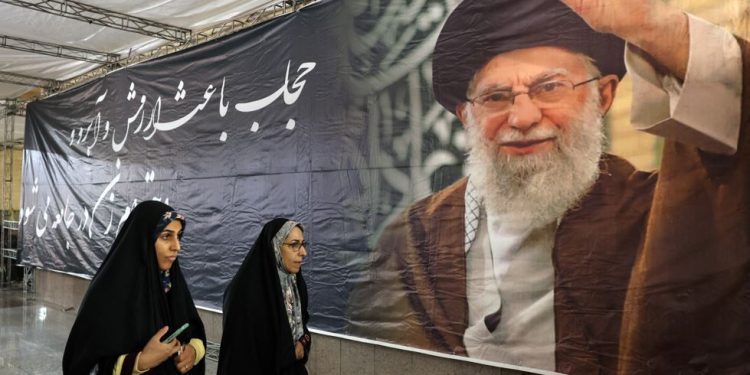
Khomeini’s rise to power in Iran in 1979 was akin to an earthquake in the regional landscape; its aftershocks and tremors have continued to play their part for decades in shaping the regional picture. Many who welcomed the fall of the Shah—including Arabists, Kurdish nationalists, and Marxists—found the expectations they had placed on Khomeini deeply disappointed. We saw this same pattern within Iran itself; the liberal, communist, and nationalist forces among Persians, Kurds, Arabs, and Azeris, along with moderate clerics who allied with him in the revolution against the Shah’s regime, were subsequently decimated by Khomeini.
An Iranian citizen may view the regime through the lens of civil liberties, the economy, or ethnic rights, but a son of the region stretching from Pakistan to the Eastern Mediterranean and the Red Sea cannot look at the Iranian system—built by Khomeini and led by his successor Ali Khamenei since 1989—while overlooking the repercussions of the Iranian earthquake in drawing a new map for the region. This manifested, first, through Iran reaching the status of a regional superpower in the period 2003–2014 by controlling the capitals of Baghdad, Beirut, and Sana’a, and rendering Bashar al-Assad’s regime a subordinate in the period 2013–2024, as well as becoming a major influencer in the Palestinian cause through its alliance with Hamas, which has controlled the Gaza Strip since 2007. Secondly, through its attempt to control Shia parties and movements in the region, the Iranian regime became a major player within countries such as Iraq, Lebanon, Yemen, and Afghanistan, which ignited the fires of Sunni-Shia conflicts across the entire region. Thirdly, through its intervention in the Syrian war between 2013 and 2024 in favor of the Bashar al-Assad regime—via Iranian military advisors and loyalist Shia militias from Lebanon, Iraq, Afghanistan, and Pakistan—it created a state of “Shia-Sunni World War” on Syrian soil, occurring while the Iranians and their allies were in confrontation with Syrian Sunni military opposition organizations reinforced by tens of thousands of foreign fighters who arrived from dozens of countries.
The Iranian regime can be viewed from additional prisms: the Kurdish prism, where the oppression suffered by Iran’s Kurds under the eras of Khomeini and Khamenei exceeded what they witnessed during the Pahlavi monarchy, and where Tehran—through its ruling allies in post-Saddam Hussein Baghdad—was a major obstacle to Iraqi Kurds achieving their national demands. Then there is the Gulf prism, where, without the “Iranian bogeyman,” the birth of the Gulf Cooperation Council in 1981 would not have been possible, nor would the Gulf states’ support for Iraq in its war against Iran (1980–1988); and without the vision of the Houthis as an Iranian extension, Saudi Arabia would not have begun its war in Yemen six months after Sana’a fell to them in September 2014. Thirdly, one can contemplate how a political, and even intellectual-political, trend emerged among some Arabs—especially in Abu Dhabi and Riyadh—under the influence of the Obama-Khamenei agreement regarding the Iranian nuclear file in 2015. This agreement was opposed by both capitals, who met in that opposition with Tel Aviv, forming a trend built on the basis of an “alliance of those harmed” by that deal, which they saw as granting Khamenei an American “blind eye” toward Iranian expansion in the region in exchange for limits on Iran’s nuclear capabilities. It must be remembered here that the “Abraham Accords” concluded by the UAE and Bahrain with Israel in 2020 enjoyed tacit Saudi approval, and that Riyadh was on the verge of normalization with Tel Aviv in the months preceding the October 7, 2023 operation—which many, including Washington, saw as having the sabotage of Saudi-Israeli normalization as one of its goals for Hamas and its backer, Iran.
The Iranian regime can also be viewed as the starting signal for the wave of political Islam across the entire region, stretching from Islamabad to Rabat and from Istanbul to Aden. This appeared in the form of Sunni and Shia Islamic fundamentalism in the period 1979–2013, then in the form of Salafi-Jihadism since 2014. As for the convergences of Khomeinism with the Muslim Brotherhood—which have intellectual-political roots—they were not only translated in Palestine with Hamas, but can also be traced in Iraq through the relationship of the Dawa Party with the Iraqi Islamic Party, and in Lebanon through Hezbollah’s relationship with the Islamic Group there.
All these perspectives lead us to see that the Khomeini-Khamenei regime is not a normal regime like those the region is accustomed to; rather, it is a regime with a “project,” similar to the regimes of Muhammad Ali Pasha in nineteenth-century Egypt and the regime of Gamal Abdel Nasser. These three regimes possessed a cross-border nature and independent decision-making, and when they allied with major international powers, they sought to strengthen themselves through the cracks of international contradictions—as Muhammad Ali Pasha did with France against Britain, or Nasser with the Americans against the British between 1952 and 1955, and then with the Soviets until his death in 1970. Khomeini, during the revolution, hinted to the Americans that he was a possible ally against the Kremlin, whose allies had expanded in Ethiopia in 1977, South Yemen in 1978, and Afghanistan in 1978; otherwise, Washington would not have allowed Paris to become Khomeini’s command center for the Iranian Revolution. Khamenei was in an explicit alliance with the Americans during the wars in Afghanistan (2001) and Iraq (2003), as the Americans believed that the Kabul-Tehran-Baghdad corridor was the wall preventing China from expanding toward the Middle East and Europe.
In truth, Donald Trump was the first American to discover the cost of the “American marriage with Iran” contracted by George W. Bush in Baghdad and then by Barack Obama through the nuclear deal; therefore, in 2018, he withdrew the American signature from the agreement. Joe Biden attempted to revive this through negotiations with the Iranians held in Vienna in 2021 and 2022, before Biden discovered Iran’s alliance with Russia in the Ukraine war and sensed the Iranian fingerprints in the October 7, 2023 operation.
It is likely that the American-Iranian divorce began in Kyiv and was completed in Gaza. The striking of Iran’s arms in Gaza and Lebanon, followed by the 12-day war in June 2025 on Iran, are consequences of this divorce. Trump suggests, through his dealings with Khamenei in 2026, that he wants to end and liquidate the Iranian project in the region, confine the Iranian regime internally, and leave this regime to ferment and secrete “appropriate” trends after downsizing it and cornering it in a narrow internal angle—either after forcing it into major concessions in negotiations conducted to the rhythm of American aircraft carriers, or after it receives a crushing military blow.