


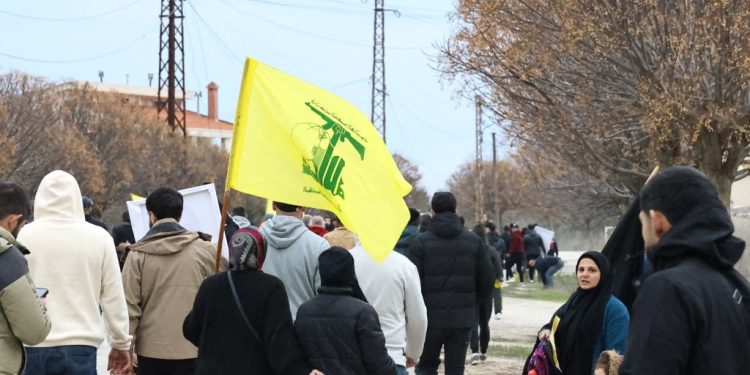
With the accelerating collapse of Iranian influence, Turkey emerges as a central player carrying a vision completely different from that which prevailed over the past two decades. What is happening in relations between Turkey and Hezbollah is not merely a change in the list of allies, but a redefinition of the nature of the conflict itself.
Turkey does not seek to inherit Iran’s role as the patron of the “Axis of Resistance.” Rather, it proposes a different alternative: from “resistance by proxy” to the “central state” with a regional horizon, from the “Shiite Crescent” to the “Sunni (Ottoman) Crescent,” and from the “language of rockets” to the “language of treaties and institutional deterrence.”
This shift in the region places Hezbollah in an existential dilemma: either integrate into a Turkish project that would dissolve its identity, or risk complete isolation at a moment when it feels threatened by the loss of its Iranian backer. More dangerously, this dilemma is taking shape under the mercy of a Turkish “containment” that appears diplomatic on the surface but is strategic in depth.
First: Facts Speak for Themselves: The Seeds of the Scenario on the Ground
Talk of Turkish communication with Hezbollah is no longer just intelligence speculation or theoretical analyses. Indicators have accumulated over months to reveal a new scene taking shape before our eyes:
* Linking Rivals: Today, Ankara sits at the center of the Lebanese-Syrian web of relations as a powerful mediator. It negotiates with Hezbollah on one side, while coordinating with the new Syrian government in Damascus—the party’s historic adversary—on the other. This position grants Turkey the role of a true “game-maker”: it alone can open or close channels, facilitate or block the flow of weapons, guarantee the safety of fighters or hand them over.
* Diplomatic Warning: When Turkish Foreign Minister Hakan Fidan warned of a potential “new genocide” in Lebanon under the pretext of combating Hezbollah, he was not defending the party as a political entity. Rather, he was signaling—in diplomatic and security language—that Turkey sees itself as the new “protector” of Lebanon, and that Israeli actions there threaten its expanding influence. The distinction is subtle but decisive: the protection does not extend to Hezbollah as a militia, but to the Lebanese state as a whole. In this sense, Turkey distances itself from Hezbollah’s military legacy while positioning itself as the guardian of Lebanon’s territorial and political framework.
* Proposed Defense Treaty: Reinforcing this trajectory, the pro-government Turkish newspaper Daily Sabah published, in January 2026, a detailed analysis calling for a joint defense agreement between Ankara and Beirut. The proposal was not merely an opinion piece, but a signal of a broader strategic direction: Turkey is preparing to fill the security vacuum that could emerge from Hezbollah’s decline.
Second: What Does Turkey Want?
Turkish initiatives intersect within the context of deep strategic objectives, going beyond daily tactical gains to reshape the entire regional system:
* Objective One: Transfer of Influence from Iran to Turkey
Decision-makers in Ankara realize that Hezbollah is not merely a militia that can be uprooted by military force, but a structure deeply rooted socially, politically, and militarily in Lebanese soil. Any direct confrontation with the party would lead to a long war of attrition that does not serve the Turkish project. Therefore, Turkey seeks a “smooth” transfer of power or influence, from Iran’s hand without firing a single shot, and placing it in its pocket as bargaining chips in the face of Israel.
* Objective Two: A Strategic Pressure Card on Israel
Turkey faces deep pressures in Syria due to Israeli strategies. These pressures make Ankara feel besieged in a complex Syrian arena. This is where Lebanon comes in as an ideal card for counter-pressure. Any Israeli escalation against Lebanon could be portrayed by Turkey as “aggression against the nation” and a threat to vital interests warranting a response. Not for Lebanon’s sake per se, but to balance Israeli pressures in Syria. The essential difference from Hezbollah’s previous phase lies in the nature of pressure: while the party exerted it through rockets and non-institutional military operations, Turkey will use regular military presence, international diplomacy, the possibility of closing airspace, and mobilizing regional allies.
This pressure is far more bothersome for Israel than militia pressure, because it places Tel Aviv in confrontation with a sovereign state, not an armed organization, thereby limiting military response options and imposing complex international calculations.
* Objective Three: Investing in Iranian Weakness
Iran today is undergoing an unprecedented existential crisis following US-Israeli strikes in February and March 2026. This accelerating collapse has left Hezbollah as a “weapon without a master,” or with a master incapable of protection and funding. Into this vacuum, Turkey presents itself as the “natural alternative”:
* Protection: Unconventional political and military deterrence based on physical presence and treaties rather than secret coordination.
* Funding: An open economy and international trade relations instead of a besieged economy and sanctions.
* Legitimacy: A network of relations with Saudi Arabia, Qatar, Egypt, and Pakistan that restores to Hezbollah – or what remains of it – an Arab legitimacy lost due to Iranian intervention.
The price Turkey demands is clear: surrendering heavy weapons to the state, accepting Hezbollah as a purely Lebanese political entity, not an Iranian regional arm, and refraining from any movement in Syria that hinders the Turkish project there.
* Objective Four: Engineering a New Regional Balance
This is the deepest and most dangerous goal. Turkey does not only want to “annoy” Israel or fill an Iranian vacuum, but seeks to completely redraw the map of power in the Middle East.
Before 2024, the regional balance was based on a duality: The “Axis of Resistance” (Iran-Hezbollah-Hamas) facing the “Axis of Moderation” (Saudi Arabia-UAE-Egypt) and Israel. The confrontation was sectarian (Shiite vs. Sunni) and military (militias vs. regular armies).
The Turkish scenario for the post-2026 era proposes a different alternative: Turkey as a “spearhead” Sunni alternative to Iran. Characteristics of this model:
- Confrontation based on the state and system, not on militias and proxies.
- Mobilizing the Sunni world (or a large segment of it) behind Turkish leadership, instead of the Shiite sectarian axis.
- Using legal, diplomatic, and economic levers alongside security and military ones within possible limits.
In this context, Hezbollah is used as a “bridge” from the Iranian model to the Turkish model, not as an end in itself. It is merely a transitional tool that can be surpassed once the transformation is complete.
Third: How Does Israel Read the Scene? Four Strategic Convictions
In Tel Aviv, analysts and strategists follow these transformations with growing concern, and Israeli decision-making circles have formulated four main convictions governing the reaction:
* “Turkey is the New Iran”
The formulation of thinker Bernard Lewis echoes in Israeli security corridors: “Iran will become Turkey, and Turkey will become Iran.” Meaning that Iran, which was moving towards moderation before its collapse, leaves the scene for Turkey moving towards Islamic and nationalist extremism.
Israel looks at Turkey today as an existential threat replacing the Iranian threat, and even more dangerous in some aspects. The organized Turkish state, a NATO member – despite strained relations – represents a more complex challenge than the isolated Islamic Republic.
* “Syria is the Arena, Lebanon is the Target”
Israel realizes that the rising Turkish presence in Syria is not the final goal, but a prelude to expansion towards Lebanon. The five points occupied by Israel in southern Lebanon represent a crucial “strategic depth” for its presence on Syrian Mount Hermon. Any Turkish military or security presence in Lebanon will simultaneously deepen Turkish influence in Syria and pressure Israel to withdraw from both areas together. Therefore, Tel Aviv considers Lebanon a red line that Ankara must not reach.
* “Dismantle Before Enabling”
Based on this reading, Israel follows a proactive, aggressive preventive strategy based on a simple principle: striking everything Turkey could use as a bargaining chip or launching pad. This could translate into: Bombing infrastructure in Lebanon that might host Turkish forces in the future. Continuous pressure on pro-Israel Lebanese political elites to act as a “barrier” against Turkish influence, not tools in its hand. Supporting local forces opposed to Turkish expansion inside Lebanon.
* “The 1919 Moment” – Race for the Vacuum
Israeli analysts compare the current phase to “the 1919 moment,” when the Ottoman Empire collapsed after World War I, and the British and French rushed to divide the region according to the Sykes-Picot agreement. Today, with the collapse of the Persian Iranian Empire, there is a frenzied race between Turkey (the New Ottoman) and Israel to fill the vacuum. The warning echoes in the corridors of the security establishment: “If we do not act now, the 1919 moment will turn into a 1939 moment” – i.e., a comprehensive regional war that cannot be avoided.
Fourth: Temporary Relations or Marriage of Convenience? The Nature of Turkish-Lebanese Relations
The functional relationship between Turkey and Hezbollah is governed by strict conditions defining its form and limits:
* Nature of the Alliance: “Enemy of my Enemy” not “Friend of my Friend”
The only common denominator is Israel. However, the goals fundamentally diverge: Turkey seeks regional hegemony and expansion of its influence as a major regional power, while Hezbollah – theoretically – seeks the continuation of resistance against Israel and the preservation of its existence. The two goals are different, but intersect in the short and medium term.
* Form of Relations: “Containment” not “Integration”
Turkey will not send soldiers to fight alongside Hezbollah against Israel. However, it might provide diplomatic cover for Hezbollah (in its new form and relations) in international forums, to prevent its complete isolation. It would use its influence to prevent the issuance of decisive international resolutions against the party. It might allow – with high secrecy and complete official denial – the passage of limited funds or weapons to the party, as a guarantee to continue dialogue.
* Limits of the Alliance: “Breakable” at Any Moment
This “alliance” is not a sacred marriage, but a temporary marriage of convenience linked to objective conditions: On Turkey’s part, if it feels that Hezbollah hinders its project in Syria, or becomes a strategic burden at high cost, it will turn the tables on it immediately without hesitation. On the party’s part, if its leaders feel that Turkey is using them as a card in its conflict with Israel at their expense, or seeks to hand them over as a “sacrifice” to international legitimacy, they will withdraw from the relationship immediately, and may even turn into violent adversaries.
Fifth: Where Are Things Heading? The Likely Scenario (2026-2028)
Based on the preceding analysis, a likely trajectory for developments over the coming years can be mapped:
* Phase One: Containment and Mediation
Turkey continues playing the role of mediator between Hezbollah and the new Syrian government, and between the party and Lebanese Sunni powers. In this phase, Ankara offers implicit and undeclared “guarantees” to Hezbollah regarding its existence in Lebanon, in exchange for field settlements where the party’s influence gradually retreats in favor of the Lebanese state.
* Phase Two: Gradual Deployment
With the entrenchment of communication, a security “Memorandum of Understanding” might be signed between Turkey and Lebanon, not a full defense treaty, but a first step towards a security-military “alliance.” Sending Turkish military advisors to Lebanon, under the cover of “training the Lebanese army” and “developing its capabilities.” Establishing a joint Turkish-Lebanese operations room to monitor the southern border, as an entry point for a semi-permanent military presence.
* Phase Three: Potential Confrontation
This is the furthest and most dangerous scenario. If Turkey feels its presence in Lebanon has become strong enough, and that Israel continues to contain or pressure Turkey in Syria, it might move to more direct confrontation, which could include: Publicly demanding Israel’s withdrawal from occupied Lebanese and Syrian territories. Deploying advanced Turkish air defense systems in Lebanon (low probability). Raising the level of support for “Hezbollah” or other militias with money and weapons, as a clear deterrent message. Linking the Lebanese file to Gaza and Palestine files, presenting itself as the “sponsor” of a comprehensive solution in the region.
However, this scenario is contingent on difficult conditions: A complete US withdrawal from the region (unlikely currently), full Arab-Turkish consensus (possible, especially with Saudi Arabia), and Israeli security or political retreat (unexpected in the near future).
Conclusion: Substitution, Not Inheritance
We arrive here at the essential point in this analysis: What Turkey is doing in Lebanon is not “inheriting” the anti-Israel role from Iran, but a complete “substitution” of the Iranian model with a different Turkish model in essence.
Iran relied on militias and military jihadism against Israel. Turkey relies on the state, the regular army, diplomacy, economics, and broad regional partnerships with Saudi Arabia, Qatar, and Egypt. And of course, jihadist militias when necessary.
Hezbollah in this new model is not a “strategic ally,” but an obstacle to be overcome if it refuses submission, or a tool to be temporarily used if it accepts Turkish conditions. Its fate is linked to its ability to transition to the Turkish umbrella.
As for Israel, the real danger is not that Hezbollah gets support from Turkey, but that the Lebanese state itself comes under Ankara’s influence. This is what makes the coming conflict completely different from anything before: not “Israel vs. a militia” in an asymmetric guerrilla war, but Israel against a strong, organized, Sunni Islamic central state with wide influence in two countries (Syria and Lebanon) on its northern borders.
The strategic question facing Tel Aviv today – for which there is no clear answer – is: Is it better for Israel to deal with a weak, exhausted, chaotic “Lebanon of Hezbollah,” or with “Lebanon of Turkey,” organized, directed, and regionally supported?
The irony is that Israel might, at some point, find itself longing for the days of militia “resistance,” when it knew its enemy and its limits, and discover that confronting the “Ottoman jihadist crescent” is far more difficult than confronting a rebel militia. This is the core of the strategic dilemma that will govern the coming years in the Middle East.