

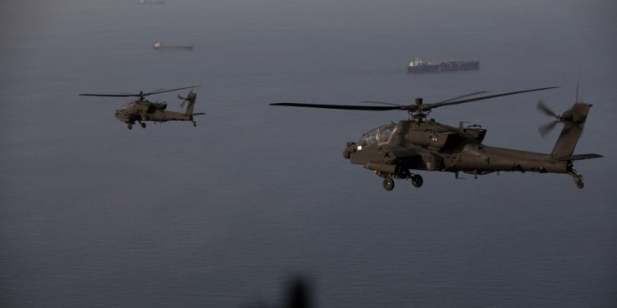
Trump has categorically ruled out, since the beginning of the war on Iran—both before and after the twelve-day and subsequent forty-day rounds—resorting to the option of a land war. The former President George W. Bush has long occupied a prominent position on the list of presidents detested by Trump for plunging tens of thousands of American armed forces into the furnace of a war whose human losses overflowed with thousands of dead and wounded. The model of regime-change wars via boots on the ground represented one of Trump’s terrifying nightmares; he kept his eyes firmly fixed on controlling the casualty count among his forces and the domestic accountability it might invoke for a man who promised Americans to withdraw from Afghanistan and the Middle East, only to find himself forced to return to them.
Trump struggled to apply the same model to Khamenei’s Iran that he had previously reserved for Maduro in Venezuela. Moreover, he attempted to learn from Putin’s lesson in Ukraine, when Russian soldiers carried ceremonial parade uniforms among their gear, as the Kremlin believed the war would not last more than a week and that a victory celebration in Kyiv was imminent. Instead, the “blitz” war has entered its fifth year with no indicators of an approaching end.
Between the images of Bush Jr. and Putin and their prolonged wars, and the operation to overthrow Maduro—which resembled the assassination of the Iranian Supreme Leader—the Trump administration is wading through “disastrous” negotiations. To these, Iran is adding new demands as the military stalemate and opportunities for a decisive breakthrough persist. The matter is no longer confined to the Iranian nuclear program or the fate of enriched uranium, nor is the reopening of the Strait of Hormuz the sole American demand. Tehran has added to its list of demands the cessation of Israeli military operations targeting the leadership, fighters, and weaponry of “Hezbollah.” This additional demand has revived the principle of the “unity of the arenas,” after it had been relegated to the status of discarded slogans.
Trump realizes that Pakistani mediation between him and Tehran is not working properly, much like his own mediation earmarked for the Ukrainians and Russians, wherein he promised to end the war in record time upon winning the presidential election—which, naturally, did not materialize. Furthermore, Israel holds a dissenting viewpoint regarding the negotiations that does not align with the desires of Trump, whom Tel Aviv believes will declare victory over Iran regardless of the outcome of the negotiation or how the results of the war conclude.
From a standpoint that could be termed realistic, the Iranian regime cannot be defeated using a knockout-blow policy. Trump has unwittingly liberated the Iranians from the notion of a centralized “head” of the regime; following the assassination of Khamenei, the Iranians have come to possess countless heads. Perhaps the Iranians’ adaptation to the idea of decentralizing armed action and military decision-making is one of the primary difficulties facing Trump, who has boasted of eliminating hundreds of key Iranian and Islamic Revolutionary Guard Corps (IRGC) leaders. This Iranian adaptation renders the renewal of the war a repetition of futility, because the most crucial part of this adaptation lies in Tehran’s capacity to absorb aerial and missile strikes, and the regime’s remarkable ability to generate new leaders to replace those assassinated by precision aircraft, drones, and missiles. Furthermore, the figures presented by Trump regarding the destruction of Iran’s missile and military capabilities cannot be relied upon—firstly, because the American president pays no heed to the duality of truth and falsehood in his statements, and secondly, because Iran does not accurately disclose the damage inflicted upon its military capabilities.
It appears that the model of a war transcending the ground—that is, a war from the air—cannot alter much on the ground. While such a war carries low costs regarding the fate of American soldiers, it is highly expensive and grants the opposing party the full right to resort to a policy of mutual harm. It seems the Iranians’ discovery of the leverage afforded by controlling the Strait of Hormuz and targeting American interests in the Gulf has granted Tehran the ability to achieve the required objectives. This is particularly significant given that the defining characteristic of American hegemony in the Middle East was its ability to protect its allies—a task rendered untenable by the Iranian strikes. These strikes have prompted more than one Gulf state to network with regional powers to compensate for the lack of American efficacy in protecting them. Here, one can observe the security agreements between Qatar and Turkey (though predating the war), Saudi Arabia and Pakistan, and the UAE and Egypt, which signifies that the American protective umbrella no longer provides the desired security.
Hypothetically, defeating the Iranian regime requires resorting to a land war—a deeply calculated risk that is ultimately unpredictable, as the Iranian regime could transform Iran into a new Vietnam, Afghanistan, or even another Iraq. For this reason, Trump has categorically steered clear of moving in this direction. In fact, he preferred not to “embroil” the adversaries of the Iranian regime in such an endeavor. Let us look, for example, at his preference not to involve Iran’s Kurds in the war due to the heavy costs, which could provoke an Iranian response that would tarnish the reputation of Trump and the United States rather than that of the Kurdish fighters. The lesson of relying on the Cuban opposition to get rid of Fidel Castro’s regime during the “Bay of Pigs” operation reinforced the Cuban regime’s survival and constituted a scandal for President John F. Kennedy and the CIA. It appears that refraining from involving the Iranian opposition, particularly ethnic groups like the Kurds and the Baloch, in such a war was Trump’s correct choice, despite Tel Aviv’s preference to operate inside Iran via opposition forces, and despite Trump’s accusations against Kurdish forces of “stealing weapons” allocated for the opposition—accusations refuted by the Pentagon. These accusations can also be viewed as a “lie of necessity” that allowed Trump to evade Israeli pressure favoring the arming of the Kurds and the opposition; nonetheless, this does not negate that it emerged as part of a Turkish public relations campaign aimed at distorting the reputation of Kurdish armed groups, as Turkey opposes Washington repeating its experience of supporting the Kurds in Syria.
Alongside avoiding the introduction of the Kurds into the war equation, Washington is careful not to involve Damascus in the war or pressure it to enter into a conflict with Hezbollah. While Trump hinted over the past two days to the possibility of Damascus playing a role in facilitating “more precise” strikes against Hezbollah in Lebanon, and that al-Assad “might be ready to assist in regional security efforts,” reality indicates the impossibility of pursuing such an option due to a combination of reasons known to Trump himself. Syrian government forces are unprepared to engage in a sectarian war outside their borders, and such an adventure could invite a harsh Iranian response. Furthermore, Damascus lacks the financial and military capabilities to wage a regional war, especially since Iran has proven its ability to harm its adversaries, contrary to how it appeared during the 12-day war. Most importantly, Turkey does not desire the involvement of its ally (Syria) in a war that aids Israel, particularly if we take into account the Turkish vision stating that the end of the Iranian regime would be a prelude to a future war on Turkey, positioning it as the next target of the Israeli war.
Hypothetically, the entry of Damascus into the conflict equation would obligate Washington to provide funds, weapons, training, and to elevate the level of coordination with Damascus. This is an excluded option that cannot be achieved in the foreseeable future, given Trump’s urgency to reach a deal with Tehran that spares him from remaining in the gray zone (neither war nor peace). This reduces the Syrian role to mere “security coordination” to imply that there is a secondary pressure on Hezbollah that extends beyond Israeli pressures. In fact, Trump’s statements may fall within the context of dissuading Netanyahu’s government from continuing to strike Hezbollah—as a ceasefire in Lebanon is an Iranian demand and a condition for continuing negotiations—and consequently suggesting that Damascus could be considered an alternative offering a service to Washington and Tel Aviv. This is a proposition that Netanyahu’s government will not accept, and it will face objections from Tehran and Ankara. This means that the “security coordination” aimed at by Trump will not transcend logistical roles based on drying up Hezbollah’s resources and keeping the severance of the Shiite corridor (Tehran – Dahiyeh) that passes through Syria intact.
In conclusion, Trump excluded the option of a direct land war from the very beginning, and subsequently excluded the option of pushing “new allies” on the ground to confront the Iranian regime. This means that Trump’s intermittent war is a war without warriors; therefore, it is a war with lower costs but with diminished returns, incapable of achieving the two declared goals: either changing the Iranian regime or changing its behavior. Furthermore, imposing a strict naval blockade on Iran or implementing greater economic sanctions as an alternative to war requires long patience—a trait Trump lacks. This renders reaching an agreement with Tehran the best that can be achieved, even if Trump makes concessions and submits to the status quo as a “virtue,” mirroring what Martin Indyk said about German Chancellor Konrad Adenauer (1949–1963), that he “was determined to present submission in the form of a virtue.