
In the past weeks, multiple football matches turned into sites of ethnic conflict between Kurds and Azeri Turks in Urmia. The incidents that followed were a reflection of complex ethnic and religious issues in that region.
Urmia is a historic and diverse metropolis situated in East Azerbaijan province (East Kurdistan or northwestern Iran). Home to Kurds, Azeri Turks, Armenians, Assyrians, and other ethnic and religious minorities, it has always been a space of tension between these groups.
The Kurds and Azeri Turks constitute the majority in the city and the surrounding region. However, the Turkish population holds greater political power and influence. The Kurds and other minorities have been systematically excluded and marginalized under the Iranian state’s discriminatory policies. But they are also targeted by growing Turkish ultranationalism supported and amplified by the states of Iran, Turkey, and Azerbaijan.
The recent football matches in October 2025 at the city’s biggest stadium, which received a considerable amount of attention and reactions on social media as well as in the political space, once again exposed how Kurds and other minorities face state-sponsored racism, hate speech, and discrimination in Urmia.
On October 10, 2025, a football match took place between the Kurdish team Hoor Spor Urmia and Naft-e-Masjed Soleiman in Bakeri Stadium, Urmia. While Hoor Spor Urmia is owned by a well-known Kurdish restaurant, Naft-e-Masjed Soleiman belongs to the National Iranian Oil Company.
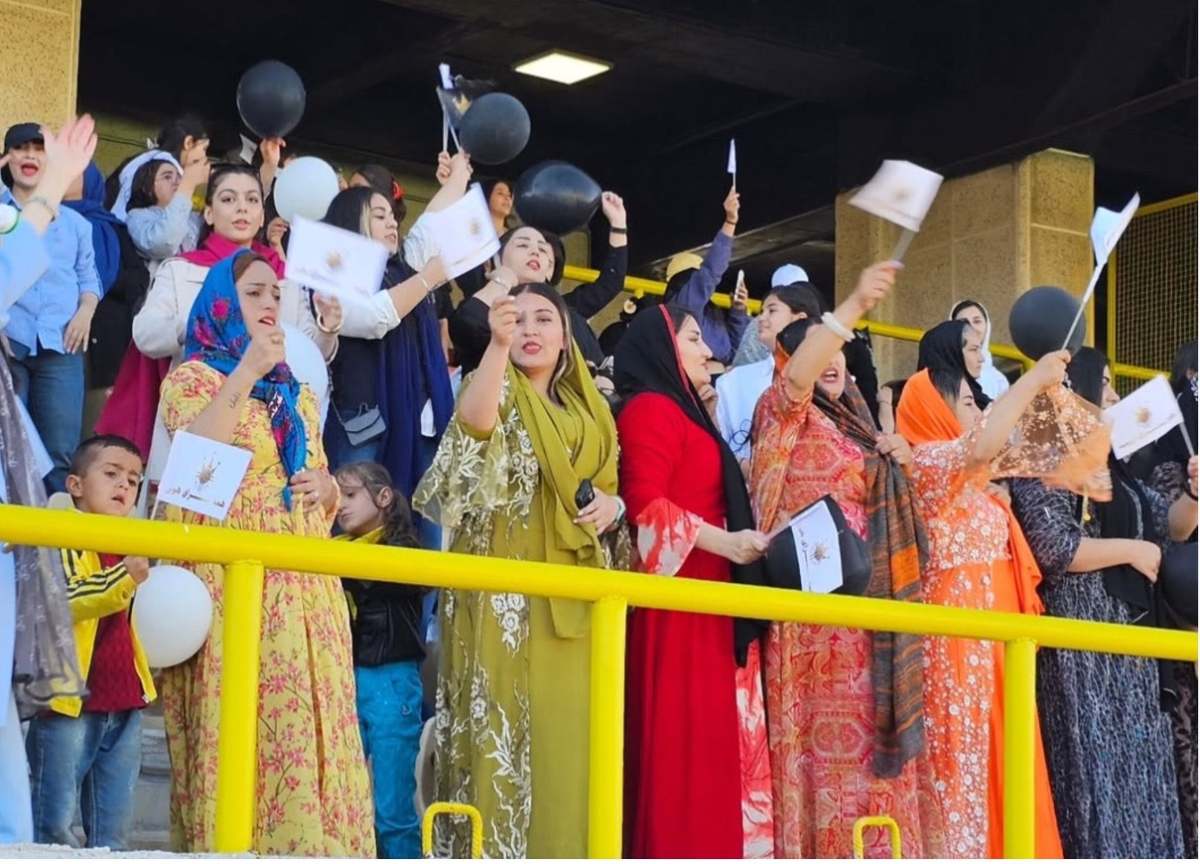
The game turned into more than a football match. During the match, the fans were seen wearing Kurdish attire, singing Kurdish songs, and chanting peaceful slogans such as “Bijî Urmiye” (long live Urmia).
The presence of women in the stadium wearing Kurdish attire and being in full support of the team also represented a new development in a state that used to ban women from entering sports stadiums.
The match ended with 0-0, but Hoor Spor Urmia beat Naft Masjed Soleiman 8-7 in the penalty kicks, which was later celebrated by fans inside the stadium and on the streets.
This was no regular match; it was the first of its kind where Kurds gathered to support a team that represented them, their denied identity, and their presence in a city like Urmia—something similar to football matches in North Kurdistan and Turkey, where the Kurds support Kurdish football teams such as Amed Spor or Van Spor.
Hate campaign against Kurds
The nationalist Azeri Turks in Urmia and beyond, however, reacted differently. On social media, some pages and also media platforms, such as Araz News, and individuals, like Eliyar Makuyi, a known Azeri Turkish politician residing in Turkey and spokesperson of the GAMOH, a Turkish ultranationalist organization affiliated with both the AK Party and the Nationalist Movement Party (MHP), launched a smear and hatred campaign against Kurds by publishing racist content accusing Kurds of terrorism and separatism while calling them migrants and foreigners. This rhetoric, which is not a new phenomenon, simply reflects decades of Iranian and Turkish propaganda against the Kurdish people as foreigners and a threat to their territorial integrity in regions like Urmia.
Three days later, on October 13, an Azeri Turkish team named 90 Urmia hosted a match with the Iranian team Nasaji Mazandaran in the same stadium in Urmia. Instead of a regular match, it turned into an anti-Kurdish demonstration in which the fans called for the massacre of Kurds by chanting, “Hasani, where are you to execute Kurds?” referring to Gholamreza Hasani, an extremist cleric and representative of the Iranian supreme leader in West Azerbaijan Province who played a notorious role in promoting anti-Kurdish racism as well as prosecuting and massacring Kurds in events such as the Qarna massacre of 1979.
The Azeri Turkish crowd also displayed the Gray Wolves “Bozkurt” sign in the stadium, which represents the Turkish ultranationalism and fascism often used by extremist Turkish groups across Turkey. Azerbaijan, and Europe. Notably, these organizations, groups, and their symbols have been banned and designated as extremist entities by several EU member states.
At the same time, they displayed the Syrian flag in the stadium and praised the Turkish state and Recep Tayyip Erdogan for invading Afrin, Gire Sipi, and Sere Kaniye in Rojava (Northwest and Northeast Syria) and chanted “Death to the PJAK, Death to the PKK.”
Photos from Ismail Agha Shikak’s execution were also displayed in the stadium and on the streets as a threat to Kurds that they will face the same fate if they continue expressing their presence in the city.
Some social media accounts were also seen calling on Turks to boycott Kurdish businesses and abstain from trading with Kurds in the city.
Reactions
The Iranian state’s response to such actions has always been favorable to the Iranian and Turkish nationalists. As an ironic example, the Iranian security agencies arrested a moderate Azeri Turkish researcher and activist named Shayan Hushyar for condemning the hate speech and racism against the Kurds in Urmia during the football matches rather than holding those who promote racism accountable.
While Iranian law criminalizes any act deemed “separatist,” it has systematically and intentionally turned a blind eye to the pro-Turkey and Azerbaijani slogans and relevant symbols and groups calling on violence against Kurds or the separation of Azerbaijani regions from Iran.
As seen in these events, displaying flags of Turkey and Azerbaijan goes completely ignored, while those who call for peace and coexistence and ordinary Kurdish citizens who express their identity face prosecution and threats.
On October 17, 2025, during another match between the Kurdish Ronahi Urmia team and Qaraquyunlu Shahin Dezh at Urmia’s Takhti Stadium, the Kurdish fans condemned the racist slogans chanted by 90 Urmia fans in the previous days.
After Ronahi’s victory, the crowd took to the streets in the city center, chanting slogans condemning racism and honoring Simko Shikak, referring to Ismail Agha Shikak, a Kurdish chieftain who revolted against the Qajar and Pahlavi dynasties in the 1920s and 1930s in the Urmia region.
During these demonstrations, some Turks were seen recording and photographing the crowd to report them to the Iranian authorities, and their actions were confronted by the Kurdish youth.
This act was perceived as a provocative action by some Turkish activists, media outlets, and political groups. They resorted to the same racist rhetoric that has existed for decades, labeling Kurds as terrorists, separatists, and migrants.
As an official reaction to the developments in Urmia, the Kurdistan Free Life Party (PJAK) warned against the efforts of “certain groups” allegedly seeking to create division and hostility between Kurds and Turks. It stated that these provocative slogans in Urmia and Tabriz are a part of the Iranian state’s projects and that these ethnic confrontations and divisions are against the philosophy of “Jin, Jiyan, Azadi,” as well as the history of people’s coexistence in the area. Some Kurdish activists also reacted to this statement on social media, saying that PJAK is blaming Kurds for provoking Turks and intensifying these ethnic conflicts in the region, while the deep-rooted and systematic Turkish racism was not addressed as the main reason.
In another statement, the Nojîn cultural association reacted to the incidents, saying, “The Nojin Organization, while emphasizing on the Kurdish identity of Urmia, simultaneously stresses the need to protect and preserve the rights of all ethnic, religious, gender, and linguistic groups across Kurdistan—including Azeris—and calls on everyone, including organizations, movements, individuals, and sympathizers of Kurdistan, to distance themselves from the historical and internal shame that has been institutionalized in the minds of the Kurdish people throughout history, to adopt a clear and explicit position regarding the most strategic city in East Kurdistan, and to prevent the identity and land crisis there from continuing and deepening.”
Systematic Discrimination and the “West Azerbaijan” Policy
These dynamics are not a new phenomenon in Urmia. They are rooted in systematic discrimination and racism backed by the Iranian state, which has been weakening, oppressing, and denying the existence of Kurds in the Urmia region since the establishment of “West Azerbaijan Province” in 1937 by the Pahlavi dynasty. Renaming the Urmia region in this way was a part of a broader policy to further assimilate and fragment Kurdistan.
At the same time, the Iranian state has long encouraged and promoted the demographic changes in the Kurdish-majority regions in Urmia, fostering competition and hostility between the two populations as a part of a “divide and rule” strategy that has been continuously challenged by Kurds for the past century. Through these policies, Urmia, which was once a stronghold of Kurdish culture and politics, has turned into a city where Kurds systematically face both Iranian state repression and Azeri Turkish nationalism and aggression.
From Newroz to Football: A Pattern of Suppression
The same dynamics were also witnessed recently in March 2025 during the Newroz celebrations. Kurds in Urmia organized the biggest festival in the history of the city and even East Kurdistan, where an estimated 80 to 100 thousand people gathered on the western side of the city to celebrate the new year by singing Kurdish songs, dancing, and celebrating their traditional attire and identity.
Despite being a fully cultural and peaceful event, it provoked Turkish nationalists. They were led by personalities like Nader Qazipour, an extremist IRGC commander, politician, and former member of the parliament. They reacted aggressively by pouring into the streets and holding sticks and bats in their hands and chanting “Heydar, Heydar”—a chant invoking the first Imam of the Shia Muslims, usually used by groups affiliated with the Iranian state’s religious and military organizations. In these demonstrations, they chanted against Kurds and called for their massacre by calling for personalities like Mullah Hasani and praising Turkish President Erdogan.
Instead of prosecuting those who incited hate and violence, the Iranian authorities again responded by going after the people targeted by this incitement. They arrested and interrogated several Kurdish citizens, including women and minors, for wearing Kurdish attire and posting content on social media.
Today, Urmia stands as a microcosm for broader ethnic tensions across Iran. In this region, Kurdish identity and existence are systematically oppressed and denied while Turkish and Iranian nationalism and racism thrive through the state’s selective tolerance of these ideologies. Due to the decades-long anti-Kurdish policies, any visible expression of Kurdish identity and solidarity, whether through culture, sports, or language, is labeled as a political crime, while the same is not applied to the Azeri Turkish identity and existence. The Iranian state has always used this “divide and rule” strategy as a means of controlling certain communities in strategic and diverse regions such as Urmia.
The protests and demonstrations followed by events such as Newroz celebrations, football matches, or other cultural events in this city are not isolated incidents. They reflect a well-organized and systematic ethnic discrimination sponsored by both Iranian and Turkish nationalism that targets the Kurdish population in Urmia in their daily lives.