

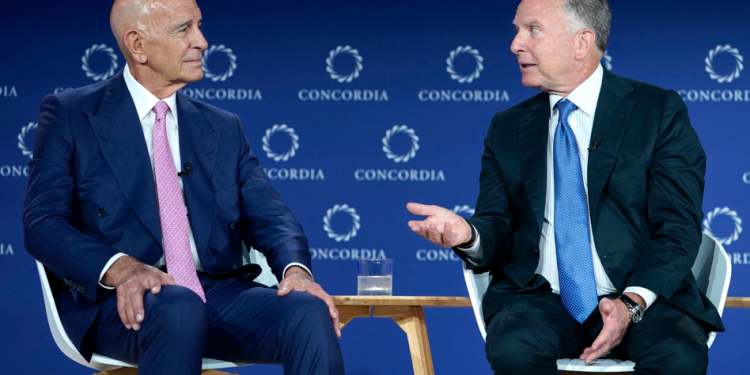
The statements made by Tom Barrack, the U.S. Special Envoy to Syria, regarding the Middle East as comprising “tribes and villages” rather than “states” (September 26, 2025), sparked speculation about a harsh Orientalist view of the region. However, the current reality seems to reinforce this perspective. Here, we present an approach that examines and analyzes the presence of an “objective congruence” between the Orientalist vision of the East and the actual situation of the Middle East today. It is important to note that this text was written long before those statements.
Introduction
Is the Middle East closer to “social formations” than to “societies,” in the sense understood by social sciences and many countries around the world? Are the region’s social structures truly “non-state” formations, or do they actually possess “non-state” characteristics? Alternatively, is what Orientalism has said about the region—about Arabs, Turks, Persians, Kurds, and others—merely a “fabrication,” a “construction,” or a “formation”? Are Orientalist studies, surveys, readings, and assessments of Eastern societies driven more by political and colonial priorities than by cognitive, scientific, and cultural ones? If so, does that mean they are incapable of reaching a serious and accurate understanding of what they are examining?
Could the reality be different? That is, perhaps the Middle East is indeed a society, with “states”—presidents, kings, or princes, ministries, armies, security institutions, embassies, prisons, immigration and taxation departments, and so forth—similar to many countries around the world. However, these societies suffer from stereotypical perceptions and images of themselves, along with constraints that hinder their ability to project an effective presence in the global arena. And perhaps Orientalism bears some responsibility for this situation?
The premise of this text is that Orientalism has, in fact, provided readings and assessments that are quite close to the reality of “societies” or “social formations” in the region. Developments, especially in countries experiencing conflict and war, demonstrate the extent to which Orientalist evaluations have been accurate. There is a certain “objective congruence” between the reality of the East and what Orientalism perceives and presents about it. However, this does not ignore the many biases and obstacles that hinder Orientalism from producing knowledge fully aligned with the true nature of the East.
First, in Critique of Orientalism: The Critical Approach and Its Limits
There are numerous criticisms of Orientalism, particularly that it originates from “Eurocentrism” and a “colonial moment.”[1] Its concerns are more political and colonial than scientific or epistemological. As a result, it presented the East not as it truly is, but as the West desired, imagined, or understood it to be. Orientalism “produced” images, perceptions, and knowledge “about the East for the West,” not “about the East for the East” itself. Refer to the views of Mohammed Arkoun, Samir Amin, Joseph Massad, and others.[2] Furthermore, developments during and after the colonial era have “shaped” the East itself within the framework of Western knowledge, assessments, and interests regarding it (the East), as well as regarding itself (the West) and the world. These developments also “affected” the peoples of the East and the wider world, who began to reproduce the logic and perspective of Orientalism itself. There is also a “critique of the critique of Orientalism,” which extends to Edward Said himself,[3] who authored the most prominent, influential, and widely cited work on critiquing Orientalism and Western centrality.
However, Orientalism contains much that warrants examination, knowledge, and scrutiny—particularly its significant contributions to understanding the East. It is not appropriate to categorize all of it as colonial, imperial, or Western-centric culture. In fact, some of the accusations leveled against Orientalism stem from a “reverse-centrality” and are driven by epistemological biases and ideological stakes. Moreover, much of the criticism lacks genuine epistemic value.
Second, between Orientalist Discourse and the Reality of the East
There exists an “objective convergence” or “articulation” between the reality of Eastern societies and Orientalism, in that the East is closer to “ethnic, racial, religious, social, cultural, linguistic, and value-based formations” than to “societies” in the modern sense. It is characterized by “dynamics of division” rather than “unity,” and by “contradiction and conflict” rather than “harmony and peace.”
For example, consider the writings of Ernest Gellner and Clifford Geertz,[4] who employed ethnological, anthropological, linguistic, and sociological approaches in studying Eastern and Asian societies. These works revealed societies that “believe in magic” and exhibit patterns of “popular religiosity” intertwined with tribal, rural, regional, and urban customs and values. Various, sometimes contradictory, theories have been proposed—such as: societies are similar in some respects and different in others; they are unified yet divided; they hold diverse interpretations of religion, culture, and values, yet tend to be conservative and rigid, resistant to pluralism and diversity, etc.[5]
Third, Orientalist Analysis
Max Weber’s analysis of traditional authority provides an important theoretical framework for understanding social organization in traditional societies, where authority is based on sacred traditions and inherited customs rather than laws.[6] This Weberian perspective intersects with the Orientalist view that sees Eastern societies as models of patriarchal authority (Patriarchal Authority) and tribal organization (Tribal Organization). Ferdinand Tönnies’ concept of “traditional society,” which distinguishes between “community” (Gemeinschaft) and “society” (Gesellschaft), also offers an analytical lens to understand social bonds in the Middle East, where kinship, religion, and tradition often predominate over rational and contractual ties.[7]
Fourth, Arab Societies in Orientalism: A Detailed Reading
For example, Bernard Lewis—often regarded as an influential Orientalist held responsible by many for some aspects of Western policies toward the East and Muslims—argues that there are “no clear boundaries between mosque and state, or between ‘what belongs to God and what belongs to Caesar’ (the Sultan),” or between religion and politics, in Islamic societies.[8] He claims that these societies were predominantly rural and gradually transformed into states resembling European models during the colonial period, governed by similar political systems and characterized by a culture reinforced by the Arabic language and Islamic religion, despite many underlying similarities and differences.[9] In this context, Lewis developed the concept of “Oriental despotism,” borrowed from Karl Marx, to explain the nature of authority in Islamic societies as absolute, lacking institutional boundaries or constitutional constraints. Although problematic, this concept sheds light on the difficulties faced in building modern institutions in the region.
Anthropologist Clifford Geertz, for instance, discusses the difficulties of nation and ethnic formation in “new states,” influenced by numerous factors, including: the pace of internal change not being synchronized with global developments, especially in Europe or the West. There is a tension between traditional structures, values, loyalties—religious, ethnic, regional, and linguistic—that developed over centuries, and the new concepts of politics, authority, society, and the state.[10] “The dense accumulation of self-identity and social loyalty, heritage, and loyalties based on ethnicity, region, and language, produced over long centuries of ignorance, was confronted with a simplified, abstract, and carefully constructed concept of political ethnicity that approached pain through self-awareness,” in other words, through the concept of the “national spirit” in the modern sense.[11] Similarly, individuals’ perceptions of their self-identity, which were closely linked to traditional society, contrasted with new, broader, and more vague collective identities.[12] There were efforts to “alter the symbolic framework through which people experienced reality,” aiming to change the reality itself. But overall, these efforts were “primitive,” “confused,” “incomplete,” and “fragile.”[13]
Fifth, Anthropological Analysis of Identity and Belonging
Benedict Anderson’s concept of “imagined communities” provides an important theoretical framework for understanding the difficulties of forming a national identity in the Levant, where nation-building requires mechanisms of collective imagination that go beyond direct traditional ties.[14] This analysis explains why sub-identities (tribal, sectarian, regional) remain stronger than a unified national identity in many countries of the region.
The social phenomenon in the Levant appears more “non-state” or “non-sovereign” than fully constituted states. In reality, the “state” in the Levant is closer to “authorities” than to “states” in the conventional sense. Badi argues that the modern state in the Levant is an “imported” state from the West.[15] There is a clear difference between the phenomenon of the state—or what is considered a state in Islamic countries—and the modern European concept of the state.[16]
Sixth, The Levant, Society, and the State: The Formative Problem
The Middle East did not develop into “societies” in the sense understood by social sciences and countries around the world, especially in Europe. The patterns of writing about society and the state throughout different historical periods reflect their modes of existence more than contemporary understandings or much of the current discourse. In the past, discussions focused on “the community,” “the government,” or “the authority,”[17] and what today might be called a “state.” This is evident in works on royal and political literature and Islamic governance.
Contemporary writings may refer to a “society” and a “state” in the Middle East, but the reality is closer to “communities” or “formations” rather than a unified “society,” and to “authority” and “system of governance” rather than a fully developed “state.”[18] Abdallah Laroui, for example, refers to a “sultanic state.”[19]
Seventh, Conceptual and Heritage Reconsiderations
In recent decades, scholarship has increasingly revisited historical concepts to better understand and analyze social and political phenomena in the region, such as in works like Mirrors of Kings, Sultanic Literature, and Sharia Politics, as previously mentioned, along with Ibn Khaldun’s Muqaddimah.[20] Interpreting stories from One Thousand and One Nights about society, politics, power, and livelihood in the region also reveals a certain continuity of underlying political structures from the past to the present.
Invoking heritage concepts like Ibn Khaldun’s “asabiyya” (social cohesion) reflects an effort to understand “social conflict” outside the framework of the modern state. Asabiyya, a social bond based on kinship, lineage, and tribal loyalty, helps explain how political groups form, evolve, and collapse in the absence of modern institutions.
The late novelist Hani al-Raheb likened Eastern societies to “grains of sand” in the desert, which may coexist and accumulate over long periods but disperse at the first gust of wind. For example, he notes that Arabs “tied religion and history to their narrow minds… and have not advanced a single step in a thousand years.” One of his characters adds: “We Arabs, it’s impossible to turn us into a nation or a people.”[21] Al-Raheb’s ideas are not from an Orientalist perspective nor supportive of Orientalism; rather, they reflect sentiments echoed in many writings and speeches. Meanwhile, Khaldoun al-Naqeeb speaks of a specific and enigmatic form of backwardness that is difficult to interpret or analyze, much less deconstruct or transcend, emphasizing that “tribalism” and “political tribalism” are foundational to society and politics in the region.[22]
Eighth, Conditions and Horrors: Contemporary Reality and Its Manifestations
The above may involve relatively harsh generalizations, in the eyes of some, but these become more understandable or less skeptical when examining social structures, formations, and interactions that reveal cracks, fissures, and increasing dynamics of division—especially in countries experiencing conflict and war. Here, tribe, sect, and group, along with jihad, conquest, and spoils of war, are the most influential determinants and drivers of politics.
Some countries exhibit a return to the most violent and aggressive aspects of human behavior, with violence amounting in some cases to genocide—such as in Syria, Libya, Sudan, Yemen, and Iraq. Killings often occur as mass hysteria, sometimes broadcast live on social media. This raises questions: Can we still speak of a “society” and a “state” in some countries of the region after such violence?
Ninth, Social Disintegration and Institutional Collapse
The ongoing collapse of states and social disintegration in several Arab countries confirms the weakness of vertical social bonds that connect citizens to the state, contrasted with the strength of horizontal ties based on kinship, sect, and clan. Robert Putnam refers to this as the difference between “bonding social capital” and “bridging social capital.”[23]
Many countries in the Middle East are characterized by significant social, political, economic, and cultural fragility, with difficulty in social integration—not only between minorities and majorities or among religious, sectarian, ethnic, and national groups but also within the social fabric itself, based on tribal, familial, regional, clientelistic, and mercenary foundations. This fragility is not alleviated by simply calling these entities “societies” in Syria, Lebanon, Turkey, Iraq, etc., because— from this perspective—they are closer to “consensus” than to actual embodied social structures, and their existence is generally tied to the presence and stability of authority or the state, which depends on them.
Tenth, The Rentier State and the Fragmented Society
The concept of the “rentier state” provides an important interpretive framework for understanding the nature of the relationship between “state” and “society” in the region. In rentier states, the state relies on external sources of income (oil, aid, remittances) rather than on local productivity and taxation, which weakens the bond between ruler and ruled.[24]
However, some believe that Arabs, Turks, Persians, and others have already transformed into societies and states. The discourse about an “Arab phenomenon,” an “Arab society,” and an “Arab culture,” as well as similar notions for Turks, Persians, and Kurds—presented in many writings and narratives—may be partially true. Yet, such claims tend to reinforce or exaggerate “commonalities” and “similarities,” overemphasize their relative importance, and sometimes interpret, fabricate, or imagine them, rather than focusing on their real embodiments, representations, and reflections in actual social and political life.
Eleventh, Conflict and Division: Nature or Circumstance?
Some might argue that conflict and the dynamics of division are ubiquitous, and that social phenomena are inherently conflictual. This is true. However, what requires scrutiny is: on what grounds and within what horizons does this happen? In many Middle Eastern countries, societies have demonstrated a strong tendency toward polarization based on religion, sect, tribe, and region, often at the expense of the “idea of society” or the “spirit of society.” They have shown a significant dominance of “sub-state” identities and dynamics over “national identity” or the “national community.” To such an extent that the word “society” appears more as a “customary rule” or as closely linked to the existence of the “state” or what is considered a state, as previously noted. Many indicators of this can be observed throughout the Levant today.
This analysis aligns—broadly speaking—with Samuel Huntington’s “Clash of Civilizations” on the one hand, and with the theory of “ethnic conflict” on the other, where sub-identities become sources of tension and conflict rather than sources of diversity and richness.[25]
Twelfth, A Complex Dilemma: The State and Society in the Levant
Thus, “societies” in Middle Eastern countries do not possess an “objective existence” that is separate or distinct from the state or the prevailing authority. There is no “spirit of society,” as often mentioned, that refers to a “separate” or “distinct” objective existence from social formations. Nor does the state have an “objective existence” separate from society or what is considered society, nor does it necessarily possess the degree of institutionalization, legitimacy, social acceptance, and stability required by “society.”[26]
Thirteenth, The Vicious Circle: Society and the State
There exists a highly complex and intricate dilemma: society is assumed to “produce” its state, and vice versa—that the state “produces” or “builds” society. It was believed that champions of nationalist ideologies would create the state, and that the state would then forge the nation. However, what actually occurred was a significant failure. The perspective of “milla” (religious community) in the sultanic sense (such as during the Mamluk or Ottoman periods) remains influential in the region, and perhaps has gained even greater strength and momentum with the failure of democratic state policies, modernization efforts, and the inability to create or engineer modern societies.[27]
Charles Tilly’s theory of “state formation” offers an important analysis of how the modern European state was shaped through war, resource extraction, and institution-building.[28] This European model was not replicated in the Levant; instead, the modern state emerged as an external import rather than an organic internal development.
Understanding the nature of the “Ottoman system” and the “millet system” is crucial to understanding the persistence of social organization patterns in the Levant. The Ottoman Empire did not aim to unify peoples into a single identity but managed them through religious and ethnic leaders.[29] This governance style left a deep legacy in how relations between different groups are structured.
Fourteenth, Mosaic: Rereading Pluralism and Diversity
The use of the terms “mosaic” or “formations” to describe social diversity—whether Arab, Turkish, Kurdish, etc.—does not diminish the social phenomenon. In fact, it is not a negative descriptor; quite the opposite. It may imply “coherence” and “harmony” within the framework of systems and dynamics of meaning and social formation. However, reality often contradicts this: there is no continuous or stable “coherence” or “harmony” internally. Instead, contradictions, conflicts, and potential explosions exist—sometimes “controlled” or “managed,” and occasionally exploited—by the authority and the state. Often, the state itself is the source of conflict and contradiction, meaning that the struggle over “power” or “the state” is, in fact, intertwined with these tensions[30].
Therefore, authoritarian regimes, social structures based on fanaticism, and rigid values are among the main sources of conflict, contradiction, and failure to develop into “societies” built on the principles of “the national community” and “citizenship.” What is crucial here is not only the “reality” and “social formations” themselves but also the “dynamics of interaction” among them—and, most importantly, the “horizon” and “stakes” within which they operate: Is it the “community” and “religion,” or the “society” and the “national community”?
Fifteenth: Towards a Deeper Understanding of Pluralism
The “mosaic” formation of the Levantine social phenomenon and the persistent or “stubborn influence” of the logic of “religions and sects” “aligns” or “intertwines,” in some respects, with tendencies of “non-state” or “anti-state” orientations, borrowing an important perspective from the French anthropologist Pierre Clastres.[31] However, this does not mean that we are dealing with entirely “essentialist features,” even though they may appear so sociologically, psychologically, cognitively, and politically.
If it were truly possible to establish a modern state based on a “social contract,” “social consensus and pluralism,” “political stability,” etc., then a society in the modern sense of the word could be realized. This, in any case, remains one of the dilemmas and challenges of contemporary social formation in the region.
Hannah Arendt and Arend Lijphart present the model of “consensual democracy” as a solution for divided societies, where elites share power and protect the rights of minorities or social and ethnic groups, etc.[32]. This model has seen relative success in Lebanon for certain periods, but it faced significant challenges due to the lack of consensus on the rules of the political game, as well as regional and international interference and divergence.
Sixteenth: Modernization and Tradition — An Ongoing Dialectic
Perhaps we have gone too far in generalizing and judging the experience of society and the state in the Levant, claiming that neither society is a true society nor the state a true state. This is not because these formations do not constitute a society in reality, nor because they are entirely “traditional” or “non-modern” by design. Rather, there is an “overlap” and “hybridity,” suggesting the existence of a society with “modernized traditions” [33].
This becomes especially evident in moments and conditions that are often unstable and intertwined. The same applies to the “state”: it is not merely an institution or authority separate from “society.” Instead, there is evidence that the state is a belief in and defender of itself. The concept of “multiple modernities” offers a useful theoretical framework for understanding how different forms of modernity develop in diverse cultural contexts, without necessarily following the European model in its entirety.[34].
What we are dealing with are fluid, unstable phenomena. The state can become a “non-state” at any moment, supporters can abandon it or even turn against it. What appears to be a society can erupt into prolonged conflict, potentially transforming into interconnected wars. Of course, the “army” can morph into a “militia,” and vice versa—”militias” can become “armies” in the official sense, according to regional political standards and conventions. Both phenomena have been well understood by Orientalism, and they are also what the region’s own experiences have often confirmed, sometimes to the point of “self-destructive behavior.”
Seventeenth: Signs and Warnings
- Recognizing reality does not mean accepting inevitable historical or cultural determinism. Instead, it opens the way to developing practical strategies for building modern societies and states that transcend historical obstacles. This requires:
- Redefining the relationship between heritage and modernity. Modernization does not necessarily mean rejecting heritage; it can be a positive reinterpretation of it.
- Building inclusive institutions that transcend sectarian or sub-group affiliations and create a unified identity based on equal citizenship.
- Developing a unifying political discourse that emphasizes shared interests rather than divided identities.
- Learning from comparative experiences, studying how other societies have successfully overcome their historical divisions.
- The future is not bound by the past, and critical assessment of the current situation should serve as a starting point for positive change, not resignation. This demands continuous intellectual and political effort from scholars and policymakers in the region to transcend historical obstacles and build a better future for the peoples of the region.
- The aim of this analysis is not to absolve Orientalism of its biases or to entirely blame Eastern societies for their crises. Rather, it seeks a complex and nuanced understanding of the dialectical relationship between discourse and reality, between perception and practice, between theory and application.
- The region faces a dual epistemological challenge: on one hand, the need to transcend the stereotypes generated by traditional Orientalism; on the other, to confront the complex reality that sometimes seems to confirm those stereotypes. This challenge requires a critical methodology that avoids both outright rejection of the Orientalist legacy and blind acceptance of it.
- There is an urgent need to “redefine” what we mean by “society” in the Levantine context. This involves moving beyond rigid Western definitions and starting from the local social reality. Society here may not be a “nation” in the European sense, but it constitutes a “pluralistic civilizational space” with its own characteristics and dynamics. Instead of seeking simplistic explanations or definitive answers, we must acknowledge the complex and contradictory nature of the social and political realities in the region. This complexity is not a flaw to be hidden but a feature that must be understood and addressed.
- Rather than relying solely on “imported theories,” we need to develop analytical tools rooted in local realities and capable of engaging with global theories without becoming fully absorbed by them. This involves rereading local heritages, experiences, and expertise with open minds. Theoretical critique alone is insufficient; we must also develop practical, applicable alternatives. This requires studying successful regional and international experiences and developing development and political models suited to the local context.
Conclusion
One can speak of an “objective consensus” between Orientalist discourse and the reality of the East. While it is true that some of what happens stems from “centralities” and “reverse centralities,” both arrive at similar assessments based on interpretations of reality—sociologically, cognitively, culturally, ethically, economically, politically, and so on. The most significant point of agreement or similarity between them is the problematic nature of the meaning and the definition of “society” and “state” in the region. This consensus does not necessarily validate or justify Orientalist analysis; rather, it underscores the need for a deep, critical review of the social and political realities in the region.
Despite its tragic aspects, the contemporary situation in the region also opens up new horizons. Collapses and conflicts, though costly, reveal previously hidden truths and create opportunities to reshape social and political relations on new foundations. Thinking or dreaming of modern, pluralistic, and democratic societies is neither shameful nor forbidden!
References
Arabic
- Arkoun, Mohammed, et al. (2000). Orientalism Between its Advocates and Opponents (2nd ed.). (Hashim Saleh, Trans.). Beirut: Dar Al-Saqi.
- Amin, Samir. (1989). Toward a Theory of Culture: A Critique of Eurocentrism and Inverse Centricity. Beirut: Arab Development Institute.
- Anderson, Benedict. (2009). Imagined Communities: Reflections on the Origin and Spread of Nationalism (1st ed.). (Tha’er Deeb, Trans.). Damascus: Dar Qadmus.
- Badie, Bertrand. (1996). The Imported State: The Westernization of the Political System. (Latif Faraj, Trans.). Cairo: Dar Al-Alam Al-Thalith (Third World House).
- Badie, Bertrand. (2017). The Two States: Power and Society in the West and the Lands of Islam. (Latif Faraj, Trans.). Madarek for Research and Publishing.
- Bishara, Azmi. (2018). Sect, Sectarianism, Imagined Sects. Beirut: Arab Center for Research and Policy Studies.
- Tönnies, Ferdinand. (2017). Community and Civil Society. (Na’el Hariri, Trans.). Beirut: Arab Center for Research and Policy Studies.
- Hallaq, Wael. (2019). Restating Orientalism: A Critique of Modern Knowledge. (Amr Osman, Trans.). Beirut: Arab Network for Research.
- Dabashi, Hamid. (2015). Post-Orientalism: Knowledge and Power in the Age of Terror. (Basel Watfa, Trans.). Italy: Manshurat Al-Mutawassit.
- Al-Raheb, Hani. (1999). I Drew a Line in the Sand (Novel). Beirut: Dar Al-Kunooz Al-Adabiyya.
- Said, Edward. (1984). Orientalism: Knowledge, Power, and the Construction (2nd ed.). (Kamal Abu Deeb, Trans.). Beirut: Arab Research Foundation.
- Said, Edward. (1997). Culture and Imperialism (1st ed.). (Kamal Abu Deeb, Trans.). Beirut: Dar Al-Adab.
- Sharabi, Hisham. (1992). Patriarchy and the Problem of Underdevelopment in Arab Society. Beirut: Center for Arab Unity Studies.
- Al-Arwi, Abdallah. (2011). The Concept of the State (9th ed.). Beirut: Arab Cultural Center.
- Alatas, Farid. (2021). Applying Ibn Khaldun: Reviving a Neglected Tradition in Sociology. (Osama Abbas, Trans.). Beirut: Nuhud Center for Studies.
- Al-Azmeh, Aziz. (1987). Heritage Between Authority and History. Casablanca: Oyoun Al-Maqalat.
- Geertz, Clifford. (1993). Islam Observed: Religious Development in Morocco and Indonesia. (Abu Bakr Baqader, Trans.). Beirut: Dar Al-Muntakhab Al-Arabi.
- Geertz, Clifford. (2009). The Interpretation of Cultures: Selected Essays. (Mohammed Badawi, Trans.). Beirut: Arab Organization for Translation.
- Gellner, Ernest. (2004). Muslim Society. (Abu Bakr Baqader, Trans.). Beirut: Dar Al-Madar Al-Islami.
- Weber, Max. (2015). Economy and Society: Economy and Social Systems. (Mohammed Al-Turki, Trans.). Beirut: Arab Organization for Translation.
- Clastres, Pierre. (1991). Society Against the State (1st ed.). (Mohammed Dakroub, Trans.). Beirut: University Foundation for Studies and Publishing..
- Lewis, Bernard. (2002). What Went Wrong?: Western Impact and Middle Eastern Response. (Mohammed Enani, Trans.). Cairo: Manshurat Sutour.
- Lewis, Bernard. (2013). The Crisis of Islam: Holy War and Unholy Terror. (Hazem Mohsen, Trans.). Baghdad: Dar wa Maktabat Adnan.
- Lijphart, Arend. (2006). Democracy in Plural Societies: A Comparative Exploration. (Hosni Zeina, Trans.). Beirut-Baghdad: Center for Strategic Studies.
- Massad, Joseph. (2013). Desiring Arabs. (Ihab Abdel Hamid, Trans.). Cairo: Dar El-Shorouk.
- Migdal, Joel. (2018). Strong Societies and Weak States: State-Society Relations and State Capabilities in the Third World. (Mohammed Salah Ali, Trans.). Cairo: Alam Al-Adab for Translation and Publishing.
- Al-Naqeeb, Khaldoun. (1991). The Authoritarian State in the Contemporary Arab East: A Comparative Structural Study. Beirut: Center for Arab Unity Studies.
- Al-Naqeeb, Khaldoun. (1996). The Struggle of Tribe and Democracy: The Case of Kuwait. Beirut: Dar Al-Saqi.
- Al-Naqeeb, Khaldoun. (2002). Views on the Jurisprudence of Underdevelopment: Arabs and the West in the Age of Globalization. Beirut: Dar Al-Saqi.
- Huntington, Samuel. (1999). The Clash of Civilizations and the Remaking of World Order. (Talaat El-Shayeb, Trans.). Cairo: Manshurat Sutour.
English
- Barkey, K. (2008). Empire of Difference: The Ottomans in Comparative Perspective. Cambridge University Press.
- Beblawi, H., & Luciani, G. (Eds.). (1987). The Rentier State. Routledge.
- Braude, B. (Ed.). (2014). Christians and Jews in the Ottoman Empire: The Abridged Edition. Lynne Rienner Publishers.
- Eisenstadt, S. N. (Ed.). (2002). Multiple Modernities. Transaction Publishers.
- Geertz, C. (Ed.). (1963). Old Societies and New States: The Quest for Modernity in Asia and Africa. Free Press of Glencoe.
- Lewis, B. (1997). The Middle East: A Brief History. Simon & Schuster.
- Putnam, R. D. (2001). Bowling Alone: The Collapse and Revival of American Community. Simon & Schuster.
- Tilly, C. (1992). Coercion, Capital, and European States, AD 990-1992. Blackwell.
Footnotes
[1] Edward Said, Culture and Imperialism, Translated by: Kamal Abu Deeb, 1st ed., (Beirut: Dar Al-Adab, 1997); and Edward Said, Orientalism: Knowledge, Power, and the Construction, Translated by: Kamal Abu Deeb, 2nd ed., (Beirut: Arab Research Foundation, 1984). For reading covering a more modern phase, see: Hamid Dabashi, Post-Orientalism: Knowledge and Power in the Age of Terror, Translated by: Basel Watfa, Revised by: Hussam El-Din Mohammed, (Italy: Manshurat Al-Mutawassit, 2015).
[2] Mohammed Arkoun (et al.), Orientalism Between its Advocates and Opponents, Translated by: Hashim Saleh, 2nd ed. (Beirut: Dar Al-Saqi, 2000). And Edward Said, Orientalism, previous source. And Samir Amin, Toward a Theory of Culture: A Critique of Eurocentrism and Inverse Centricity, (Beirut: Arab Development Institute, 1989). And Joseph Massad, Desiring Arabs, Translated by: Ihab Abdel Hamid, (Cairo: Dar El-Shorouk, 2013).
[3] See, for example: Wael Hallaq, Restating Orientalism: A Critique of Modern Knowledge, Translated by: Amr Osman, (Beirut: Arab Network for Research, 2019).
[4] Ernest Gellner, Muslim Society, Translated by: Abu Bakr Baqader, (Beirut: Dar Al-Madar Al-Islami, 2004). And Clifford Geertz, The Interpretation of Cultures: Selected Essays, Translated by: Mohammed Badawi, (Beirut: Arab Organization for Translation, 2009). And Geertz, Islam Observed: Religious Development in Morocco and Indonesia, Translated by: Abu Bakr Baqader, (Beirut: Dar Al-Muntakhab Al-Arabi, 1993).
[5] Bernard Lewis, What Went Wrong?: Western Impact and Middle Eastern Response, Translated by: Mohammed Enani, (Cairo: Manshurat Sutour, 2002).
[6] Max Weber, Economy and Society: Economy and Social Systems, Translated by: Mohammed Al-Turki, (Beirut: Arab Organization for Translation, 2015).
[7] Ferdinand Tönnies, Community and Civil Society, Translated by: Na’el Hariri, (Beirut: Arab Center for Research and Policy Studies, 2017).
[8] Bernard Lewis, The Crisis of Islam: Holy War and Unholy Terror, Translated by: Hazem Mohsen, (Baghdad: Dar wa Maktabat Adnan, 2013).
[9] Bernard Lewis, The Middle East: A Brief History, (New York: Simon & Schuster, 1997).
[10] Clifford Geertz (Ed.), Old Societies and New States: The Quest for Modernity in Asia and Africa, (Free Press of Glencoe, 1963), p. 108.
[11] Same source, p. 109.
[12] Same source, p. 110.
[13] Same source, p. 111.
[14] Benedict Anderson, Imagined Communities: Reflections on the Origin and Spread of Nationalism, Translated by: Tha’er Deeb, 1st ed., (Damascus: Dar Qadmus, 2009).
[15] Bertrand Badie, The Imported State: The Westernization of the Political System, Translated by: Latif Faraj, (Cairo: Dar Al-Alam Al-Thalith, 1996).
[16] Bertrand Badie, The Two States: Power and Society in the West and the Lands of Islam, Translated by: Latif Faraj, (Madarek for Research and Publishing, 2017).
[17] Aziz Al-Azmeh, Heritage Between Authority and History, (Casablanca: Oyoun Al-Maqalat, 1987).
[18] See: Khaldoun Al-Naqeeb, Views on the Jurisprudence of Underdevelopment: Arabs and the West in the Age of Globalization, (Beirut: Dar Al-Saqi, 2002), and Khaldoun Al-Naqeeb, The Authoritarian State in the Contemporary Arab East: A Comparative Structural Study, (Beirut: Center for Arab Unity Studies, 1991). And Hisham Sharabi, Patriarchy and the Problem of Underdevelopment in Arab Society, (Beirut: Center for Arab Unity Studies, 1992).
[19] Abdallah Al-Arwi, The Concept of the State, 9th ed., (Beirut: Arab Cultural Center, 2011).
[20] See, for example: Farid Alatas, Applying Ibn Khaldun: Reviving a Neglected Tradition in Sociology, Translated by: Osama Abbas, (Beirut: Nuhud Center for Studies, 2021).
[21] Hani Al-Raheb, I Drew a Line in the Sand, Novel, (Beirut: Dar Al-Kunooz Al-Adabiyya, 1999).
[22] Khaldoun Al-Naqeeb, The Struggle of Tribe and Democracy: The Case of Kuwait, (Beirut: Dar Al-Saqi, 1996).
[23] Robert Putnam, Bowling Alone: The Collapse and Revival of American Community, (Simon & Schuster, 2001).
[24] Hazem Beblawi & Giacomo Luciani, The Rentier State, (Routledge, 1987).
[25] Samuel Huntington, The Clash of Civilizations and the Remaking of World Order, Translated by: Talaat El-Shayeb, (Cairo: Manshurat Sutour, 1999).
[26] Joel Migdal, Strong Societies and Weak States: State-Society Relations and State Capabilities in the Third World, Translated by: Mohammed Salah Ali, (Cairo: Alam Al-Adab for Translation and Publishing, 2018).
[27] Regarding the Millet system, see: Benjamin Braude (Ed.), Christians and Jews in the Ottoman Empire: the Abridged Edition, (Lynne Rienner, 2014).
[28] Charles Tilly, Coercion, Capital, and European States: AD 990-1992, (Cambridge, MA: Blackwell, 1992).
[29] Karen Barkey, Empire of Difference: the Ottomans in comparative perspective, (Cambridge University Press, 2008).
[30] Azmi Bishara, Sect, Sectarianism, Imagined Sects, (Beirut: Arab Center for Research and Policy Studies, 2018).
[31] Pierre Clastres, Society Against the State, Translated by: Mohammed Dakroub, 1st ed., (Beirut: Al-Mu’assasa Al-Jami’iyya for Studies and Publishing, 1991).
[32] Arend Lijphart, Democracy in Plural Societies: A Comparative Exploration, Translated by: Hosni Zeina, (Beirut-Baghdad: Center for Strategic Studies, 2006).
[33] Hisham Sharabi, Patriarchy, previous source.
[34] Shmuel Eisenstadt, (Ed.), Multiple Modernities, (Transaction Publishers, 2002).