

(On Banditry, Flesh and Blood)
To say “banditry” and its synonyms – such as highway robbery, insubordination, delinquency, thuggery – is to place the image of authority, in its full clarity, before a mirror that matches what is desirable regarding its structure, substance, and transparency.
Banditry, as a concept, opens onto the social and the political, just as it lifts the thick veil from a thorny history of volatile relations, where banditry permeates them and stands as a witness to a fundamental value disorder.
The Kurds have that unenviable position of being pushed to the forefront by the political regimes of newly manufactured states, especially after the Sykes-Picot Agreement of 1916, which partitioned a “single nation” across a banquet of three hegemonic, divisive nationalisms: Arab, Persian, and Turkish – that is, four states, as is well known: in the Arab sphere, “Syria and Iraq.” To legitimize this partition, not by writing a history that renders the fragmented “Kurdish people” as ahistorical, stereotypical, and stripped of identity differentiation, cinema has played a notable role. This is what I will attempt to examine, albeit briefly.
Cinema and Banditry through the “Kurdish Model”
Cinema has its place in addressing the phenomenon of banditry, as mentioned. And what a concentrated, multi-faceted attention it has paid to this, particularly in Turkey. Without forgetting the most vulgar of technically oriented methods that make the Kurd the warp and weft, appearing backward, primitive, incomprehensible in speech – like a mute, a sign of the inferiority ascribed to him, directly reminiscent of the image of the Native American in American Westerns – silent in abundance, falling like moths from live gunfire during raids and military sweeps, with boasting of every ruin, destruction, and killing in striking scenes.
Cinema thus has its history and power of influence, because the eye is affected and does not need an interpreter for its visual display, to highlight the figure of the bandit: the Kurd, or the description of the Kurd as antagonistic or resistant to the state as an expression of his existence, and rejecting the forms of humiliation directed against him; the nameless Kurd, transformed into an emptied-out being, as intended in the alternating game of “cut” and “paste,” a game connected to the set of “venerable” procedures within the structure of Ottoman-Turkish policy, albeit with minor modifications and embellishments that do not hide the frivolity of the stance and the fear of showing the slightest movement or visible conduct contradicting what is intended to be relied upon, pushed to the forefront, and displayed on screen, to have a deeper impact than the circulated image of him in the minds of the concerned “audience” subjected to such predispositions. And to further compound social contempt, this also connects this audacity to the extent of Kurdish presence and the impossibility of throwing them into the “trash bin” of history, or closing their case file, relegating them to the status of “trace after an eye.”
Cinema has its scenic utterance, each movement its physiognomy and corresponding language, and cinema its roles, for the developments of history are not as desired, in the manner of (the winds blow contrary to what the ships desire) – a historical, social, and political saying regarding changes and their local, regional, and international tensions, especially over several decades, where those concerned with cinema, in its serious and effective role – Kurds: directors and actors, particularly abroad – have an influential role in this visual record, much of it stained with Kurdish blood, and defined as Kurdish: a voice that does not stop screaming, in forms that have outgrown their ideological captors.
We read about this in A Geocratic Approach to Kurdish Cinema and the representations of artistic vision and its revivalist innovation: While this section aims to focus on the relationship between cinema, art, and geography, it seeks to analyze how geography and some of its epistemological outcomes, situated at the crossroads of social sciences and philosophy, are reflected in images. On one hand, the spatial dimension of art in cinema; on the other, the aesthetic dimension of geography and the relationship between its forms/objects. Furthermore, examining the perspective of geography and the (methodological) practices embedded in the art of cinema, especially in the images of Kurdish cinema, leads us to understand geography as spatial aesthetics, leading to knowledge of aesthetic systems. The Kurdish people in Iran were subjected to various political pressures during the Shah’s era, and these policies continued after the revolution and the establishment of the Islamic Republic. Although the Iranian state “recognizes” the Kurdish language and culture, this recognition does not include Kurdish autonomy and cultural freedom to provide public education in the banned Kurdish language. Therefore, it is useful to state that cinema and artistic works produced in Iran (East: Rojhilat) are mostly circulated in the diaspora. In Turkey, this situation has begun to change partially, as restrictions on Kurdish language and culture were eased through the neoliberal reforms of Turgut Özal’s government since 1991 (for the first time after the 1984 coup and attempted coup).
In the first decade of the 21st century, restrictions on Kurdish culture and arts were somewhat lifted, and means of disseminating Kurdish culture such as newspapers, magazines, radio, and television were dealt with under a different policy, controlled by the AKP government. While supervised Kurdish cultural studies are now included in another area of control within the state’s guardianship policy, very significant cinema studies have become visible, especially before the peace process and until 2016.
The artistic creativity of cinema in the Kurdish field indicates the emergence of a liberation resistance uprising, not the appearance of a colonized victim. The expression of the political moment of the sound, rhythm, and distorted history of films in this field that concern and disturb us, such as domestication or resettlement, is an act of trauma relief. Indeed, how can cinematic vision change the Kurdish issue, how can political protest spreading in cross-border dynamics against discrimination in a stateless society be repaired? Questions about democracy, environment, and social crisis, with images of mountains, urban divides, and rural areas, suggest a political education to us, showing a critique to be made.
The voids of urban space and its colonial relationship, and artistic works realized in the interrupted urban space of Kurdish cinema, allow us to analyze how directors or artists present traumatic memory in their visual perceptions as a public aspect. Abandoned houses, destroyed walls, authoritarian statues, tombstones, water wells, fields of the disappeared, khaki military vehicles, dirty children, evacuated villages, destroyed cities or mountains, Newroz or car tires… etc.
Kurds cross borders fleeing political persecution in colonial geographical regions; they symbolize mountains as a refuge for salvation or the freedom of their nation and their lives only because they have suffered state violence in the 20th century. Cinema is not a perception of the mountain, it produces a space of liberation where mountains and countryside become places of resistance or survival.
The homeland is not the place where tragedy is founded in the Kurdish field; I believe the most important focus on the image of the homeland, from music to cinema, is manifested in the concept of displacement.
Cinema as a Subterranean Image: A Precise Historical Reading
The history of Kurdish cinema is also affected by the political conditions in which Kurds live. In the process that began with the disintegration of the Ottoman Empire, the 20th century was recorded as the tragic history of the Kurds. Of course, art and cinema studies could not form their own field for a long time due to the “tragic” policy of repression, the sacrifice of subordinates, and the lack of institutional structures, and like literature, they could find a place for themselves in the geography of exile for a long time.” [1]
Numerous are the examples concerning the Kurds and how they were turned into a synthetic material in the laboratory of Turkish ideological cinema, in more than one sense, parallel to the official state policy, which translates it into studied sound and image, while at the same time not hiding the aspect of change in reality, albeit cautiously, so that the name: bandit, highwayman, delinquent, rebel, has its sanctioned impact. And where there are globally resonant voices of Kurdish origin, as in the case of Yılmaz Güney (1937-1984), too famous to need introduction in this field, who died in his Parisian exile at the peak of his artistic output. Through his position within Turkish cinema and his acting roles therein, and then his directing of films outside the herd context, as in The Road and The Herd, he formed the blinding daylight of the swamp with its historical reference, and its consciousness-shocking impact on those around him, serving as a source of inspiration for subsequent Kurdish directors.

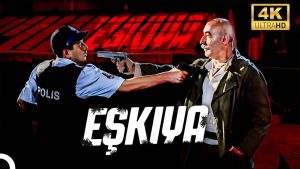
For example, in discussing a Turkish film titled “The Bandit”, we read the following:
“The film Bandit was a very successful film as an extension of this regime’s policies and a practical indicator of the long-awaited direction for Turkish cinema, which had lost its way. The regime’s stick policy against Kurdish workers continued for years. We have seen once again that this policy does not exclude the islands, with the screening of “Kurdish” films this season. These films are a clear attack by the bourgeoisie on Kurdish identity on a cultural-ideological basis. Roughly speaking: the film Let the Lights Go Out fell into the trap of the dominant ideology’s discourse, despite claiming neutrality. The film Deryan was lively and dealt with the internal problems of a village guard tribe that was well adapted. The film Thieves was more successful than the others in distorting Kurdish identity. It was able to ignore the conflict that has been ongoing for years.” [2]
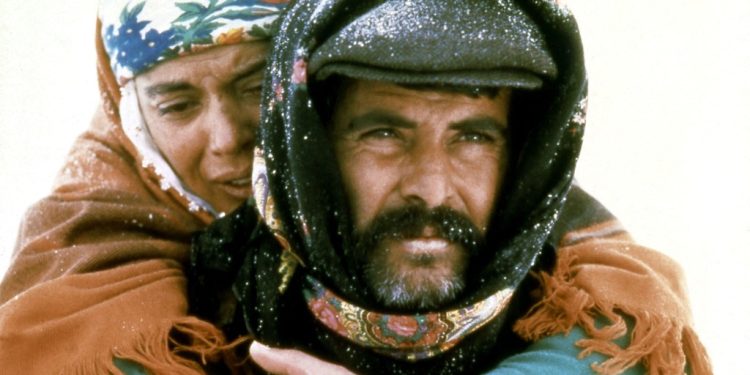
There is also what directs the gaze to something different, to the existence of a crisis at the heart of such actions. Cinema has its platform related to monitoring what is happening, and the diversity of its roles concerning the image and its interactions on the ground, and what is intended by that in the ruin of reality: In the film produced by Yılmaz and Peyda, based on a folk song from the Urfa region, Kurds take on the leading role for the first time, although their names are not mentioned.
In the words of Atıf Yılmaz, “Abdo Agha creates a sensation as soon as he arrives at the film market. He brings a new genre to cinema with his headscarf, colorful clothes, and shoes.”
With Abdo Agha, Kurds began to appear in Turkish cinema.
When we read the book, we see that music or literature cannot be thought of independently of cinema. Folk songs that are originally in Kurdish but translated into Turkish in the archives are hidden characters in films adapted from literature, although mentioned as Kurdish in novels.
We interviewed Muslim Yücel, who has been living in London for a while, about his book.
You present very important details in your book about the Kurdish characters that began to exist in Turkish cinema since the 1950s. What resources did you use while conducting this research? How long did this work take?
In Turkey, everything is on the street; once you know how to assemble, the material comes to you. Writing is a form of resistance, and that is what I tried to do. Everything I write is counter-fire. Words are ready to ignite this fire as long as people want them.
Writing in Turkey and living in Turkey is like choosing the lesser of two evils. I chose writing. As for sources, we were children sitting in front of the television until closedown. There was a coup, and everything was condemned to a single black-and-white channel.
Kurds and Turks can find a way out by looking at this wounded consciousness. In the film Zeno, there is Yılmaz Güney shooting at a billboard because his name is written too small, and on the other hand, the Efe dance he performs in the film. It ends once the artist knows what he is doing. [3]
State Banditry: The hidden and the overt, the secret police and its backer, principal, operator, and opposite – it is no longer unknown. The arena of visibility has been greatly illuminated, history has escaped its constraints, and the ongoing, stormy global transformations cannot have their impact ignored on these ongoing relations on the ground, regarding the Kurds, and how they are treated here and there, despite all the tragedies they continue to live. However, talk of banditry and its justifications, sources, and those hiding behind it, as formed in the state’s secret basements, in the minds of its servants and their counterparts who are hired, as well as those caught up in its game – visible in the naivety of its manufacture – is no longer prevalent, nor does it have credit in the world of the seventh art with its professionalism!
Sources and References
[1] Engin Sustam: Kurdish Cinema: The Foundational Image of Political Time, Decolonial Geographic Landscapes, and Transnational Visibility.
[2 ]Eşkıya — The Bandit / The Outlaw / The Highwayman.
[3] 1951: The film A Game of My Gravestones (or A Game from My Gravestones), directed by Atıf Yılmaz, written by Hüseyin Peyda, and starring Abdo Agha, caused significant public repercussions.