


Benjamin Netanyahu, from his first tenure as Israeli Prime Minister (1996–1999) up until the Forty-Day War that began on February 28, 2026, has personified the Israeli pursuit of striking Iran, with or without the United States. Following the June 2025 war, he succeeded in securing the American green light to launch an Israeli war on Iran, in which the United States participated on the final day, before US President Donald Trump halted it—akin to a football referee blowing the final whistle. In contrast, during the Forty-Day War, Washington participated alongside Tel Aviv from the very first strikes.
One of the major personal dilemmas in Netanyahu’s political career was his return to the premiership in 2009, just seventy days after Barack Obama entered the White House. In his inauguration speech on January 20, Obama had stated: “If Iran unclenches its fist, it will find our extended hand.” A year later, what John Bolton wrote in the American Enterprise Institute magazine under the title “Israel and the Crisis with Obama” (March 17, 2010) proved true—namely, that the crisis, as Bolton put it, lay in the fact that Obama “does not want anyone else to handle the Iranian issue, especially Israel.”
Netanyahu wanted to strike Iran when he returned to the Israeli prime minister’s office after a ten-year absence, but he collided with the American veto. Obama declared this veto during his interview with CNN on July 7, 2009, stating that “the United States has not given Israel a green light to strike Iranian nuclear facilities.” On the day of Obama’s statement, Netanyahu did not know that two months prior, the United States had entered into indirect negotiations with Iran over its nuclear file through the “Omani back door,” via Dennis Ross, advisor to US Secretary of State Hillary Clinton (as revealed by David Ignatius in The Washington Post: “The Omani back channel to Iran and the secret climate of the nuclear deal,” June 7, 2016). Ultimately, however, Obama managed to bind Netanyahu’s hands and prevent any unilateral action. The Israeli Prime Minister, whose dream was a joint Washington-Tel Aviv strike on Iran, was likely in a state of shock when Obama revealed to him, during their White House meeting on September 30, 2013, the details and outcomes of the secret negotiations regarding the nuclear deal with Iran.
Perhaps the greatest expression of his divergence from Obama came the following day in his speech before the UN General Assembly. He described Iranian President Hassan Rouhani—whom officials in the US administration were competing to praise for his “reformist orientation”—as a “wolf in sheep’s clothing.” In practice, Netanyahu’s remark was the opening salvo of a confrontation with Obama that peaked on March 3, 2015, when the Israeli Prime Minister delivered his speech to the US Congress against the draft of the Iranian nuclear deal, which was signed four months later in Vienna.
That scene was the exact opposite of what transpired eleven years later during the Forty-Day War, when Netanyahu found himself in the same boat with US President Donald Trump in a joint American-Israeli war against Iran.
However, two distinct agendas were presented within this shared boat. Trump’s declared demands from the war were: 1) Halting and dismantling the Iranian nuclear program, including shipping quantities of enriched uranium at the 60% level outside Iran. 2) Dismantling Iran’s ballistic missile arsenal (at one point, Trump specified limiting its range). 3) Severing Iran’s relations with its regional proxies. Meanwhile, Netanyahu added a fourth demand not voiced by the Americans: “Creating a situation through the outcomes of this war whereby the Iranian people can determine their own destiny.” This made it clear that Tel Aviv wanted the “overthrow of the Iranian regime” through the dynamics and outcomes of this war, whereas Washington wanted to change the regime’s behavior and policies. The US sought a scenario where the war would produce an “Iranian Gorbachev” or a “Delcy Rodríguez in Tehran” from within the existing structure of the Iranian regime—an American containment of Iran reminiscent of the approach taken by the Nixon-Kissinger administration toward Anwar Sadat’s Egypt after the 1973 war, succeeding Gamal Abdel Nasser.
In the June 2025 war, the strike began with the killing of the commander and leadership of the Iranian Revolutionary Guard Corps (IRGC) along with Iranian nuclear scientists, while Iranian Supreme Leader Ali Khamenei was left untouched. Khamenei remained in his usual headquarters for twelve days of that war without moving. Conversely, on February 28, 2026, the war opened with the assassination of Ali Khamenei alongside the commander of the IRGC during a joint meeting with top military and security leadership. This was executed via an Israeli airstrike, though the intelligence regarding the meeting was American.
Trump likely believed that the assassination of Khamenei—the head of the regime, its “guide,” “mastermind,” “general coordinator” between its factions, and their “regulator”—would lead to the emergence of figures from within the Iranian regime who would raise the white flag and comply with Washington’s wishes. This would mirror what occurred in Venezuela two months prior following the arrest and extradition of President Nicolás Maduro to the United States, when his vice president, Delcy Rodríguez, stepped up and fell into alignment with the American rhythm, along with the rest of the Venezuelan regime that had been “defiant” and “resistant” to the Americans since 1999. Meanwhile, Netanyahu believed that Khamenei’s assassination would lead to a scenario akin to the fall of Saddam Hussein, when the entire infrastructure of the Iraqi Ba’athist regime disintegrated after the Iraqi dictator fled Baghdad on April 9, 2003.
Neither Trump’s calculation nor Netanyahu’s expectations and forecasts materialized. Instead, their joint action that day in participating in the assassination of Khamenei led to the creation of a new Iranian regime. This regime differs from the Khomeini system (1979–1989), where the “Supreme Leader” managed all apparatuses directly, and it differs from the Khamenei system (1989–2026), where the Supreme Leader’s alliance with the IRGC was the source of Khamenei’s strength and his ability to manage all state institutions—many of which were weakened and marginalized by that very alliance. Through this alliance, the IRGC had gained control over the economy, bolstered its strength at the expense of the regular army, and shaped much of the foreign policy through the Quds Force, which practically mapped out Iran’s foreign policy course in Iraq, Syria, Lebanon, Palestine, Yemen, the Gulf, and Afghanistan over the past quarter-century.
In this new Iranian regime, which commenced following the killing of Khamenei on the morning of February 28, 2026, the IRGC itself became the “Supreme Leader” and the “Commander,” at the expense of the clerical class—which had played a major role during the eras of Khomeini and Khamenei. This shift also occurred at the expense of the presidency (the president having been the head of government since 1989) and the parliament, and naturally—as has been the case since the early days of Khomeini’s rise to power—at the expense of the regular army.
Here, every day of the war, the days of its truce since April 8, and the days following the start of the 60-day period agreed upon under the (Memorandum of Understanding)—which entered into force on June 21 with the Switzerland meeting—demonstrated that the IRGC, and no one else, holds the decision-making power in Tehran. In the four months since the start of the war, it was proven that the IRGC holds the steering wheel of the Iranian regime, regulating its tempo and leading it according to its own will. The Guard maintained the upper and final hand, even when President Masoud Pezeshkian, Parliament Speaker Mohammad Baqer Qalibaf, or Foreign Minister Abbas Araghchi hinted at or articulated specific policies. It appears that all the Americans and Israelis achieved was killing the “Supreme Leader” only to have him replaced by a “new Supreme Leader” in the person of the IRGC commander, rather than the leader Ali Khamenei, who was also titled “The Commander” within the Iranian system. Meanwhile, Mojtaba Khamenei serves as little more than a facade behind which General Ahmad Vahidi, the commander of the IRGC since March 1, 2026, holds real power.
Throughout this war, its truce, and their aftermath, the Iranian regime demonstrated cohesion behind Ahmad Vahidi, contrary to the regime collapse that followed the removal of the leadership head in Baghdad in 2003. It also resisted moving toward moderation or submission, as seen in the Venezuela of Delcy Rodríguez. This indicates that the Iranian regime since 1989 has been a cohesive, institutional system, though its leadership style and the internal balance of power among its components have varied across the leadership eras of three men: Khomeini, Khamenei, and Vahidi—even if the latter represents a qualitative shift from clerical to military leadership.
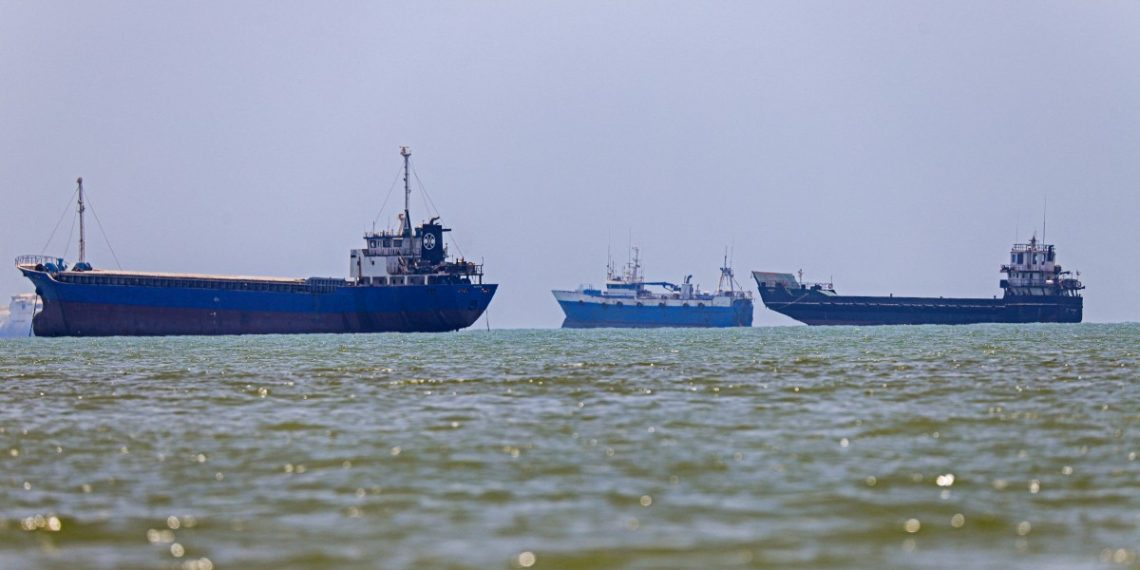
Faced with the violent strikes received on the first day of this war—which did not reach the limits of striking Iran’s civilian, industrial, or nuclear infrastructure but was restricted to military targets—and realizing that the military balance was heavily tilted in favor of America and Israel, the cohesive Iranian regime took the initiative to deploy two major leverage cards. The first was the closure of the Strait of Hormuz, through which one-fifth of the world’s energy supplies (petroleum, liquefied natural gas, and petrochemicals) passes. The second was striking the oil and LNG facilities of the Gulf states (such as Ras Laffan in Qatar), in addition to civilian economic infrastructure (airports, etc.) and certain US military bases in the Gulf. The objective of the Hormuz card was to trigger a global economic crisis that would force Washington to retreat or accept a settlement on terms Iran could agree to, while the second card aimed to compel the Gulf states to use their influence to press Washington to end the war.
Alongside these two cards held by Ahmad Vahidi, he possessed additional leverage. First, the Americans had no intention of seizing Iranian territory, contenting themselves with aerial and missile strikes, nor did they have plans to strike Iranian oil and gas facilities, or civilian and industrial infrastructure. Another card in his hands was the quantity of uranium enriched to 60%, estimated at 450 kilograms. If raised to a 90% enrichment level, this amount is sufficient to manufacture nine or ten Hiroshima-type nuclear bombs. This material exists and is distributed beneath nuclear facilities that were destroyed in the American strike during the June 2025 war, and there is no US military capability to secure it without occupying Iran. Consequently, the Americans required the cooperation of the existing Iranian authority. Indeed, this quantity of enriched uranium remained the primary focus for Washington, as evidenced in its negotiations with Iran before, during, and after the war.
Through all these leverage cards, the Iranian regime succeeded—by virtue of its cohesion and its refusal to collapse or raise the white flag following the wartime strikes—in defining the course of this war. It was notable that Trump stated in his interview with the Axios website on June 18—four days after his Vice President, JD Vance, electronically signed the “Memorandum of Understanding” with Iranian Parliament Speaker Qalibaf—that “if the war had dragged on, it would have generated a global economic recession, and I do not want to be like Herbert Hoover, the American president who witnessed the 1929 crisis.” It is highly probable that pressure from the major industrial nations of the G7 was an influential factor pushing Trump to reach the Memorandum of Understanding just one day prior to the group’s summit in the French city of Évian. Furthermore, the Qatari role in reaching the Memorandum of Understanding was not far removed from what was desired by the Gulf states, which had been scorched by the fires of a war they were neither consulted on nor wanted. This Qatari role is as noteworthy as its Pakistani counterpart. Just as the September 9, 2025 Israeli airstrike against a meeting of Hamas leaders in Doha was a major factor that prompted Trump to halt the Gaza war, Qatar’s role was influential this time as well in bringing this war to an end through the Memorandum of Understanding.
It appears that this Iranian success in defining the trajectories of the war is what drove Trump, from its third week onward, to diverge from Netanyahu, who did not want to halt it via the April 8 truce, nor end it via the Memorandum of Understanding—a scene that stands in stark contrast to their alignment during the initial days of the war. Certainly, Netanyahu’s statement during his press conference on Monday, June 15, 2026, that he “did not know the contents of the Memorandum of Understanding,” reflected a difficult predicament that was grander than the one he lived through when he entered his battle with Obama over the nuclear deal. That confrontation was unprecedented in its intensity between an Israeli prime minister and an American president, even if it was not the first of its kind, as a similar clash had previously occurred between Israeli Prime Minister David Ben-Gurion and President Dwight Eisenhower when the latter pressured for the withdrawal of Israeli forces from Sinai and the Gaza Strip after the 1956 war.
In summary: The trajectory of this war reflects a mismatch with reality on the part of the United States and Israel regarding the leverage cards held by the opposing side, alongside a miscalculation of the structural cohesion of the regime they confronted in this war. Conversely, the Americans perceived that the naval blockade imposed by Trump on Iranian ports and coastlines after the truce had a greater impact on the Iranian authority than the American military strikes during the war. Estimates indicated that Iran was losing approximately $450 to $500 million daily through it due to the suspension of its exports of oil, LNG, and petrochemicals, which had continued flowing during the war itself. It is highly probable that the assessments showing the continuation of this blockade for six months would lead to the collapse of the Iranian economy, combined with the United States’ fear that the closure of the Strait of Hormuz would trigger a repeat of the 1929 Depression scenario, are what brought Trump and Vahidi together to meet at the Memorandum of Understanding.
The divergence between Trump and Netanyahu over the course of this war was striking. Their relationship during Trump’s first term (2017–2021) and from his return to the White House in 2025 up until the start of this war had been described as the finest relationship between an American president and an Israeli prime minister. Yet, in the month of June 2026, we witnessed them presenting the most pronounced case of divergence historically seen between Washington and Tel Aviv.