

Much has been written about “the nation-state” and “the nationalist state” in the world, with contributions from prominent thinkers. Some have provided justificatory frameworks for racism, whether intentionally or unintentionally, by suggesting that the state is built on discrimination as an independent, biased rationality—almost as if it is the natural state of affairs. Others have worked to correct the deviations of this system, which dominates existing political entities.
However, the worst aspect of the Eastern nationalist state is that it was established based on the models of early European nation-states, rejecting the later European reforms related to expanding representation and political pluralism. As a result, the state has become a system of genocide and repression, relying on an excess of organized violence against weaker groups and those unable to defend themselves.
The Disintegration of the Republic
Since the disturbances of the Arab Spring and the October 7, 2023 events, the existing system can no longer sustain itself with the old tools that have been in place for a hundred years. The first to realize this transformation—namely the impossibility of continuing with the old form of governance—were decision-makers in Turkey, particularly the fierce opponent of pluralism, Devlet Bahçeli. The “unilateral nationalist state” must reinvent itself and elevate to a model of national and ethnic pluralism.
What increases the likelihood of success in this direction is the fact that the Kurds in the Middle East—communities with deeply rooted and vibrant local cultures—have chosen “to transform the state into a form suitable for their own life and for others.” This change, led by the Kurdish movement in North and West Kurdistan (Bakur and Rojava), is based on the experience of the blueprint for change: dismantling the old state and building a new one (without destroying the existing state). This requires the Kurdish side to possess the ability to threaten the old system; without this, i.e., without the capacity to threaten the old regime, the state will not enter a more advanced phase of political representation.
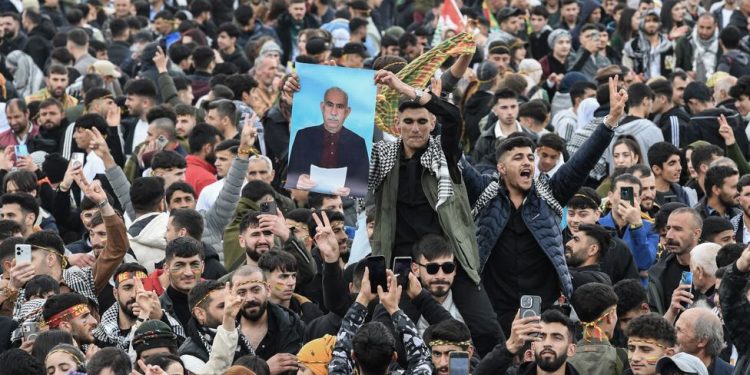
Therefore, the leader of the Kurdistan Workers’ Party (PKK), Abdullah Öcalan, began his most important messages (on April 25, 2025) regarding the peace process with Turkey by saying: “Those who fight are the only ones capable of making peace. The forces that wage war, oversee it, and bear its consequences are the only ones capable of making peace and should bear the responsibilities and repercussions.”
In this sense, mediators and goodwill actors in reconciliation are helpers in peace, but they do not create it. The actual transformative process of the Kurdish movement is very important for understanding the paths of nationalism in the Middle East. First and foremost, in this region, one must be a fighter with weapons in hand to reach peace; there is no other proven way to succeed. These were the main conclusions of the initial premises articulated by the Kurdish side.
It is worth noting that the Kurdish leader has recently spoken as a “fighter” negotiating for peace more than ever before. Nevertheless, in a subsequent message, he reminded Kurdish leaders that they have two options: either a democratic state (for both Kurds and Turks), or a Kurdish state. At another point, he also defined two options: either a democratic state or the withdrawal of Turkish nationalism into Anatolia.
“A Nation Without a State”
Due to the long Kurdish struggle against Arab, Persian, and Turkish nationalist-states, concepts of nationalism have experienced a remarkable intellectual movement on the Kurdish side. However, stereotypical media portrayals of the Kurdish issue depicted the Kurds as they were a hundred years ago: fighting for secession. Despite the nobility of this pursuit—an independent nationlaist-state—and its justification, both historically and in the future, this deliberately crafted image was produced under the supervision of the republic’s media apparata.
The Kurd was not allowed to present himself in any way other than the image desired by the state: someone seeking to dismantle and destroy the republic and exterminate the Anatolian Turks. Yet, the reality is that the spearhead of change was directed at the identity of the republic itself: dismantling the old republic and forging a new, pluralistic identity, based on the shared national pact (Misaqi Milli).
It was ideal for the republic to have the Kurd repeat himself a hundred years ago, and for the state to repeat its violence from a hundred years earlier. It was dangerous for the nationalist-state in Anatolia that the Kurds could protect the Kurdish nation without a nationalist-state. Reaching this formula, from the Kurdish side, shattered the tools of repression used by the state; they no longer produced satisfactory results.
When Öcalan pointed out that the PKK had been repeating itself for years and had become stagnant, he also did not overlook the fact that the republic had begun repeating itself even earlier. The current equation is clear: the fighters are the ones who make peace, and this requires both fighters to be active on the ground—even when they are repeating the same fighting methods used for 40 years. The most crucial point is to remain capable of fighting when the time for peace arrives. When Öcalan touched on Gaza and the war there, he condemned the idea of asymmetric warfare in cities, saying: “Either you submit to hegemonic powers (he mentioned Israel by name), or you are in a position that allows you to wage a real and equal war.”
This approach will influence the Kurdish struggle now and in the future, demonstrating the capacity to inflict losses on the enemy and prepare for war with the highest levels of mobilization. This is evident in the actions of the Syrian Democratic Forces during recent tensions with the new Damascus government.
Notably, Turkish Foreign Minister Hakan Fidan’s interventions are based on reinforcing traditional nationalist solutions, such as his insistence on the “withdrawal of the Syrian Democratic Forces from Arab cities.” This means preventing the gradual, participatory interaction of what Öcalan—along with Bahçeli—calls “social unity,” a concept that is an alternative to both class-based unity and the nationlist-state.
This “social unity” aims to reduce the state’s reliance on nationalist violence and establish a parallel system of democratic modernity, opposing the foundations of the prevailing modernity based on three pillars: the nationalist-state, capitalism, and the industrial/technological revolution. Öcalan described these pillars in his lengthy letter as “the horsemen of the end of the world.”
Part of Öcalan’s critique of modernity becomes clear in the final part of his letter, when he discusses the origins of the nationalist crisis in the Middle East, which began with genocides, from the Armenian genocide to the partial genocides of the Kurds: “The Kurdish reality shattered and ended with the emergence of modernity.” The Kurds and Kurdistan, as a concept and phenomenon, were targeted for annihilation by the Turkish Republic. The appearance of a phrase like “Imagined Kurdistan was buried here” is an official acknowledgment of genocide. This phrase appeared on the front page of the Turkish newspaper Milliyet in 1930, after the suppression of the Ağrı Rebellion led by İhsan Nuri Pasha and the Khoybun Society.
Kurdistan as a Colony… and a Social Graveyard
It is important to review the PKK’s approaches to nationalism, free from ideological rancor—whether from its opponents or rivals—and free from ideological blindness, in order to understand the current peace process in Turkey, and later in Syria and Iran. This also helps gauge the scope of the Kurdish issue and its resilience amid wars and calamities that have afflicted the region’s peoples.
In the early days of the party’s founding, the question that united the first cadres was to provide a practical answer to the 1970s question: “Do the Kurds exist or not?” The Kurdish issue had begun to rise, but it had not yet transcended the genocidal denial by the nationalist-states. So, the fundamental question remained: Do the Kurds exist or not?
Answers came from the main Kurdish regions in Turkey, Iraq, Iran, and Syria. The PKK performed the most difficult task: providing this answer to the Turkish Republic. But after forty years, has there been a greater development beyond the answer that the Kurds exist? The process of Kurdish national liberation has not yet been achieved. The reason in the Turkish case, as Öcalan explains, lies in socialist ideology. As he says, “Socialism collapsed, but we did not fall. Despite this, we experienced a major crisis.” He implicitly distinguishes between “liberation” and “achieving freedom.” Understanding these theoretical distinctions is essential for grasping the current peace process, its expected outcomes, and the timeframe in which its fruits might be realized.
Achieving freedom has made it possible to resolve the crises of Kurdish and Turkish nations, since the party has succeeded in defining and presenting the Kurds. To emphasize that the PKK has achieved its greatest goals, Öcalan states: “Without the PKK, Kurdish culture would have disappeared like the Maya and Aztec cultures in Latin America, and the Kurds would have become extinct like the Native Americans.”
Furthermore, Kurdistan no longer faces a single major problem: occupation. With the end of occupation, all other minor problems will also vanish. In this context, Öcalan moved beyond the principle that “Kurdistan is a colony.” This phrase was the intellectual starting point for a group of university students—including Öcalan—fifty years ago. So, what is Kurdistan, besides being a colony?
The British Model
In his message to the party conference, Öcalan identified a phenomenon more dangerous than “colonialism,” describing it in several terms, including “mass graves,” as a result of deep internal historical fragmentation and a century of state intervention that has corrupted the societal cultural fabric. Therefore, the Kurdish reality is not simply a colonial situation, and this understanding opens the way for solutions focused on gradual internal development. Like any Middle Eastern society, some issues may be impossible to resolve without the aid of the state itself, provided that the state is based on shared identity foundations—namely, a multinational state. At one point, Öcalan alluded to the British model as a preliminary solution to start with in Turkey, though he did not provide detailed specifics or a comprehensive plan.
It is well known that the British model, while not without shortcomings, is based on an unequal coalition of nationalities, in which English nationalism dominates the upper management and strategic decision-making—essentially, a model built on a “political union” led by a hegemonic nationalism centered in England. Perhaps a similar model could be initiated in Turkey: a constitutional political union between Kurdistan and Anatolia under Turkish leadership.
This is what the peace process could potentially achieve in its initial phase. However, an important aspect that also requires attention is the extent of transformation needed from the Turkish Republic to approach the British model of governing quasi-state territories (such as Wales, Scotland, and Northern Ireland). Nonetheless, there is no detailed program or model being worked on; the British approach remains a general framework. There could be a better alternative in Turkey and Kurdistan—one where there is no longer a “nation-state” in the classical sense, nor an occupying “nationalist-state,” but rather a multi-national political union.
A Self-Genocidal Dynamic
It is crucial to understand these complex aspects of the relationship between society and the state. Why does the Democracy and Equality Party (DEM) in the Turkish parliament also embrace the concept of “social unity” at the level of both the republic and Kurdistan? Because such an approach could allow for the construction of multiple nationalities within a single state without turning it into a system of civil war.
This requires a process of oversight, care, and a responsible approach from all involved parties. Over a hundred years of persecution and cultural erasure, the Republic has fostered a self-sustaining dynamic among the Kurds to exterminate themselves—through agents Öcalan describes as “Kurdish committees,” similar to the “Jewish committees” that collaborated with Nazism and fascism to compile lists of Jews to be burned, in exchange for a potentially brief reprieve of no more than 24 hours, based on the principle: “Save your family and abandon your community.” This system exhausted the Republic due to its frequent use. It began with the 1961 amnesty, when Alparslan Türkeş’s group within the military coup demanded that exiled Kurds return on the condition that they renounce their Kurdish identity, culture, and politics.
Therefore, Öcalan notes at the end of the fifth paragraph of his letter that “from now on, the struggle and resistance will be directed inward. The next stage will be the stage of self-building. Therefore, peace and a democratic society must be achieved. This is the challenge we face now.”