

Since the fall of the Assad regime, Syria has been living a striking paradox: an
increasing political openness toward the outside world, exploratory visits by investment
delegations, and an abundance of conferences, agreements, and memoranda of
understanding, contrasted with a domestic reality that remains incapable of translating
this movement into actual reconstruction.
Nevertheless, the current phase is not devoid of intermittent signs pointing to a return of
interest in Syria, even if always driven by political calculations on the part of the
investment delegations rather than an attraction to economic opportunities in the first
place. Over the past months, Damascus has witnessed Arab and Gulf investment
forums, and projects and agreements have been announced in the sectors of real
estate, energy, infrastructure, transport, tourism, and logistics.
The importance of looking at the investment map before looking at its numbers stands
out. The statements made by the Chairman of the Emirati real estate company Emaar,
Mohamed Alabbar, at the Syrian-Emirati Investment Forum gained their broader
significance as they opened a larger question about the direction of incoming
investments to Syria: Will they be an entry point to rebuilding the country in a more
balanced manner, or will they reproduce geographical and developmental disparity
under the banner of reconstruction?
The founder of “Emaar” spoke about projects under study in Damascus and its
surroundings with a value that could reach 11 or 12 billion dollars, and about another
package on the Syrian coast that could range between 5 and 7 billion dollars, at a time
when the official discourse celebrated these figures as evidence of the return of
confidence in Syria.
On the surface, these numbers seem like good news for Syria. A devastated country,
emerging from long years of war, sanctions, and contraction, needs every dollar
entering its economy, and every company capable of employing labor, moving the real
estate market, reviving tourism, and rebuilding a part of external trust. One cannot
downplay the significance of companies and businessmen of Alabbar’s weight returning
to think about the Syrian market, or Damascus turning once again into a hub for Gulf
and Arab investment forums.
However, the real question lies in the investment map, which seems—by virtue of the de
facto situation—to be an alternative to reconstruction. When the major package is
proposed in Damascus, and then a second package is added to it on the Syrian coast,
we are facing an indicator of an old pattern of economic thinking in a new attire: the
center first, the facade second, while the peripheries and the regions most affected and
most impoverished remain in a position of waiting.
The problem does not lie in investing within Damascus. The capital, by its nature, is a
political, administrative, and commercial center, and any process of economic revival
will need to restart it. The flaw also does not lie in investing in the coast, where there are
tourism, real estate, and service potentials that can attract capital and open up job
opportunities. The problem begins when Damascus turns into a semi-sole gateway for
viewing Syria, and when investment becomes a mirror to the desires of investors alone,
not to the priorities of society nor the necessities of just reconstruction.
Will the country be built according to the logic of national equity, or according to the
logic of marketable regions? Will reconstruction be a project to reconnect the Syrian
geography to each other economically, or a project to produce beautiful urban islands
within a vast country of ruin, poverty, unemployment, and displacement?
What makes these questions more pressing is that the investment forums did not come
isolated from a prior context. In July 2025, Damascus hosted the Syrian-Saudi Forum,
during which 47 agreements and memoranda of understanding were announced with a
value approaching 24 billion Saudi riyals, meaning more than 6 billion dollars. These
agreements were also presented as a sign of Syria’s return to its economic
surroundings and the beginning of a new phase of attracting Gulf investments.
However, the repetition of the scene in Damascus raises a political and economic
question simultaneously: Why does the capital always seem to be the stage of the first
announcement, the center of the first contract, and the facade of the first investment?
And why do the devastated provinces not appear to the same extent in the heart of the
investment discourse?
The Syria that needs investment is not Damascus alone, nor the coast alone. There is
Rural Damascus, and the northern and eastern provinces—Hasakah, Raqqa, and Deir
ez-Zor—where agricultural, oil, and water wealth lie, and where years of
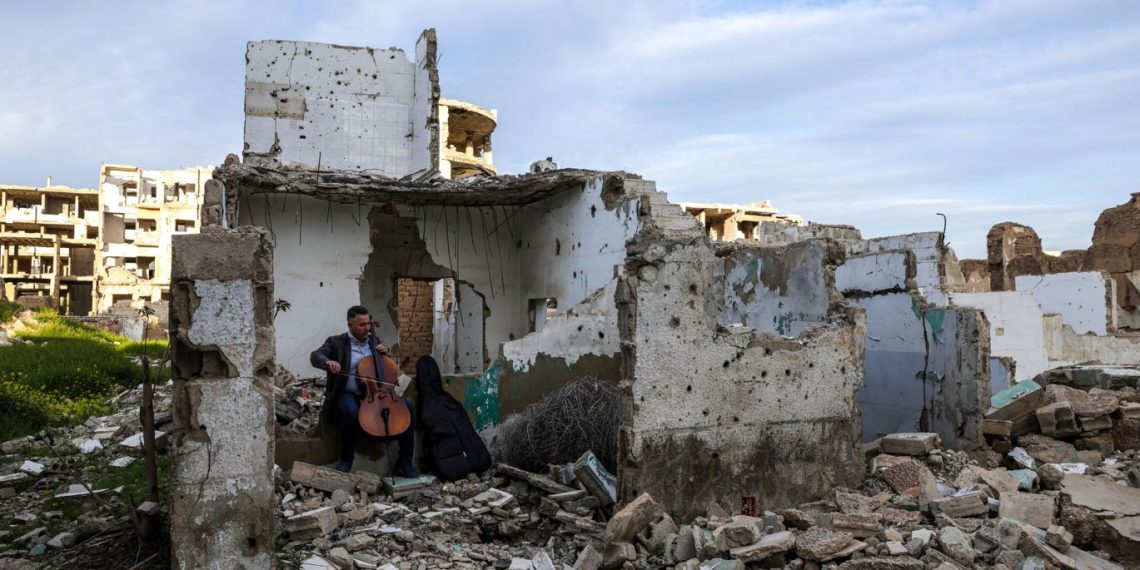
marginalization, war, and destruction have accumulated. There are cities devastated
during the years of war, such as Kobani, the symbol of victory over ISIS, and there are
major cities like Aleppo, with the industrial, commercial, and historical weight it
represents. There is Homs, as a central node between the north, south, east, and the
coast. And there are the vast rural areas that cannot be left outside the equation of
revival. If the reconstruction process is truly intended to be national, it must not be
reduced to towers, hotels, and complexes within the center or on the shore.
Here, a distinction must be made between investment as a private activity and
investment as a public policy. It is the investor’s right to look for profit, for the safest
land, for the market most capable of paying, and for the fastest-marketing location. But
the duty of the “state” is completely different. The state should not content itself with
receiving investors’ offers and celebrating them; rather, it must lay out a national map
that determines where investment must go, what sectors should have priority, and how
capital can be transformed from a tool for beautifying the center into a means of
restoring balance between regions.
Those in charge of managing Syria could have presented a more balanced national
map to investors, one that does not start solely from the most attractive sites for quick
returns, but rather from the areas of most acute need as well: Aleppo as an industrial
lever, Homs as a node of connection and production, the Syrian East with its agricultural
and oil resources, and the South as a border area in need of economic and social
stabilization. Only then would investment turn into a tool for reconnecting the country to
each other and mitigating the disparities accumulated by the war and by pre-war
policies of targeted discrimination against the Kurds nationally, and against the eastern
region developmentally.
Without this map, investment becomes capable of consecrating disparity instead of
treating it. Regions that possess better infrastructure will attract more investments,
regions that enjoy a stronger political and security presence will gain greater
opportunities, and regions suitable for tourism and real estate marketing will appear
more attractive than regions of agriculture, industry, and population return. Thus,
instead of investments being a bridge between Syrians, they may transform into a new
mechanism for sorting them geographically: winning regions entering the era of
projects, and losing regions returning to marginalization, considering that the current
authority is an extension of a centralization and a method of governance that is not new
throughout Syria’s history.
To emphasize once again, this does not mean that every project in Damascus or the
coast is a wrong project. Such a simplification weakens the hypothesis that the authority
is establishing a new geographical disparity, perhaps because the development of Syria
as a whole (at least theoretically) is a burden on their credit and external relations.
Investment in the capital may be necessary to restart administration, the market, and
services. Investment on the coast may create jobs, revitalize tourism, and attract hard
currency. But the problem lies in the absence of balance, and in the absence of the
public question about the share of the rest of the Syrian geography. What will go to
Aleppo? What will go to the East? What will go to the rural areas? What is the share of
the regions that paid double the price of the war? And what is the share of productive
sectors, not just real estate?
Real estate and tourism projects, no matter how huge, do not create a national recovery
on their own. They may raise land values, create temporary job opportunities, and grant
the state bright images of towers, complexes, and hotels (if they happen), but they do
not necessarily treat the roots of the collapse: unemployment, weak production,
decaying agriculture, destroyed industry, declining education, and the collapse of basic
services. Therefore, the question should not stop at the number of billions that will enter
Syria, but must extend to a more fundamental question: Will Syria benefit from these
billions (if they enter)?
It would have been more fitting for those in charge of the investment file to display a
different map. A state emerging from a war does not need large investors alone, but
needs justice in the distribution of opportunities. It needs, before that, a vision saying
that reconstruction is a test for building trust between the center and the peripheries.
In the end, the problem does not lie in investments starting from Damascus, for it is the
capital and the center, but rather in this beginning turning into a permanent policy that
makes capital see only “Lesser Syria” which—by coincidence—matches the map of
what the deposed regime used to call “Useful Syria”.