

Like many other issues related to history, to historical figures in politics, culture, and art, and to society itself, we are witnessing a certain awakening. This awakening comes from within history and through history, initiated by the “people of the letter,” so to speak. They seek to transcend numerous taboos in light of present-day developments, such as the available technological media and an implicit sense of cosmopolitism. This includes the awakening of the Kurds as Kurds, their awakening within the societies they belong to, as well as outside the communities where they migrated, settled, learned new languages, interacted with cultures, and began researching what they had long missed and what had deeply pained them amidst the hardships they experienced—and continue to experience. This stems from an acknowledgment that historical research carries an undeniable struggle-oriented dimension.
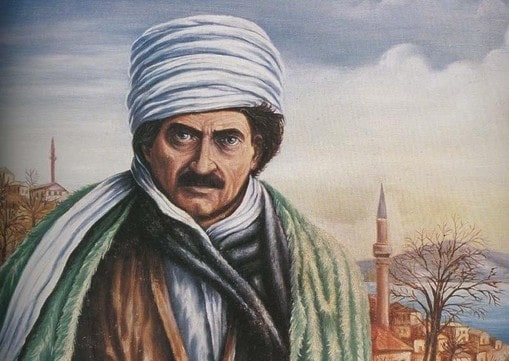
What has been and continues to be written about “Badi’ al-Zaman Said al-Nursi” (1876–1960)—this distinguished figure in stature, standing, voice, and echo across multiple languages, though his mother tongue, Kurdish, remains less present compared to the striking river-like flow of studies with various orientations—reflects his capacity for all this diversity, as evident in his biography. This places his Kurdish reader face-to-face with a core Kurdish question: What kind of Kurd was he?
To put it another way, and to illuminate this question further: Where does his Kurdishness begin, and where does it end, when connected to the intimate Islamic dimension of his persona?
The tone of our article and the pulse of its movement revolve around this very dynamic!
What Made al-Nursi Occupy the Minds of His Fellow Kurds
We are the sum of what we have said and what we have left unsaid. What we have said is not exclusively what has been pointed to here and there, but also what remains unexamined between the lines of our text. Returning to read a particular author in light of new developments is nothing more than following reserve paths—an affirmation that the act of reading is liberated from looking back at the past or peering into the future in a narrow sense. Once named, reading no longer belongs to a specific time. Therefore, examining the figure of al-Nursi from a reader’s perspective is an inquiry into the Kurdish identity that defines him—an identity we live and through which we sense what is different alongside today’s variables. It is as though al-Nursi himself is prompting us to read what was left unnamed in him and in his history.
A researcher points to three historical Kurdish figures of great renown:
“Three prominent figures stand out in the path of state-building within Kurdish society:
In the realm of Sufism: Mawlana Khalid al-Baghdadi al-Shahrazuri al-Kurdi, the pioneer of the new structure of the Naqshbandi order in the Middle East and Southeast Asia.
Badi’ al-Zaman Said (al-Kurdi) al-Nursi, a pioneer of contemporary Islamic thought, philosophy, and exegesis.
Ziya Gökalp, a Kurd from Diyarbakir, considered one of the most prominent sociologists of the late Ottoman era and a theorist of modern Turkey. Looking at the situation of Turkey from its founding to the present day, it is no exaggeration to say that it has been governed by social followers shaped within the intellectual platform established by these three.” (1)
Perhaps he is right in this assessment, or at least it contains an idea worth researching and considering.
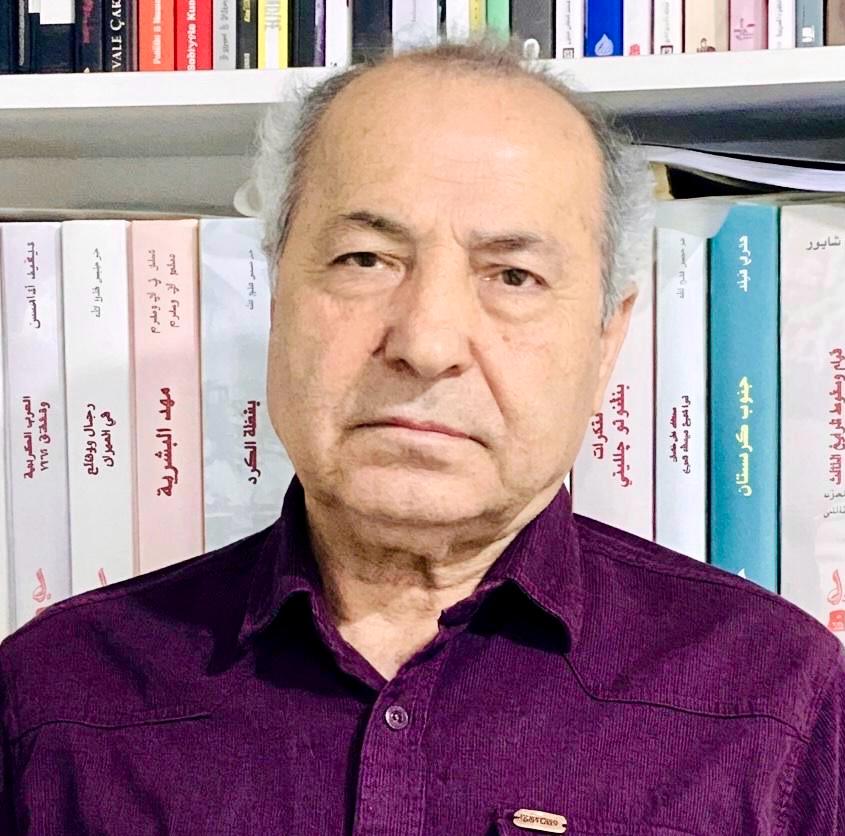
Therefore, out of a desire to understand the Other and recognize their true worth and standing, I point here to what Rohat Alakom expressed in this regard. Alakom lives amidst diverse cultures—Kurdish, Turkish, Swedish, among others—and reads and writes in their languages. Thus, the depth of his written work can be examined in proportion to this diversity of relationships and his tracking of cultural matters within the scope of our current inquiry.
Alakom wrote a relatively long article centered on al-Nursi. What was included in it?
“I wouldn’t trade an onion head for a thousand red apples!”—this is the title of the article. (2)
A title like this undoubtedly raises questions about its origins for anyone unfamiliar with it.
First, an initial illumination of the life path of this Kurdish scholar is necessary:
“Said al-Kurdi (1876–1960) was born in the village of Nurs, near the city of Hizan in the Bitlis province of Northern Kurdistan. For this reason, he is also known as Said al-Nursi. Initially, he called himself Said al-Kurdi, but he was unable to use this name often after the establishment of the Republic due to legal difficulties and other reasons. Nevertheless, he remained known by this name among the general public who knew him. What Said al-Kurdi wanted from the Kurds was national solidarity and national love. Given the great suffering the Kurdish society endured for centuries due to division and fragmentation, Said al-Kurdi’s calls to the Kurds were always in this direction, as we will see later. On the other hand, Said al-Kurdi, who argued that the Kurds were always deceived in the face of this fragmentation, resorted to his Kurdish identity and turned this observation into wisdom: ‘We are Kurds, we are deceived, but…’ ‘we will not be deceived.'”
This brings us to a pause and a closer look at a point focused on al-Nursi’s works:
“When studying the works of Said al-Kurdi, we notice that he chose certain Kurdish references. The influence of these other prominent Kurdish figures on his life is of great importance. He was influenced by figures such as Saladin, Melayê Cizîrî, Ehmedê Xanî, and Mawlana Khalid, and held immense respect for them. On the other hand, we find that some contemporary Kurdish nationalists, such as Khalil Hayali, Müküslü Hamza, and Ahmed Ramiz, were close to Said al-Kurdi in Istanbul at the beginning of the twentieth century.
When we study modern Kurdish nationalism that emerged at the beginning of our era, we see that Said al-Kurdi was one of its important figures. His name and other prominent figures are mentioned frequently. Said al-Kurdi seeks to unite the Kurds and offers them advice in this regard. He puts forward the view that one of the biggest problems facing the Kurds is internal conflict. He draws attention to the following dangers as the main enemies of the Kurds: poverty, ignorance, and conflict. Said al-Kurdi believes that the only way to eliminate these dangers is unity. He stresses that the path to achieving this high level is education, and offers a final piece of advice to the Kurds: ‘Read, read, read.'”
There is an attention drawn to a biography that transcends the individual in the man, expanding the circle of research to uncover what can be revealed in a loud life, vibrant with meanings:
“More than 25 years have passed since the publication of my article, The Story of Oblivion: Said al-Kurdi, in 1990 in the Swedish magazine Birne. A year later, an expanded version of the article was published in a booklet carrying the same title. As one reader noted, the title of the article or book carries deep connotations: ‘…even the title of the book expresses our ancient betrayal and our return to it.’ When this article was published, it sparked widespread debate among readers. For the first time, the Kurdish identity of this Kurdish figure was studied with such comprehensiveness. In those years dominated by Kemalist and leftist ideas, including this Kurdish religious figure in Kurdish historiography and evaluating him in this context was not a desirable topic. Because religious figures during that period were targets of criticism and labeled as ‘narrow-minded’ and ‘reactionary.’ But history proved these claims wrong. Said al-Kurdi assumed his prestigious position in Kurdish history and became one of the most prominent Kurdish figures of our time. In the past three decades, the number of written sources about him has increased significantly. There is still a need to prepare a comprehensive list of Said al-Kurdi’s works. When such a work is written in the future, I, like many others, will be eager to know the number of sources written in different languages on this subject.”
Alakom does not hide his appreciation for this personality who carries in his consciousness an entire history—not only for his own people, but for them and those living alongside them in one society and under one religion. He notes the significance of his name in history along with his title, his love for the iconic Kurdish national poet Xanî, and what lies beyond hasty evaluations, such as his stance on Kurdish revolts or the Turkish state in his time. Alakom highlighted this in an interview:
“It is well known that Ziya Gökalp regularly met and discussed with Kurdish intellectuals at the time, such as Said al-Kurdi, Mullah Ahmed-i Shashi, and Abdullah Cevdet. Gökalp, Shashi, and Nursi used to roll and smoke tobacco together in front of the Grand Mosque in Diyarbakir. When Gökalp wrote his poem ‘The Red Apple,’ Nursi was deeply angered by him and even visited him in Istanbul. Gökalp did not pay much attention to him, so Nursi sarcastically said: ‘I wouldn’t trade an onion head for a thousand red apples.’ Gökalp’s ‘Turkish Apple’ and Nursi’s ‘Kurdish Onion’ represent two opposing sides; treating them together causes diarrhea. At that time, the Empire, which had been a fortress for everyone for the past four hundred years, was collapsing. Gökalp’s dispute with Ibrahim Pasha al-Milli in Diyarbakir is well known. There was a vibrant Kurdish intellectual class in Istanbul and Diyarbakir that witnessed sharp debates, studies, and conflicts. What was the nature of Gökalp’s relationship with the Kurds during that period? For example, did he have any connection with his fellow countrymen from Diyarbakir, or with the Cemilpaşazade family, or the Bedirxan family?” (3)
In Alakom’s writings, a reader concerned with the actual process of reading will notice an emphasis on the problematic and the marginalized in history across his various books spanning three languages: Kurdish, Turkish, and Swedish.
It is a form of knowledge based on awareness and appreciation of the Other, as well as how to engage in dialogue with them.
Deferring definitive judgment on the Other—regardless of their type, gender, language, or nationality—is a striking feature in writings built on polyphony. It warns against passing any “final” judgment on anyone or anything, because there is always something that transcends rigid frameworks. Regarding a figure like al-Nursi, this stance becomes even more pronounced.
Becoming the Center of a Kurdish Dossier
Perhaps allocating a special dossier to al-Nursi in a journal of true cultural significance published by the Kurdish Institute in Paris serves as an acknowledgment of past shortcomings on the one hand, an attempt to remedy gaps in Kurdish cultural history on the other, and a way to keep the path open—much like the concept behind his name—on a third.
What was raised in the dossier about al-Nursi, and in Kurdish, of course? (4)
It is difficult, if not impossible, to cover all the diverse points raised regarding al-Nursi: his biography, social and political relationships, religious experience and its consequences, cultural activities, stances, and interpretations.
What matters is presenting aspects, “snapshots/scenes,” that showcase the varied interest in his thought, critique, speech, and action across his daily behavior and diverse life stages up to his death:
Perhaps the motive behind this dossier was his charisma and the attempts to distort it.
In the introduction, we read:
“Accordingly, it appears that some of those known as his followers have committed a grave injustice against this Kurdish scholar. Fethullah Gülen’s followers bear the weight of this heinous act. The greatest misfortune and harm lies in tampering with the content and authenticity of this scholar’s work; removing certain words and concepts while adding others.
When comparing the original works with those that were tampered with, the scale of distortion and alteration becomes glaringly obvious. Most importantly, in the writings of Said al-Kurdi, almost all words related to the Kurds and Kurdistan were deleted. In their place, the space was filled with religious or Turkish terms.” (p. 5)
For this reason, the voices of those who addressed his persona sought to illuminate him from within. For instance:
Merhem Ekeyd: Self-Knowledge is the Foundation of Everything
He points to a quote by the artist Joe Hill, who was executed in America many years ago—a quote frequently repeated by Swedish Prime Minister Olof Palme and once painted on the walls of the Stockholm metro: Stop complaining about the darkness; light a candle instead! (p. 9)
From this point, he launches his perspective:
Since the early 1990s, research on Badi’ al-Zaman Said has increased, seminars have been organized, conferences held, and programs broadcast on television and radio. (p. 8)
As is known, the name Badi’ al-Zaman differs from his choice of this name among the names he used in his life. During the era of Badi’ al-Zaman, the Kurd Said was alive, and long before him, Kurdish intellectuals used their titles, the names of their native villages and cities, and their family names—such as Melayê Cizîrî, Ehmedê Xanî, Mullah Mahmud Bayazidi, Pertew Beg Hakari, Kemal Fawzi Bitlis, Abdurrahim Hakari, Musa Anter, and others. This issue of names is a complex one: Which name should one be called by? Badi’ al-Zaman, a figure who could not use his name freely without facing grave problems like imprisonment, assassination, and exile, was forced to use different names and titles. (p. 9)
What can be observed in an interview with Medeni Ferho:
In response to an inquiry regarding a statement by writer Cemalettin Canlı: “To understand Said al-Nursi, one must understand nineteenth-century Kurdistan and the efforts of that era’s leaders” (Kurdistan Network, September 25, 2010)—is this an essential prerequisite? To what extent do you agree with this view?
The response:
The tyrannical Republic (Hovanger) could only be a source of atrocities. Therefore, answering this question is extremely difficult. In the history of the Turkish Republic, individuals like Badi’ al-Zaman or Said al-Kurdi were imprisoned in a ‘cursed paradise.’ This was the specific policy of the Committee of Union and Progress, which continues to be applied today in an even stricter and harsher manner. As a network, this mindset hides documents, conceals facts, and issues the latest statements—which are nothing but lies. They do not provide documented testimony; rather, they search for words, dictate them to their targets, and keep them captive in a ‘cursed paradise.’
The affirmation of his Kurdish identity by Yousif Sarhad Faiq: Badi’ al-Zaman Said is a Kurd.
Many scholars, poets, writers, and patriots received their education in Kurdish schools. Among the most prominent was Mullah Said al-Kurdi, who earned a prestigious standing throughout the world. For example, the Jewish professor Yehezkel Landau said of Mullah Said al-Kurdi: “Said Nursi (al-Kurdi) is a brilliant writer who paints exquisite pictures with his words, awakening minds from their slumber and stimulating them to action.” (p. 62)
Sheikh Said al-Kurdi held four principles in his life: he never accepted zakat or gifts from anyone; he never questioned scholars, saying: “I do not doubt their knowledge, but if they have doubts, let them ask me”; his students did not pay alms or zakat, as he fulfilled all their needs; and his life was simple, caring nothing for worldly matters. Wherever he went, he carried very little with him. For instance, when he passed away in Urfa on March 23, 1960, his estate consisted of a reed basket containing a prayer rug, a pitcher, two handkerchiefs, two pairs of socks, two pairs of shorts, two undershirts, and 7.5 Turkish lira wrapped in a piece of cloth in his shirt pocket. (Musa Anter: My Memories, Istanbul, p. 79) (p. 65)
What can be drawn from an interview with Mullah Shavelî:
Regarding the difference between him and other religious scholars:
There is a vast difference between Mullah Said al-Kurdi and Middle Eastern scholars. Mullah Said al-Kurdi did not limit himself to reading religious books; he studied and memorized various sciences, engaging in constant debate and dialogue with leading figures in those fields. He traveled to Mardin in 1892 and stayed in its mosque for a period. The Governor of Mardin heard of his arrival, feared him, said he would cause harm, and insisted he must be expelled from Mardin. He summoned him and forcibly sent him to Bitlis. News of his arrival reached the Governor of Bitlis, Omar Pasha, who summoned him and said: “I will prepare a place for you.” The Mullah initially refused, but agreed after persistence and pleading. There, he read and memorized around eighty books on Islamic jurisprudence and principles. He also engaged in constant scientific discussions with the governor on topics such as physics, mathematics, and geography. (p. 102)
In an interview with Roni Alasor:
Regarding ignorance and universities:
Said al-Kurdi worked for the education, knowledge, and awareness of the Kurdish people. He said: The enemy of the Kurds is ignorance. That was his conviction. He argued that ignorance must be eradicated for the sake of Kurdish identity, unity, and freedom. He considered education essential to combat ignorance, stating in his debates that ignorance had killed Kurdistan. For this reason, he demanded the establishment of Kurdish universities. He opposed superstitions and harmful innovations. He spoke of both scientific and religious universities, expressing this by saying: “The light of the mind is scientific knowledge, and the light of the conscience is religious knowledge. Their unity reveals the truth. If separated, science and philosophy lead to deception, denial, and doubt, while religion alone leads to reactionism, superstition, and bigotry.” (p. 168)
With Karnas Coger, in his article: Badi’ al-Zaman and Mullah Abdul-Muttalib of Kurandshty:
A striking incident is recounted:
Mullah Abdul-Muttalib says: “I once asked Badi’ al-Zaman: ‘Sir, it is said in the world that the Prophet Khidr spat on Badi’ al-Zaman’s tongue, and because of that, the door to the treasure of knowledge opened to him, making him the owner of this culture and knowledge. Is this true?’ Badi’ al-Zaman looked at me, smiled, and said: ‘God is witness that no such thing happened. If there is any grace from God that opened the doors of knowledge to me, it is thanks to Sheikh Ehmedê Xanî. During my studies in Bayazid, I used to visit his grave, lean my back against his shoulder, and recite my lessons. Throughout my study period in Bayazid, this was my routine, and I read many books. I studied and completed my education at the grave of Sheikh Ehmedê Xanî, continuing my studies there in that manner. I always consider myself indebted to Sheikh Ehmedê Xanî and say that all the knowledge I possess is by his grace.'” (p. 174)
What is intense, vital, and even provocative appears in an interview with Malmîsanij—an accomplished researcher whose work stimulates an intellectual drive to recognize errors and acknowledge them in Kurdish history:
— Sir, should I say his praise for the Committee of Union and Progress came before his work or after it? If I say after, does that mean Said al-Nursi supported the Unionists’ oppression?
M. Malmîsanij: I am not saying Said al-Nursi knowingly supported their oppression, but whatever the intention, his support was a mistake. As I said, he supported them during the war. What happened in the end? The Kurds were left stranded in the field. Their language was suppressed, and their existence was denied. If Kurdish scholars and leaders back then did not make mistakes, how did Turkish officials deceive the Kurds? A wise leader looks to the future. If I support others to revive their state, and then they suppress my mother tongue, deny the existence of the Kurds, enslave my nation, and force the children of this nation every morning to recite “I am a Turk, I believe in science,” where is my knowledge and leadership now? (p. 186)
— There is a section in your book titled “Said al-Nursi: Kurdish Independence” stating that all Kurds wanted independence, while Said al-Nursi was not among them. Is this true?
M. Malmîsanij: There is a section in my book titled: Not in Favor of Independence (Bağımsızlıktan Yana Olmayışı). He did not advocate for Kurdish independence, and I wrote this as well. I did not say “all Kurds advocated for independence except Said Nursi.” Another point: Said Nursi is not all the Kurds. He did not represent every Kurd, but other nations wanted their independence, were influenced by the conditions of that era, and became states. Today, their children do not recite every morning: “May my existence be a gift to the Turkish nation.”
The Greeks wanted independence, as did the Albanians, Bulgarians, Serbs, Arabs, and Armenians—and they became states. There is a state for the Turks and another for the Persians. Who was left without a state? The Kurds remained. Perhaps uneducated and illiterate Kurds were unaware of those other nations, but educated Kurds surely must have known. It seems that some Kurds, like the Kurdish Social Organization group, thought in the same way as scholars and leaders of other nations: that although independence was our right like other nations, we were under no obligation to serve the Turks. But most often, our “scholars” and prominent figures paid no heed to them, ignored them, or turned their backs on them. (p. 188)
What cannot be ignored is the naming of what has been and continues to be overlooked in an attempt to evade historical responsibility, historical consciousness, and the courage to admit historical mistakes. Such mistakes can sometimes be a influential factor in turning points of history, whether negatively or positively.
Al-Nursi—complex in his culture, religion, and worldly affairs—can be examined across the arc of his life. Through him, we can see many figures who were icons of the Kurdish movement and its cultural and political activities. Behind the series of Kurdish collapses, catastrophes, or defeats lay not merely the presence of a powerful enemy or enemies, but rather an attraction to the emotional, an evasion of historical imperatives, and the flaw of viewing any mistake as an “insult” wandering through history. Conversely, in societies advancing in culture, mistakes are granted optimal educational value.
By viewing al-Nursi as a human being, and considering ourselves as part of his kind, we realize what correctness was waiting for us, and what kind of life we seek that becomes within our reach nationally. (5)
Sources and References
- Yahya Munis, Is Turkish Nationalism a Trap Set for the Turks? (yahya-munis/turk-milliyetciligi-turke-kurulmus-birtuzak-mi-2)
- Rohat Alakom, “I wouldn’t trade an onion head for a thousand red apples!” (Rohat Alakom: Bir kelle soğanı bin kızıl elmaya değişmem!)
- Rohat Alakom, “In contrast to ‘The Principles of Turkism’, ‘The Principles of Kurdism’ should have been written.”(Rohat Alakom: Türkçülüğün Esasları’na karşılık Kürtçülüğün esasları yazılmalıydı)
- LÊKOLÎN Li ser Bedîûzeman Seîdê Kurdî — Journal of the Kurdish Institute for Research and Science, Issue 17, Autumn 2021.
- I note that I addressed him in my book: The Tormented of Light: In Kurdish Sufism, Dar Tammuz, Damascus, 1st ed., 2015, under the chapter: Badi’ al-Zaman al-Nursi: According to Which Kurdish Sufism Does He Belong? (pp. 378–413).