


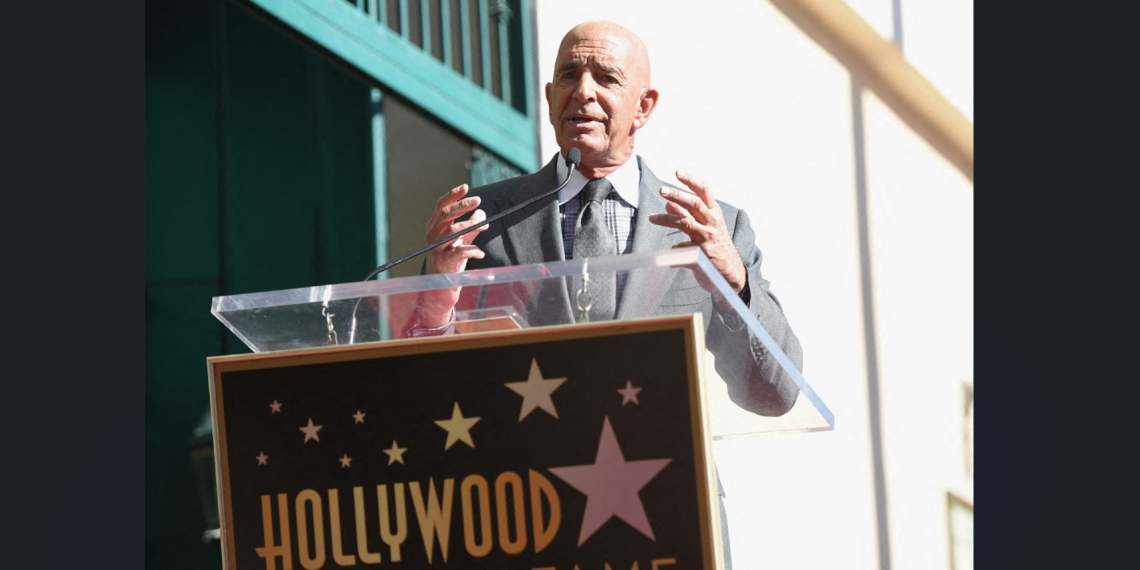
U.S. President Donald Trump on May 31 appointed Ambassador Tom Barrack as Special Presidential Envoy to Iraq and Syria. Ambassador Barrack earlier replaced Mark Savaya, appointed in October 2025, who failed to prevent the nomination of former Iraqi Prime Minister Nouri al-Maliki to return to office in January. In the same month, President Trump heavily opposed the return and nomination of Maliki, seen as being too close to Iran. In response, the Trump administration stopped air shipments of U.S. dollars to Iraq.
The appointment of Ambassador Barrack shows an effort by the U.S. to bring back Iraq, Syria, and Turkey in one strategy to limit Iran’s influence in the regions and for the U.S. to dominate energy markets in the region. This was also shown by the arrest of an Iraqi Kataib Hezbollah leader in May in Turkey, in which Ambassador Barrack played a role, as shown by his post on X thanking the FBI after the arrest.
U.S. Ambassador Tom Barrack’s job was earlier limited to being the Ambassador to Ankara and Envoy to Syria, but is now also getting more involved in Iraq. His appointment came amidst the rise of Iraq’s new Prime Minister Ali al-Zaidi, a compromise candidate, sworn in May, after Maliki and former Iraqi Prime Minister Mohammed Shia’ al-Sudani failed to get support from the United States. The Iraqi Prime Minister Zaidi in May and June launched an anti-corruption campaign and also gave Iranian-backed armed Iraqi actors until September 2026 to disarm. Moreover, after PM Zaidi’s appointment, the U.S. resumed the flow of dollars to Iraq, and PM Zaidi in July flew to Washington.
Axios reported that U.S. envoy to Iraq Tom Barrack played a role in paving the way for Iraqi Prime Minister Zaidi’s visit to the United States for several weeks. On July 14, President Trump praised 40-year-old Ali al-Zaidi, describing him as “young”, “handsome” and as someone he wanted to work with. It reminded many of the comments President Trump made about Syrian President Ahmed al-Sharaa calling him “a young, attractive guy” during the first meeting between President Trump and President Sharaa in May 2025 in Riyadh, Saudi Arabia
During Iraqi PM Zaidi’s visit to the U.S., the Iraqi PM met with several U.S. energy companies and Iraq and Syria signed a deal to revive Iraq’s crude pipeline from Kirkuk to Syria’s Baniyas with Chevron, showing Ambassador’s Barrack role in trying to form a new political framework connecting Syria, Turkey and now also Iraq. President Trump has also hinted that they want Syria to attack Hezbollah in Lebanon. U.S. energy companies have also become more active in Syria after Assad’s regime fell in 2024.
“The US is trying to decouple Iraq from Iran and tie Baghdad into a new US alliance also containing Syria and Turkey,” David Witty, a retired U.S. Army Special Forces Colonel and Foreign Area Officer, said.
“Of course this involves disarming the Iranian aligned militias, as well as attempting to address the systemic corruption in Iraq. Although the latter is probably more about addressing a long term public complaint about corrupt politicians and officials. Whatever one thinks about PM Zaidi, he is willing to take on an issue that has mostly been ignored in the past.”
Therefore, it is clear that the goal of the United States is to make Iraq less dependent on Iran and to bypass the Strait of Hormuz, which Iran is still trying to dominate, which recently resulted in renewed conflict between the U.S. and Iran. Syria plays a key role in this since it can provide Iraq with a new way to bypass the Strait of Hormuz.
“POTUS’s new paradigm of Middle East nation states connectivity alliances paired with Iraq’s young, bold, and visionary PM alZaidi, is charting a transformative corridor across Mesopotamia, the Levant, Türkiye, and the Gulf—rendering the Strait of Hormuz far less consequential very soon,” Ambassador Barrack posted on X on July 17.
The Strait of Hormuz, was also one of the reasons why Iraq has also improved relations with Syria. Iraqi media reported in June that Iraq was unable to export around 350 million barrels of oil since the closure of the Strait of Hormuz due to the Iran-U.S. war, resulting in losses of approximately $37.7 billion. As a result, Syria started to truck fuel to Syria’s Banyas port during the 40-days war that started on February 28 when Israel and U.S. launched strikes on Iran, and Iran retaliated by hitting U.S. and non-U.S. military targets in Gulf countries, Israel, Iraq, and the Kurdistan Region.
“Iraq is trying to avoid becoming a second front in conflict between the United States, Israel, and Iran. The new Iraqi leadership has to balance the reality that Iran continues to have strong influence over a wide range of Iraqi political and militia actors while simultaneously avoiding damaging U.S. sanctions and a concerted Israeli covert campaign inside Iraq,” Nicholas Heras, Executive Director at the Washington-based Middle East Policy Council, told The Kurdish Center for Studies.
“Ambassador Barrack is trying to get the Iraqis to lean a bit more toward the United States than Iran. Barrack’s approach is akin to a business negotiation,” he added.
The Trump administration so far managed to bring back U.S. energy firms back into the Iraqi market. In 2009, U.S. energy firms were not able to get any oil field contracts, and Russia and China started to dominate Iraq’s energy sector. But since President Trump came into power, U.S. oil firms and companies signed several contracts, including during Prime Minister Zaidi’s visit to the U.S.
However, according to Ali Almikdam, a Baghdad-based researcher specializing in Iraqi political conflicts and regional influence, it would be an oversimplification to attribute what is happening in Iraq solely to U.S. pressure or to an individual such as Tom Barrack.
“While the broader international environment particularly the repercussions of the U.S.–Iran confrontation has undoubtedly created a greater sense of urgency around addressing the issues of armed militias and corruption, and while the American position has been one of the factors shaping this environment, it has neither been the decisive nor the only driver,” he said.
“What is taking place today is, above all, the result of an Iraqi political decision driven by domestic considerations: preserving state stability, reinforcing the authority of state institutions, and preventing Iraq from once again becoming an arena for regional confrontation. There is also a growing recognition within the Coordination Framework itself and even among some militia leaders that the previous status quo is no longer politically, economically, or security-wise sustainable.”
It remains to be seen how successful this strategy will be. In the end, Zaidi was appointed by the Iranian-backed Shia Coordination Framework and also attended the funeral procession of Iran’s supreme leader in Iraq. U.S. Republican Rep. Joe Wilson, one of the most anti-Iranian regime voices in the U.S. Congress expressed his reservations about Zaid’s visit and refused to attend his visit. He accused PM Zaidi of running a bank sanctioned for supporting Iran. “Iraqi leaders come and go but the system stays the same an entire government system based on only one thing — serving Iran’s Supreme Leader, and funding sectarian terrorist militias,’ Rep. Wilson posted on X.
The visit also seems to have gotten a pushback from Iran. The Iran-backed Islamic Resistance in Iraq quickly denounced Al-Zaidi’s visit to the United States and has refused to disarm. Also one day after Prime Minister al-Zaidi visited Washington, Iran and Iran-backed militias started to target the U.S.-led coalition base in Erbil, Iraqi Kurdistan on Wednesday and Friday, and also increased attacks on Sulaimani, killing 9 members of the Iranian Kurdish Komala party. On July 16, Iraqi Prime Minister Ali al-Zaidi, strongly condemned the attack on Erbil, which indicates the drone attacks on Erbil might be an attempt to undermine PM Zaidi’s visit to Erbil. Iranians were also opposed to PM Zaidi’s visit to Washington, Axios reported, but still Zaidi went. Furthermore, Al Hurra reported that Iran was trying to push PM Zaidi to first visit Tehran, before Washington, but to no avail. Rudaw’s reporter in Washington, Diyar Kurda reported that Iraqi PM Zaidi will now visit Qatar, then Iran, and then Turkey after his visit to the U.S.
The biggest challenge to Baghdad will come in September this year , when the U.S.-led Coalition will leave Iraq as part of an agreement between Baghdad and the U.S. during the previous Biden administration and the deadline for the militias to disarm expires. Axios also reported that the disarmament of Iran-backed militias was also a key issue in Zaidi’s meetings in Washington and U.S. officials hope the visit is a first signal that Zaidi intends to act on his commitments to disarm those militias. So far, the Shiite Movement Muqtada al-Sadr, Imam Ali Brigades and Asaib Ahl al-Haq (AAH) have supported the disarmament move. This while, the Iran-backed resistance factions, such as Kataib Hezbollah and Harakat al-Nujaba have refused to disarm.
It remains to be seen if these ‘resistance’ factions will disarm in 2026, or find other excuses not to disarm, such as the increasingly renewed U.S.-Iran conflict around the Strait of Hormuz and southern Iran, or the presence of NATO troops and Western diplomatic missions in Iraq.
“The success of any long-term strategy depends not only on Baghdad but also on the nature of its dialogue with Tehran, given Iran’s influence over a number of these groups. For this reason, Iraqi-Iranian engagement remains an important component of any sustainable solution, alongside the strategic dialogue between Baghdad and Washington regarding the future of bilateral security and political relations,” Almikdam concluded.