

Controversial Kurdish Figures – 1
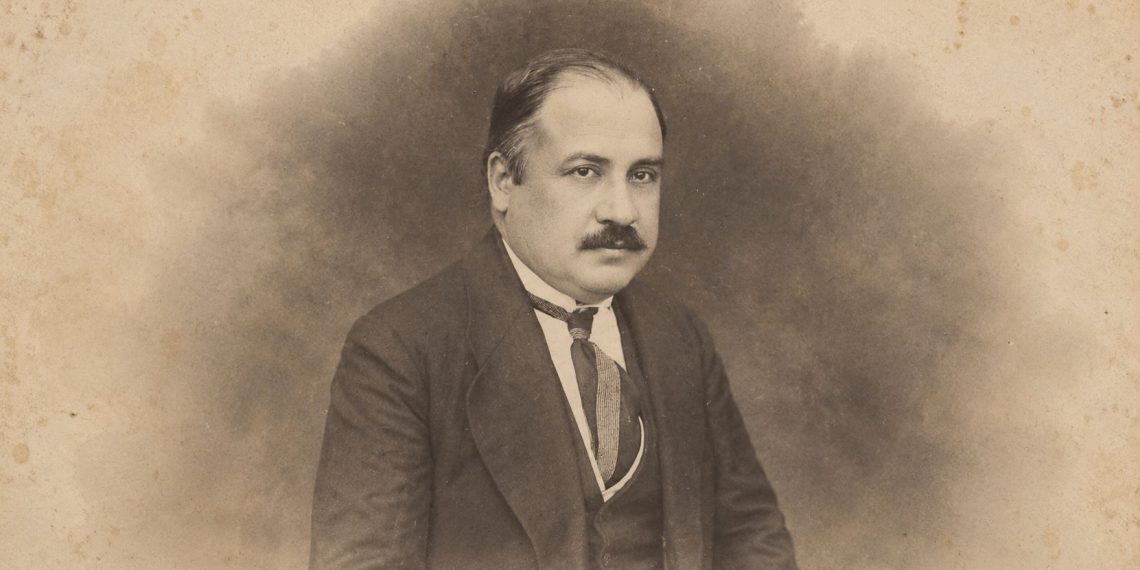
Perhaps Ziya Gökalp (1876–1924) is among the most widely discussed modern and contemporary Kurdish figures, both secretly and openly, among Kurds in general, and by intellectuals and sociologists in particular. This is because he disavowed his Kurdish identity and identified himself as a Turk, as he is commonly known. In fact, he fiercely emphasized his Turkishness. This has formed a deep, festering national wound in the conscience and memory of the Kurds. They are entirely justified in showing more than just regret; they are justified in their indignation and in execrating him in return—not merely because he deserves it, but because Ziya Gökalp, in his name and his intellectual and cultural stature, represents an exceptional epistemic figure in their history. When they keep silent about him, or attempt to ignore and sideline him, it is not out of mere revulsion toward him specifically, but rather an attempt to avoid provoking the pain and agony caused by the Kurdish national wound associated with him.
In light of this, nothing is easier than invoking the names of Ahmed Shawqi, Abbas Mahmoud al-Aqqad, Muhammad Kurd Ali, and Ma’ruf al-Rusafi, etc. These are poets and writers well-known for their Kurdish origins, or who possess Kurdish lineage at the very least. Yet, there is no pain, no suffering, and no tension when linking them to Gökalp, who belongs to their national land, their national culture, and their national language. This is because the choice he adopted was to assert his Turkishness, and moreover, because he made an exceptional contribution in return—something that the Turkish populace, and their intellectuals concerned with the question of nationalism, national culture, language, and history, can never forget. They perceive in what he inscribed for them and in their name what many failed to produce in laying the foundations of Turkish nationalism.
Accordingly, disowning him does not heal the inflamed Kurdish national wound here; rather, it prompts the reader to trace the trajectory of such a transformation and such a relationship, exploring how what happened came to be: how did Muhammad Ziya become Ziya Gökalp (the Turkish surname chosen by himself, meaning “Sky Hero” or “Celestial Thunderbolt”)? Consequently: what kind of Kurd was he?
The Necessary Distinction
There is a vast difference between the person of rhetoric and the person of culture. In the first case, there are the masses, the need for psychological mobilization, the waving of slogans, and the indicative applause. In the second case stands the intellectual—the sociological or generally social person of culture—contemplating what is unfolding, deeply connecting the structure and heat of rhetorical discourse with the spectacle of the responsive masses as they applaud and cheer with enthusiasm.
In dealing with such a situation, and to be worthy of entering history, we must enter its forest and see the dancing as well as the darkened shadows, so that we might discern what is useful to know about what lies within and beyond the shadows.
Does “execrating” such a man correct a historical trajectory? Does it heal a national wound, or straighten a social distortion? The head that stands high between the shoulders can perceive what extends beyond the horizon and detect what is ambiguous or obscured as well. Disavowing one’s nationality is a shock, and displaying indignation is equally an expression of helplessness.
Be that as it may, in light of a set of sources that lead us into the heart of the “forest,” we have no choice but to track the threads of the game!
Understanding the Other is not built on disparaging them, but on comprehending the divergence within them, for there are calculations that concern me as well.
How can someone who was recognized as a Kurd, who knew the Kurdish language, and who worked for the Kurdish cause for several decades, emerge at a pivotal turning point in time—one that cannot be studied in isolation, namely after 1909, when the influence of the “Committee of Union and Progress” began to surface at the twilight of the Ottoman “Sick Man of Europe”—and declare loudly that he is a Turk, and that is that?!
The Turks, foremost among them the founder of their state, “their father: Atatürk,” take pride in him. And why shouldn’t they, given that he provided them with what they sought, while simultaneously placing in their hands an “intellectual weapon” carved from the “clay” of the Kurds to use against them. The detachment of an extraordinary “head” from his community serves, at times, to draw attention to a structural flaw within it: here is one who was among you, and has now become a “war” upon you, and a negation of you. Thus it can be said in the final analysis!
The simplest example of his high standing in social culture is that a sociologist of Turkish origin, Ismail Beşikçi, cannot be read thoroughly by his reader—as in his book The State of Order in Eastern Anatolia—without thinking about the extent of Gökalp’s influence on the writing of such a work concerning the Kurds socially and culturally [1]. Thus, he becomes an arena for wagers, conflicts, attractions, polemics, and further discourse:
One author writes in Turkish:
(Ziya Gökalp was born on March 23, 1876, in Diyarbakır to a family of Kurdish origin. Although his family was of Zaza origin, they lived under the influence of Ottoman culture and the Turkish language (Naci, 2011: 19). Gökalp argued that cultural belonging, rather than ethnic origin, should be the basis of nation-building.) [2]
Another writes in this domain:
(Gökalp’s father was Mehmet Tevfik Bey from Çermik, Diyarbakır, and his mother was Zeliha Hanım from the Pirinççizade family. While his name was Muhammad Ziya, he used the name “Ziya Gökalp” in his writings from the Second Constitutional Era onward. He chose a surname for himself about 25 years before the enactment of the Surname Law. Mehmet Fuat Dündar believes that his father was Turkish and his mother was Kurdish. (Yet, for some reason, Gökalp is known as a Kurd rather than a Turk.)) [3]
There is another path taken by genealogists:
(An interesting point must be noted here. It has been recorded that Gökalp’s family on his mother’s side is Kurdish, and on his father’s side is Turkish. At this juncture, claims of Gökalp’s Kurdishness are built on his lineage from his mother’s side.
Fuat Dündar, who describes Gökalp as a person whose intellectual focus—and even his views, according to some opinions—shifted in tandem with all his relocations, and who “adopted an Ottoman-Turanian-Anatolian, and sometimes Islamic, and at other times secular policy during these movements, and perhaps because of this, managed to influence policy at both the micro and macro levels despite all the turmoil of his era,” also set out from a similar inquiry.) [4]
Of course, in such contestations, we must not forget the significance of insisting on his Kurdishness or his Turkishness when nationalism, in its peak intensity, becomes pivotal. For the Turk, when tracing Gökalp back to Turkishness, does so not to correct a certain historical error, for instance, but rather as an expression that the emergence of such a thinker, as a Turk, is a natural phenomenon on one hand, and that there is nothing among the Kurds to confirm the possibility of such a thinker emerging, thereby asserting superiority over them.
Because in Gökalp’s life, as traced by those who occupied themselves with its various stages, there is that which is Kurdish from his childhood until the year 1909 (spanning approximately 33 years) and that which underwent transformation and change after that (the remaining 15 years). To understand the nature of the arising tensions—not from a careful study of each case in the series of his age periods, his relocations, his interests, and his relationships within the network of major events: wars across different fronts—for this reason, only the one who looks ahead with the required calmness at what is happening can see the voids and their causes.
Renderings.. Renderings
Ziya Gökalp’s personality is deeply complex, through his writings and texts that offer readers of vastly different visions, purposes, and adopted methodologies the capacity to say what reveals the other as his antithesis:
One author writes:
(The brotherhood between Kurds and Turks stems from Islam. Any claim of Kurdish-Turkish brotherhood that disregards Islam is an empty, meaningless claim. Gökalp’s reflections on resolving the Kurdish issue represent an important and valuable experience. However, it is clear that this experience is futile under current circumstances. Gökalp finds resonance neither among the Kurds nor the Turks. On the other hand, recalling Gökalp for the resolution of the Kurdish issue, even as an intellectual effort, is not possible. Whenever the Kurdish issue or Kurdish-Turkish brotherhood is discussed in Turkey, certain circles remember Ziya Gökalp (1876–1924) as an ideal figure for this brotherhood. Following the phrase “we have been together for a thousand years, bound by a thousand-year-old brotherhood,” the choice of Ziya Gökalp’s name, which dates back a century, for this brotherhood was remarkable.) [5]
Meanwhile, another writer views him as a three-dimensional figure:
(Gökalp combined, to some extent, the movements of Westernization, Turkism, and Islamism, and laid down a social program for the Turkish nation. His saying: “I am of the Turkish nation, I am of the Islamic Ummah, I am of European civilization (Türk milletindenim; İslâm ümmetindenim, Avrupa medeniyetindenim.)” clearly reflects this combination and program. He is a proponent of Turkism in morals, religion, art, law, economics, politics, and philosophy.
Ziya Gökalp is considered one of the founders of sociology in Turkey, having contributed significantly to the development and consolidation of this science in the country. Gökalp, who adopted sociology as a scientific tool to understand society, study its structure, and guide the path of modernization, contributed immensely to the recognition and establishment of sociology as an academic discipline in Turkey.) [6]
While a third reads what expands the circle of debate:
(There is nothing more natural than the love that members of every nation hold for their people, homeland, and culture. There is no harm in that. However, the nationalism of dominant nations cannot be equated with the nationalism of oppressed nations, nor evaluated in the same category. In the classical sense, if a dominant nation, possessing all the rights that any nation should enjoy, is not satisfied with this status and demands additional rights in a manner that violates the rights of others, imagining, in its illusion of superiority, that these rights (which, God forbid, were granted to it by God) are its own exclusive rights, it is then deduced that it harbors expansionist intentions and a desire to infringe upon the rights of others. This type of nationalism becomes dangerous to the point of approaching racism, posing a threat to itself and to other nations. What is currently happening in Turkey is a movement toward this pattern.) [7]
And what comes as a warning out of concern for a relationship, and fear of a future catastrophe occurring:
(Considering that the Turks, who once dominated half the world, clung to “Turkish nationalism” despite their dominance, and even oppressed those under their rule, such as the Kurds, what could be more natural than for these peoples to also adopt their “national feelings” and become “nationalistic”? Just as Turks love Turkey, Persians Iran, and the French France, there is nothing more natural than the Kurds’ love for Kurdistan and their attachment to it; indeed, it is, and will remain, a trap for the Turks.) [8]
More could be added, except that wisdom lies in the reading and its significations—the kind that excavates within the read material what is different, what has not yet been named, and what can be paused over, in comparison to other things. What any reading process teaches us is the capacity of the text to reveal what has not yet been disclosed. Gökalp is that name that does not leave his reader content with tracing a single color, a single voice, or a single explanation and none other; rather, there is something that unsettlingly disturbs the reader, even if they do not admit it, and even if they reject and denounce any meaning contrary to what they have sanctioned or found in themselves, based on the biography of the character as his life tells it, and the elusive boundaries resulting from that. Perhaps what has become possible to say in light of contemporary variables, and in the context of international relations and Turkey’s position within them, is the impossibility of ignoring the Kurds and their voice—not only in the text that refers to them regarding “Muhammad Ziya” alone, but Gökalp himself, because a shifting condition in the relationship has allowed for the capturing of such signals.
The Kurd Who Remains
Perhaps the reading by our multilingual Kurdish researcher Rohat Alakom into the biography of the Kurd who once was—for a period spanning more than two-thirds of his life—and the Turk whose newly established history failed to conceal the Kurd within him, namely Gökalp, deserves to be a reading that expands its boundaries between past, present, and future. I refer here to his book Ziya Gökalp’s Great Ordeal: The Kurds (Ziya Gökalp’in Büyük Çilesi Kürtler) (Fırat Publications, 1992), which spans 136 pages.
What is carried on its cover in the Turkish language reinforces such research merit for the reader of history and its cunning:
(This research primarily aims to critically examine Ziya Gökalp’s ideas about the Kurds, and to shed light on unknown or little-known aspects of his life. Therefore, dealing with Ziya Gökalp’s life and ideas as a whole falls outside the scope and objective of this research. There are numerous studies addressing his ideas and life as a whole, both in Turkey and in other countries. Despite all these studies, to the best of our knowledge, a comprehensive study dealing with Ziya Gökalp’s Kurdish identity and his ideas about the Kurds in general has not yet been written. We believe that studying this issue, which his Turkish nationalist supporters consider “sensitive” while it is deemed “unnecessary” in the eyes of the Kurds, is of paramount importance. I believe this research will illuminate an unknown page of Kurdish history.)
Perhaps Alakom, in this work of his—he being a capable writer in his mother tongue, Kurdish, both in reading and writing—wished to address his Turkish reader in their own tongue to draw attention to what has been overlooked in a history that is not entirely theirs as they presume, and to the Kurd who masterfully reads Turkish, to notice that there is a Kurdishness speaking in its “mother tongue: Kurdish” within the text of Gökalp. This is what calls upon both, and every reader seeking to understand this cultural hybridity, to hear what has not yet been heard within the known geographic space and the sprawling historical space. Does not the presence of the word “ordeal” guarantee such an orientation toward an obscured interior and a blurred exterior in return?
A brief follow-up on some aspects concerning this book in an interview with Alakom makes the name clearer. Alakom activates the concept of the “ordeal” in a manner that awakens a dormant history in the text of the Other [9].
There is the introduction that forms a panoramic framework for the dialogue:
(To the best of our knowledge, a comprehensive study addressing Ziya Gökalp’s ideas regarding Kurdish identity and the Kurds as a whole has not yet been written. We believe that studying this sensitive topic, which his Turkish nationalist supporters view as thorny while the Kurds see it as unnecessary, is of paramount importance. I believe this study will also shed light on an unknown page of Kurdish history.)
I noticed that Kurdish circles are very angry with a person who denied his Kurdish identity, namely Ziya Gökalp, who turned toward Turkey and focused on Turkish nationalism, and I partially understand this emotional reaction among the Kurds. But for me, the contradictions, clashes, and impasses in his intellectual world, and the views he put forward regarding the Kurds in his books, especially in a number of journals, and what was said about him in this regard, were more important. Accordingly, I expressed my viewpoint in writing.
Turkish nationalism emerged for the first time at the hands of Ziya Gökalp.
This issue should have been dealt with seriously and condemned among the Kurds. But this silence continued until the 1960s for various reasons. In short, the issue of Ziya Gökalp never topped the Kurdish agenda and was never debated. Perhaps in only one or two places was he condemned or criticized as an individual.
And regarding an important and gravely contentful question:
Celadet Bedirxan describes Ziya Gökalp as “the greatest prophet of Turkish nationalism (Türkçülüğün en büyük peygamberi)”. Despite this description provided by Bedirxan, who is considered one of the pioneers of the Kurdish enlightenment, can we now, in light of new readings and information, benefit from Ziya Gökalp’s ideas regarding the Kurdish enlightenment, and how?
Ziya Gökalp’s interest was not limited to studying Kurdish society alone, but extended to include reflecting deeply upon the future of the Kurds. His book Sociological Studies on Kurdish Tribes was initially prepared as an official report for the Kurdish policy to be followed in the new Turkey. Gökalp was consulted on this matter due to the absence of any other figure with extensive experience in Kurdish affairs who was well-known in those circles.
Gökalp believes that the only way to get rid of the Kurds is to eliminate their language and culture and assimilate them into the Turkish language. He explains this in detail in his article “Assimilation” (loss of national identity): “When two nations belonging to two different religions coexist, one assimilates into the other and represents it.”
Despite his denial of his Kurdish identity, Ziya Gökalp did not deny the existence of the Kurdish nation and its ethnic distinctiveness. However, the Turkish Republic, built on Turkish nationalism, pursued a policy of denial and eradication of the Kurds for nearly a century. Gökalp worked on the Kurdish language, conducted research on Kurdish tribes, and presented highly important observations on the social existence of the Kurds through classical Kurdish literature, which carried great significance in his era. Perhaps he did so to integrate the Kurds into the idea of Turkish nationalism at some stage, but he put forward many ideas.
Ziya Gökalp, who passed away in 1924, was from Diyarbakır and its surrounding region, known as the cradle of the first Kurdish movement in the Republican era. Had Ziya Gökalp lived, he would have had no choice but to oppose the revolt of Sheikh Said (1925), which was followed by the Agri (1930) and Dersim (1937) revolts.
It is known that Ziya Gökalp used to constantly meet and debate with Kurdish intellectuals at that time, such as Said Nursi, Mullah Ahmet-i Shashi, and Abdullah Cevdet. Gökalp, Shashi, and Nursi used to roll and smoke tobacco in front of the Great Mosque in Diyarbakır. When Gökalp wrote his poem “The Red Apple,” Nursi became very angry with him, and even visited him in Istanbul. Gökalp did not pay much attention to him, so Nursi remarked sarcastically: “I would not exchange the head of an onion for a thousand red apples.” Gökalp’s “Turkish apple” and Nursi’s “Kurdish onion” represent two contradictory extremes; consuming them together causes diarrhea.
What Alakom pauses over as he illuminates the page of his book halts history in its divergent line:
Ziya Gökalp’s life and ideas are full of fluctuations; we cannot see complete consistency in his thinking: Ziya against Ziya. Major issues in Turkey, such as the Armenian Genocide or the unfulfilled Kurdish demands, did not significantly affect him personally. He assigned greater importance to the cultural dimension of these problems rather than their political dimension. He likened Diyarbakır to a living ethnographic museum, and strived to establish a museum there.
When we look at what was said by some writers who formed the editorial board of the journal Jîn, or what was said by Kadri Cemilpaşa and Musa Anter, we see that Ziya Gökalp conducted studies on Kurdish language, literature, and the social and ethnographic structure of the Kurds. In a section of his memoirs titled “Ziya Bey’s study of the Kurds and their language to understand the environment after his exile to Diyarbakır in 1900,” Ziya Gökalp’s brother, Nihat Gökalp, narrates the following: “One day, a number of Kurdish tribal leaders gathered in the reception hall of my uncle, Arif Bey. Ziya Bey and I were there… All those present understood the Kurdish language. However, we did not realize that Ziya Bey’s Kurdish language was so eloquent and beautiful. The Kurdish leaders, especially Seyfettin Pasha, listened with great pleasure and enthusiasm, expressing their satisfaction and gratitude. Upon returning to his place of residence, Hazro, he promised to send some unpublished Kurdish works (which were simple books consisting of anthems, ghazals, mathnavis, and a rhyming dictionary for children) that he had not yet obtained, and he did indeed send them.” (Ziya Gökalp Dergisi, Issue 6, p. 168).
What is noted here and there:
While Ziya Gökalp considered himself a Turk, and presented a new system and interpretation of Turkish nationalism, he argued that the Kurds are an independent people, and that their language belongs to a separate linguistic group. Had he lived longer, he might have opposed the Sun Language Theory, put forward in the 1930s, which denied the existence of the Kurds and considered them “Mountain Turks,” thereby refuting illogical and unscientific views.
What Alakom says must have drawn the attention of the Turkish reader from an esteemed cultural position. In today’s world, where the image of Gökalp is reclaimed, it is not confined to being a striking and wounding stick against the Kurd to discipline and “correct” them through it (the stick), but rather because history has its own path stemming from within it as well.
Perhaps an uncovering of the dynamics of the Turkish system, and the frequent mention of the name of the Kurds, the Kurd, and even Kurdistan—rather than “Eastern Anatolia” or “the east of the country” as was the situation a century ago—allows us greater control over our perspective on what was, and over the river of history that has become more transparent despite its roaring.
What the Kurd can be known for is transcending the narrow concept of the mentioned name, because it is linked to it, and away from any ideological leverage, so that the Kurd of the twenty-first century may learn from his mistakes, from his history, and from himself, observing how the name is cared for by the significant Other—considered his national adversary or enemy, and the usurper of his name, identity, history, and geography, meaning the Turk. How the Turk glorifies the one he sees as an ideal model for him, and what the Kurds possess, at the highest level of epistemic deficiency, regarding dealing with the intellectual’s position and value.
What I have cited from an article concerning Gökalp, despite being a relatively long quotation, proves useful for what can be addressed and pondered, at the moment of placing the actual image of the Kurdish intellectual and how it is dealt with:
(Ziya Gökalp’s father, Mehmet Tevfik Efendi, was the head of the Diyarbakır archives, and his roots on his father’s side trace back to the village of Aliyos in the Çermik district of Diyarbakır. As for his mother, Zeliha Hanım, she belonged to the Pirinççizade family, a prominent and high-ranking family in Diyarbakır. Both of Ziya Gökalp’s parents descended from educated families of high social standing, whose members held positions in public service, worked as muftis and judges, and were widely read and knowledgeable.
According to a handwritten record kept by his father, Tevfik Efendi, Muhammad Ziya was born on March 23, 1876, in Diyarbakır, in the mansion located on Naip Şakir Street in the Meymedin neighborhood, which is known today as the “Ziya Gökalp Museum.” Ziya Gökalp’s real name was Muhammad Ziya. His father, Mehmet Tevfik Efendi, had initially planned to name his son Muhammad Sabir. But on the day of Ziya’s birth, Sheikh Çubuk, known locally as “Cüllü Hoca,” visited the house and said: “I have good news for you; look at your watches, for exactly one hour from now a male child will be born. And I have named him Muhammad Ziya.” When this prophecy was fulfilled, Tevfik Efendi named his son Muhammad Ziya.
Due to working at an intense pace in Ankara, Gökalp suffered severe exhaustion during the days he was dedicating his time to writing the history of Turkish civilization. He moved from Ankara to Istanbul to receive treatment, then took refuge in Büyükada for rest. On October 14, 1924, he was transferred to the French Hospital in Beyoğlu. After about 24 hours of falling into a coma, Ziya Gökalp’s condition deteriorated after midnight on Saturday, October 25, 1924, and he passed away at 4:49 AM in the French Pasteur Hospital in Istanbul. Accompanying him at his death were his brother, Lieutenant Colonel Nihat Gökalp, his friends Halim Sabit Şibay and Zekeriya Sertel, and a number of his family members.
Immediately upon receiving the news of his death, the Istanbul Governorate, the Istanbul Municipality, and the Turkish Hearth (Türk Ocağı) began preparations for the funeral ceremony. The Ministry of Finance also sent 500 Turkish Liras on behalf of the Grand National Assembly of Turkey to cover funeral expenses. Ziya Gökalp’s body was transferred from the French Hospital in Taksim on Sunday, October 26, 1924, and after the funeral prayer held at the Hagia Sophia Mosque in a solemn ceremony, he was buried in the cemetery of the Mausoleum of Sultan Mahmud in Divanyolu. Two of Gökalp’s last wishes were fulfilled immediately upon his death. In this context, the Grand National Assembly of Turkey issued a decision after his death granting a lifelong pension to Ziya Gökalp’s wife and children. His book The History of Turkish Civilizationwas sent to the press by order of Atatürk, and was published by the Ministry of National Education in 1925.) [10]
Is Ziya Gökalp a Kurdish wolf?! [11]
Sources and References
1. See Ismail Beşikçi: The State of Order in Eastern Anatolia (Socio-Economic Foundations and National Structures), translated by Shukur Mustafa, Aras Publishing, Erbil, 1st ed., 2000, Vol. 1. See also pp. 52-55-114-147, and in Vol. 2: pp. 154-156-157-160-166.
2. Fahrettin Önder: Ziya Gökalp’s Thoughts as a Turkish Nationalist of Kurdish Origin
3. Selami Saygın: Ziya Gökalp — November 17, 2024
4. Nuri Fırat: A Portrait of an “Inconsequential” Man: Ziya Gökalp
5. Selami Saygın: Ibid. (Op. cit.)
6. Süleyman Doğan: Ziya Gökalp as a Sociologist
7. Yahya Munis: Is Turkish Nationalism a Trap Set for the Turks? – Part 1
8. Yahya Munis: Ziya Gökalp’s Great Ordeal: The Trap He Set for Both Kurds and Turks! – Part 2
9. Rohat Alakom: In Response to “The Principles of Turkism,” the Principles of Kurdishness Should Have Been Written
10. Ali Duymaz: Ziya Gökalp: Turkish Thinker, Sociologist, Poet, and Writer
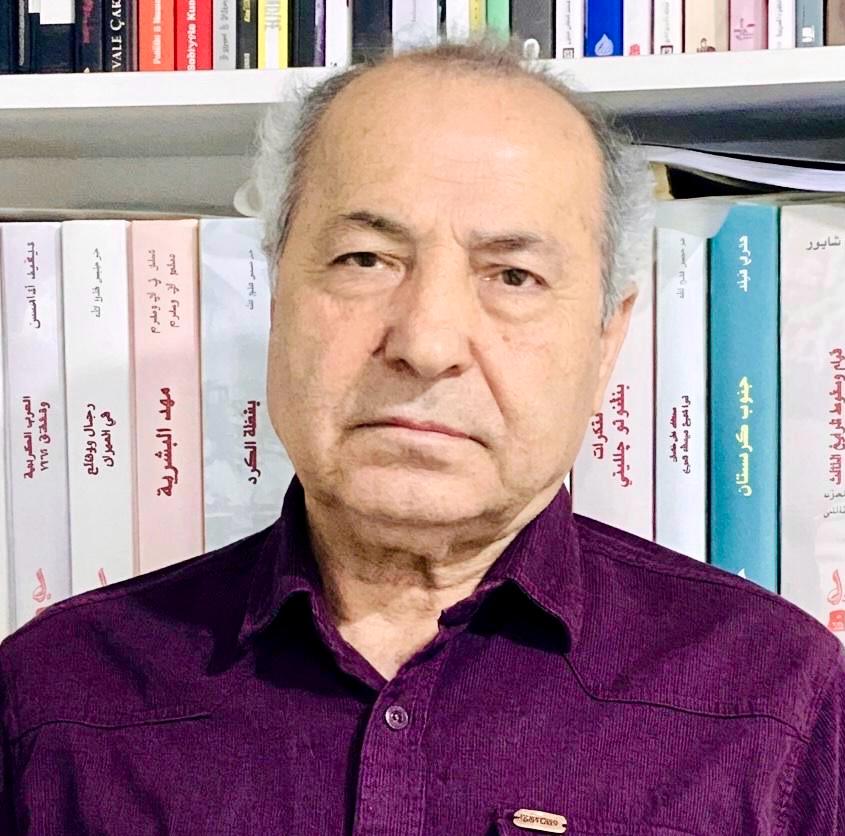
11. I refer the reader to my study of this figure in my book: The Kurdish Wolf: A Study of the Personality of Ziya Gökalp (Spirez Publishing House, Duhok, 2017). This is the very question that keeps my book open-ended, as I have previously noted the following:
“In concluding this text, it suffices to say that looking at the ‘Other’—whoever they may be, and regardless of how certain one is of their ‘guilt’—demands examining them through multiple lenses and perspectives. This is not to exonerate them, if that were the case, or to rescind a verdict akin to a judicial pronouncement. Rather, it is to gaze into the mirror of ourselves—a mirror whose surfaces multiply, reflecting the face of the onlooker: our own face, in various dimensions, colors, and expressions. This reflection instructs us on the necessity of establishing a relationship of good neighborliness and dialogue among adjacent faces, enabling us to live out our humanity in a more balanced harmony with the ‘Other,’ insofar as balance remains a virtue of the self, from which, and within which, the world is shaped.” (p. 128).