

The agreement between Washington and Tehran represents a watershed event in regional politics, concealing beneath its ashes—or within its silences—a geopolitical reshaping of the region. While much is said about what the agreement explicitly stated, which is highly interpretive and controversial to the utmost degree, it is crucial to read and scrutinize what has been “left unsaid,” and Israel’s position within it, both in its presence and absence. Indeed, this may be the true “agreement” between the parties.
If you follow the rhetoric of Washington and Tehran regarding the “agreement,” you might feel they agreed on nothing. Each party remains silent on more things than it discloses, and says about the agreement what the other party does not wish to say or hear, in a clear strategy to pass a basket of mutual concessions under the cover of verbal and rhetorical intransigence. When this rule is extended to Tel Aviv, we discover that what its outwardly opposing statements and its continued attacks in Lebanon conceal is perhaps greater than what it declares, and to a certain extent, contrary to what it proclaims.
This duality is not a diplomatic exception but rather a firmly established rule in the logic of international politics. Scholars of the political realism school, from Hans Morgenthau to Kenneth Waltz, have consistently emphasized that states do not act according to declared ideological rhetoric, but rather according to the logic of power and calculated interest. However, what the current context adds is a new dimension:
The ideological discourse itself has become a negotiable commodity. On this basis, the agreement, in its linguistic structure before its technical components, is closer to a “flexible peace”: an arrangement that does not eliminate conflict but rather redistributes it into manageable levels. This is something all parties share, because everyone wins, albeit to varying degrees.
Yet, reading the scene remains incomplete unless the following question is posed: Why did Washington gamble on this agreement? The answer lies in the shift of American priorities from the Middle East to the Indo-Pacific. Washington needs to stabilize a “new regional order” that relies on states assuming responsibility for their own regional security, under a flexible American umbrella as well, away from the chaos of ideological axes and rising competitions and constraints.
Iran here—and herein lies a sort of paradox—is not an enemy to be fully defeated, but rather a guardian to be re-adapted and rehabilitated to “discipline” the Gulf. This explains why Washington did not stipulate that Tehran must publicly drop Palestine from its regional commitments.
First: Shifting of the Terrain – When the Shadow Becomes the Substance
In the most prominent structural transformation of the scene, the battle is no longer decided on solid geography as much as it is managed in the spaces of media and cognitive framing. The military battlefield, with all its destruction and bleeding, has receded to become a “subordinate background” or raw material lifted to the “media laboratory” to extract the winning political narrative and generate bargaining chips.
We are facing an intensive politicization of the effects of fire: the goal of fighting is no longer to resolve the confrontation militarily in the traditional Clausewitzian sense (Carl von Clausewitz), but rather to transform the screen and the platform into decisive tools for re-engineering collective memory and defining the meaning of victory. The battlefield is no longer the sole maker of the event, but has become its shadow; the true strategic light is that which the camera shines in the final shot. This is what Walter Lippmann observed, for instance, when he distinguished between the “real environment” and the “pictures in our heads”: politics is not made on the ground alone, but in that cognitively reconstructed image.
Second: Israel – The Silent Partner in Engineering the Agreement
Here lies the core of the unsaid. If Tel Aviv was the driving dynamo behind this war, how can the engineering of its halt be understood in isolation from its will, as if it were being led by compulsion behind the train of US-Iranian understandings?
Deconstructing this ambiguity by the standards of political realism reveals a completely different logic: Israel was not marginalized; it gambled. It is like an expert skier riding an avalanche; it does not control its force, but manipulates the direction of its movement. Israel has leveraged its Iranian card—which occupied its policies for nearly four decades—to seize a strategic prize under the table that justifies its temporary bending: it conceded a loud, direct enmity with Tehran in exchange for dismantling the doctrine of the “Unity of the Arenas” and securing a strict American umbrella that guarantees curbing the region and regulating the rhythm of the border threat, rather than bearing its existential costs alone.
This equation invokes what Kissinger called the “diplomacy of balanced management of adversaries”: making your opponent pay the price of their retreat from their symbolic capital, not yours. However, a deeper analysis reveals that this description—despite its accuracy—remains incomplete unless the complementary question is asked: And what did Iran win?
Third: Iran – The Agreement as Liberation
The most common mistake in analyzing this agreement is assuming it is a zero-sum game: America and Israel won, therefore Iran lost, or vice versa. However, more mature tools in international policy analysis, specifically game theory in its cooperative formulation, make a crucial distinction between a zero-sum game and a positive-sum game. What happened here is closer to the second: each party secured a real gain, but in different currencies.
The key to understanding the Iranian gain is the Japanese approach. Japan emerged from the war in 1945 exhausted and occupied, but it also emerged free from the burden of the imperial idea that was draining it from within and isolating it internationally. Defeat allowed it to redefine its identity, self-awareness, and perception of itself: from an expansionist power relying on military ideology to a developmental state relying on economic efficiency and integration into the international system. Iran today stands before a structurally similar moment. This is, of course, a preliminary and tentative comparison, and must take into account the differences in circumstances, capabilities, readiness, and other factors between the Iranian and Japanese cases.
Four and a half decades of the “ideology of exporting the revolution”—supporting axes, funding state and non-state actors in the region, and raising the banner of Palestine—were draining resources, keeping the economy under the weight of sanctions, and fueling a growing separation or estrangement between the state and society. The agreement, from this perspective, is not a capitulation but a moment of strategic reset. Abandoning the Palestinian symbol in official discourse may be an acceptable symbolic price paid by the ruling elite in exchange for liberation from a structural burden that was impeding the grand transformation. The image is: Iran abandons revolutionary ideology to win the state. This is a deal that no rational actor in its position would reject.
The Surplus of Disappointment!
However, while the agreement achieves gains for states—should the understanding persist—it simultaneously creates a “surplus of disappointment” among non-state actors who formed the combat doctrine in the “Iranian phenomenon” over several decades. Finding themselves suddenly facing a Tehran that prefers its sovereign security over its ideological loyalty, pro-Tehran factions in the region may be driven—though this faces great difficulties—to adopt an escalatory independence, transforming themselves from Iranian assets into “troublesome variables” that could create unexpected disruptions and bottlenecks at the regional level. This remains a relatively weak probability, given current circumstances.
Fourth: The Iranian People – When the Street is a Partner in the Transformation
What gives this analysis its deepest justification is that the agreement did not come in contradiction to the desire of a broad current in the Iranian street; rather, it came to solidify a line that the street itself had drawn from within years ago.
Major agreements do not stabilize unless they find an echo in the structure of internal public opinion; otherwise, they are toppled by popular pressure or collapse through institutional resistance. What indicators of Iranian societal expression over recent years reveal is that public opinion is far more pragmatic than official rhetoric suggests. The waves of protests between 2019 and 2022 did not raise the slogans of “Death to Israel,” but rather raised explicit socio-economic demands. One of their most prominent expressions explicitly rejected the utilization of national wealth in external axes at the expense of the Iranian citizen.
In other words, a large segment of the Iranian people was already demanding the “separation” of Palestine and Arab causes from Iran at the political and financial levels before the agreement arrived to embody this separation diplomatically. Furthermore, dropping Palestine from official Iranian ideology—and the discussion here concerns the friction of the recent conflict between America, Israel, and Iran—was not merely a concession to the outside, but an internal demand that had accumulated for decades. This explains the Iranian people’s acceptance—and perhaps even relief—regarding what appeared to the external observer as an Iranian abandonment of regional causes that lack popular support and are, naturally, costly and losing.
Fifth: The Silent Explosion – The Irrevocable Divorce Between Ideology and Geopolitics
The most telling features of this engineering are embodied in the structure of the official Iranian rhetoric accompanying the agreement. The complete absence of terms like “Gaza, Palestine, Jerusalem” from Tehran’s statement is neither a protocol blunder nor an accidental omission; rather, it is what can be described as a “silent explosion”—an announcement of a profound epistemological and political rupture that reshapes the logic of regional conflict from its very foundations.
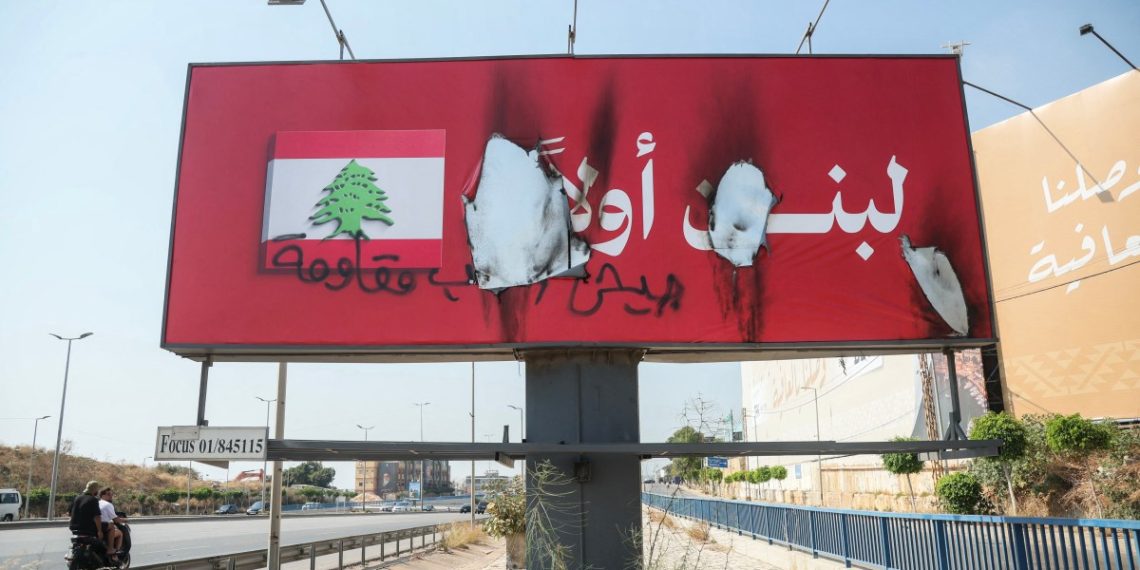
This linguistic absence reflects a significant transition: from the logic of “transnational revolutionism” and “regional hegemony,” where Palestine represented graffiti on the wall of its loud identity, to the pragmatism of a “cautious nation-state” that reads its sovereign security and the lifting of sanctions independently of the myths and narratives of the axis. Today, Iran is painting over that wall almost entirely.
What this transformation reminds us of is what Thomas Kuhn described as a “paradigm shift.” The collapse of an old cognitive system does not happen in a single blow, but through a silent accumulation of its internal contradictions until it becomes unsustainable. It is an irrevocable divorce between geopolitics and ideology. By this, Israel has reaped its most valuable asset: not only the dismantling of the “Unity of the Arenas,” but something far more precious—the “transformation of the conflict” from a zero-sum existential confrontation (the equation of existence vs. annihilation) into a disciplined regional competition (the equation of influence and shares).
Israel pushed its primary regional adversary to sign the “death certificate of the symbol” itself, while Iran opened doors for itself that had been shut for decades. Real victory—from Israel’s perspective—is not in destroying tunnels, but in destroying the symbolism or narrative of Jerusalem in the adversary’s own vocabulary. The paradox is that the adversary itself wanted this destruction, for its own reasons.
Sixth: The Rhetoric of Emptiness and the Dialectic of Productive Loss
Yet the deepest historical paradox, which borders on the surreal, is that a major war launched under the banner of “supporting Gaza” ends with an agreement in which the name of Gaza is completely erased from the lexicon of political discourse, like an inscription wiped from clay tablets.
What occurred is a major redistribution of gains in different currencies: Israel wins the dismantling of part of its existential threats, America wins the restoration of its position as the guarantor of the regional order, and Iran wins liberation from the prison of an ideology that drained it for four decades and a ticket back to the international economic system. Most importantly, a broad Iranian street wins the lifting of a burden it does not want and perhaps never chose in the first place.
Loss here is itself a victory—but in the long run. While the public is preoccupied with watching the debris of the battlefield, the naked truth lies in that linguistic vacuum which, with silent eloquence, exposed the chasm between the fervor of narratives intended for mass mobilization and the cold balance of interests in closed shadow rooms. Victory in this round of conflict did not belong to whoever killed more on the battlefield, but to whoever succeeded in “erasing a word” from the geopolitical atlas, or accepted its erasure because they wanted it erased. That is the true agreement: not in the signed documents, but in what was not written in them, and in whoever did not object to its absence.
However, a cautionary note must be made, for history teaches us that major transformations—to borrow from Thomas Kuhn again—do not conclude overnight; they remain hostage to the success or failure of alternatives. Consequently, if Iran fails to reap the fruits of an open economy, or if the lifting of sanctions stalls, this “indicative silence” may revert to the old logic, and the Palestinian symbol could return to the forefront as a reserve leverage card, even if with a low to negative return.
In Conclusion
Perhaps the essence of the US-Iranian agreement, in which Israel is the present-absentee, lies in what it promises or reveals regarding profound shifts in the value systems of the parties, particularly Iran. More accurately, it is the shift in values among Iranians, as internal constraints in this regard are no less important than external constraints.
Consequently, the US-Iranian agreement does not represent the end of history in the Middle East, but rather the beginning of a harsh testing phase for the parties’ ability to overcome the legacy of a long and complex conflict. What is happening may not be a complete break with the conflict as much as it is an experimental and compulsory change in perceptions, priorities, and stakes.