

Executive Summary
This analysis borrows the lens of French historian Jacques Bainville in his critique of the 1919 Treaty of Versailles to dissect what is being promoted as the “agreement” between Washington and Tehran, signed in the very same hall in 2026. However, it stems from a critical awareness that what was actually signed is nothing more than a “framework memorandum of understanding” or a “negotiating framework” that leaves core details to subsequent negotiations. This divergence between the political-media designation (“agreement”) and the legal reality (“framework”) is, in itself, the first manifestation of the “glass-like” nature examined by this analysis.
The thesis is built upon the metaphor of a “Glass Peace”—a brilliant facade reflecting images of diplomatic triumph and historic compromise, but which is inherently fragile and susceptible to shattering at the first sign of a real geopolitical contradiction.
The text analyzes the multi-dimensional fragility of this negotiating framework, stretching from the exclusion of key regional actors (Israel and the Gulf states)—who found themselves largely in the position of the weak “Eastern European states” after 1919—to the “strategic hedging” adopted by these states in the face of an escalating security vacuum, and arriving at the dual role of the absent major powers (China and Russia) that observe this scene with anticipation and caution, investing in its ambiguity rather than attempting to resolve it. The text also stops at the theatrical nature of American diplomacy, which preferred the mirrors of Versailles and the world of media over the metrics of hard geopolitics, and at the internal constitutional contradiction that renders a “memorandum of understanding” a legally fragile document, liable to cancellation at the slightest fluctuation in the American political landscape.
To move from theoretical diagnosis to predictive tools, the text outlines three potential scenarios for the fate of this fragile “agreement,” equipped with “early warning indicators” to track signs of its fracturing before they manifest. It also provides a critical reading of the circulated figures (such as one trillion dollars in Iranian revenues) to dismantle propaganda exaggerations, while pointing to practical “policy alternatives” for regional parties, ranging from clinging to the fragile American umbrella, to engaging in parallel understandings, to rushing toward independent capabilities.
Drawing upon a comparative table that encapsulates the similarities between Versailles 1919 and Versailles 2026, the analysis concludes that this “Glass Peace,” whether labeled an “agreement” or a “memorandum of understanding,” does not resolve the balance of power in the Middle East. Instead, it postpones it and entrenches its fragility, leaving the region more vulnerable to upcoming shocks, and resuscitating the eternal Bainvillean question: Does humanity ever learn from the lessons of the past, or are we condemned to repeat our mistakes in the very same halls of mirrors, whenever the reflection of our own images seduces us?
Introduction: Where Glass Meets History
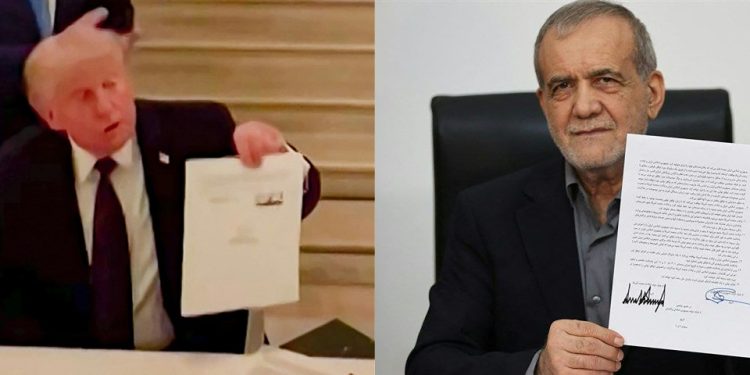
On the day U.S. President Donald Trump placed his signature on the Memorandum of Understanding with the Islamic Republic of Iran inside the Hall of Mirrors at the Palace of Versailles (June 18, 2026), the scene was a symbolic—yet unintended—re-enactment of the same historical theater ridiculed by French historian Jacques Bainville a century ago.
In this very hall, which witnessed the signing of the Treaty of Versailles in 1919, the victors gathered to forge a “peace” that Bainville, in his famous book The Political Consequences of the Peace (1920), described as nothing but a brilliant glass facade. Glass, as we know, is forged at high temperatures but shatters under the weight of the first real geopolitical contradiction.
However, the irony of history this time extends beyond the mere repetition of the venue. What is being marketed today as a “historic agreement” is not, in reality, a peace treaty following a war, but rather a “memorandum of understanding” or a “negotiating framework,” to use the expression of former President Barack Obama in his critical reading of the event (statements made on June 18, 2026). Obama viewed this memorandum as merely an extension of an old debate on how to deal with Tehran, rather than a genuine breakthrough. This diagnosis echoes, if only from afar, the debates that accompanied the previous nuclear deal (JCPOA) a decade ago, but this time it stems from a political opponent of Trump, lending the critique an additional partisan dimension that reflects a broader American division rather than a mere disagreement over Iran.
Thus, this “agreement”—or more accurately, this “negotiating framework”—combines the “ambiguity” of its clauses, the “exclusion” of active regional parties, and a “theatrical spectacle” in a palace teeming with mirrors. Herein lies Bainville’s diagnostic genius, which provides us with the tools to excavate beneath the surface of this glass brilliance.
It is important to note that this analysis stands upon announced texts and issued statements; readings and analyses should not overlook the possibility of unannounced agreements, or unintended and unexpected outcomes and pathways. Furthermore, political actors and direct or indirect developments continuously influence the perceptions and interpretations of the parties toward this “agreement” itself.
Historical Comparison Table: Deconstructing the Structure of a Fragile Peace
|
Dimension of Comparison |
The Treaty of Versailles 1919 (Bainville’s Analysis) |
The Versailles Memorandum of Understanding 2026 (The Negotiating Framework) |
|
The Central Power |
Germany: Remained unified and fundamentally strong, retaining its demographic and industrial capacities. |
Iran: Retained its nuclear infrastructure and missile arsenal, with a temporary freeze pending the outcomes of future negotiations and developments. |
|
The Excluded Parties |
The fragile states of Eastern Europe(Poland, Czechoslovakia, Yugoslavia) that were left to face Germany alone. |
The primary regional powers (Israel and the Gulf states) that found themselves outside the circle of core or direct negotiation. |
|
Nature of Diplomacy |
The abstract moral “Wilsonian Principles” that masked the real, material balance of power. |
The media-driven and theatrical “Trumpian Principles” that preferred the image over substance, and mirrors over hard geopolitics. |
|
Expected Outcome |
Postponing conflict and providing Germany an opportunity to rearm and seek revenge (leading to total collapse in 1939). |
A temporary “Glass Peace” that grants parties an opportunity to bolster their negotiating and financial positions, paving the way for future regional shocks. |
First: Re-examining the “Fragmented Europe” – Regional Powers in the Position of Fragile States
The core of Bainville’s critique of the 1919 treaty was that it left Germany unified and powerful at its core, while surrounding it with a “fragmented” Europe consisting of fragile eastern states (Poland, Czechoslovakia, Yugoslavia) that could not contain German power on their own, leaving them in a state of permanent security dependency. Bainville wrote his famous line: “Germany unified in its contradiction with a fragmented Europe.”
If we borrow this lens to read what is being promoted as an “agreement” between Washington and Tehran, we discover that Iran today plays—and this is a cautious, relatively hesitant analogy—the role of the new “Germany” in the Middle East equation, but with a fundamental difference: Iran was not entirely defeated in a war, nor was it stripped of its forces. Rather, it has retained its nuclear infrastructure and missile capabilities, and signed a memorandum of understanding that recognizes its existence as a regional power without forcing it to dismantle its arsenal, but merely to freeze it temporarily, pending what future negotiations and tugs-of-war between the parties will yield.
In contrast, the Arab states and Israel find themselves in the position of Poland and Czechoslovakia in 1919: states close to the epicenter of the threat, directly menaced by the regional power, yet absent from the primary negotiating table, left to face a cohesive power that has retained a vital portion of its cards. This absence is one of the facets of fragility that brands this “agreement” before it is even fully born.
-
Israel: Between Strategic Anxiety and the Solitary Threat
Israel, the primary strategic partner of Washington in the “maximum pressure” axis against Iran, suddenly found itself in a position resembling Poland after Versailles: a major ally (the United States) negotiating with the regional adversary (Germany/Iran) behind its back, leaving it to deal with the fallout.
The Israeli response was swift. Prime Minister Benjamin Netanyahu described this “negotiating framework” as a “historic mistake,” and Israeli Military Intelligence (Aman) emphasized that Iran would obtain “one trillion dollars” over a decade from the lifting of sanctions. This figure—despite the understandable propaganda exaggeration it may carry within the context of Israeli incitement against the “deal”—clearly reflects the scale of expected financial inflows that will alter the balance of power in the region. Even if the figure is exaggerated by 50%, it remains—given the availability of other conditions—sufficient to rebuild the exhausted Iranian economy, fund its network of loyal regional non-state actors, or both. The core question raised by this figure, even taking margins of exaggeration into account, is not its quantity, but the “direction of its expenditure”: Will it be funneled into local reconstruction projects, or into boosting military capabilities, or into financing Tehran’s regional policies and networks? This question is the most accurate indicator of whether the “glass” will remain transparent or turn into an opaque wall of ambitions and bets.
This vividly recalls Bainville’s warning that the Treaty of Versailles did not weaken Germany, but rather gave it “an opportunity for slow revenge.” More dangerously, Israel sees itself in the position of Czechoslovakia, which found itself isolated in 1938 after the Munich Agreement, left to face German invasion alone. Consequently, Tel Aviv has not hesitated to wave the card of a “unilateral military option” against Iranian nuclear facilities, as if announcing that it will not wait for the glass to shatter over its head.
-
The Gulf States: Strategic Hedging and the Arms Race
As for the Arab Gulf states, particularly Saudi Arabia and the United Arab Emirates, their position is more complex, and can be more accurately described as “Strategic Hedging.“ Like the Baltic states or Yugoslavia after Versailles, they are not superpowers and rely on an American protection that has become questionable. However, they possess a tool that was unavailable to the states of Eastern Europe in 1919: oil wealth, which allows them to purchase security through a frenetic arms race, and to normalize relations with Israel to counter Iran, while simultaneously keeping communication channels open with Tehran. It is a “covering all bets” strategy that reflects, at its core, a growing lack of trust in any external guarantor.
Nevertheless, Gulf officials look at this “negotiating framework” with deep suspicion mixed with satisfaction. In their view, the United States abandoned its greatest leverage (the economic blockade) in exchange for an Iranian promise to negotiate, reviving the nightmare of the “previous nuclear deal” where they felt Iran received massive funds without a fundamental change in its regional behavior. The satisfaction, on the other hand, stems from the halting of war and the opening of the Strait of Hormuz.
Here, the deepest Bainvillean paradox manifests: just as the Treaty of Versailles created a security vacuum in Eastern Europe that drove those states to cling to a British-French hope that did not last, the Memorandum of Understanding creates a security vacuum in the Gulf, driving Arab states to cling to an American hope that appears, at best, temporary and volatile—or to rush toward developing civilian nuclear capabilities that could turn military, as evidenced by Saudi Arabia’s repeated hints that it will do whatever Iran does.
However, any reading of the security vacuum in the Gulf remains incomplete without looking at the angle illuminated by Beijing and Moscow, as the two major powers absent in text but present in reality. China, which mediated the Saudi-Iranian reconciliation in 2023, views this memorandum with cautious skepticism: it does not want Iran to collapse under the weight of sanctions (as it would lose a commercial and oil partner), but it also does not want Iran to fully flourish under an American umbrella (as it would lose a valuable leverage card against Washington). Russia’s position is even more contradictory: it benefits from continued tension in the Gulf to keep oil prices high, and benefits from deepening its relationship with Iran as a military ally against the West, yet at the same time, it does not desire an all-out regional war or a massive shift in the balance of power and regional dynamics. They are partners in “cautious anticipation,” rather than in outright support or opposition, adding another layer of ambiguity to the future of this “glass,” making it hostage to calculations that extend far beyond Washington and Tehran alone.
The conclusion of this dimension is clear: a “Glass Peace” does not protect weak states; it leaves them exposed in the face of a consolidated regional power. This is precisely what Bainville warned against, and it is precisely what is happening today in the Middle East, where Israelis and Gulf citizens are left to face the repercussions of a negotiating framework signed without them—assuming the absence of unannounced understandings between the parties.
Second: Deconstructing Theatrical Diplomacy – The Mirrors of Versailles Against Hard Geopolitics
Trump’s choice of “Versailles” as the signing venue cannot be read in isolation from his political philosophy. This choice is not neutral, and it might not be entirely intentional, but it carries a display of symbolic power that reminds us of what French philosopher Guy Debord termed the “Society of the Spectacle.” Yet Bainville preceded Debord in critiquing moralistic/theatrical diplomacy that conceals hard material realities behind curtains of silk and mirrors.
1. The Hall of Mirrors in Versailles is an optical machine designed to magnify images. Facing mirrors reflect images into infinity, creating illusions of grandeur and expanse. In Trump’s choice of this hall, the strategic analyst reads a clear message: this “agreement” is valued by its image, not its substance.
The Trump administration has transformed diplomacy into a reality documentary: cameras, red carpets, speeches, signing before mirrors, and narcissistic talk about a “historic deal.” But as Bainville taught us, glass reflects images, it does not contain them. A mirror does not show what lies behind the wall; it only shows what is directly in front of it.
This is evident in the following paradox: Trump signed the “agreement” in Versailles, but the core details (the mechanism for handling the stockpile of enriched uranium, the future of ballistic missiles, the scope of sanctions relief) were deferred to subsequent negotiations scheduled to begin in Vienna and perhaps move to Muscat, Islamabad, or elsewhere—far away from the cameras and halls of Versailles. It is a deliberate separation between “spectacle” and “substance,” between “the mirror” and “the wall,” revealing that this memorandum is not an agreement, but a framework for future negotiation, dressed in the garb of an “agreement” to be sold in the media marketplace.
2. Platform Diplomacy vs. Classical Diplomacy
This theatrical method contrasts sharply with the classical diplomacy that Bainville advocated, which is based on the material balance of power rather than media metrics. Real diplomacy, in the eyes of the realist school to which Bainville belongs, is conducted behind closed doors by seasoned diplomats, and relies on precise calculations of oil, gas, iron, and soldiers.
Trump’s diplomacy, however, is the diplomacy of the tweet and the camera. Herein lies the danger: when diplomacy becomes a mere show, withdrawal from it becomes possible at the same speed. Just as Trump withdrew from the Paris Climate Accord and the previous nuclear deal with a “tweet,” he could withdraw from this memorandum in the same manner whenever he finds it no longer serves his media image.
This leads us to Bainville’s critique of “abstract moral principles.” Bainville believed the Treaty of Versailles was built on Woodrow Wilson’s moral “principles” more than on a real balance of power, rendering it fragile. Today, this “agreement” is built on Trump’s media “principles”—how it will look on television, the media world, and social networks—and not on the fundamental question: How many missiles will the parties actually stop producing and using?
3. Hard Geopolitics: A Pit Beneath the Mirrors
If we look beneath the mirrors at hard geopolitics (resources, waterways, military alliances, nuclear capabilities), we find that this memorandum does not touch the core:
-
The Strait of Hormuz, through which a third of the world’s seaborne oil passes, is mentioned in the “agreement” only in terms of keeping it open to navigation and shipping—which was the status quo before the war anyway.
-
U.S. military bases in the Gulf, which represent the backbone of presumed (and largely dysfunctional) deterrence, remain unchanged.
-
Iran’s missile program, which threatens Arab capitals in the Gulf and Israel, has been deferred to a “joint committee” without the slightest certainty regarding its outcome.
-
Iran’s regional “actors” in Yemen, Lebanon, and Iraq—the actual tools of Iranian influence—remain entirely outside the scope of the memorandum (unless there are unannounced understandings to this effect).
It is a hall of mirrors reflecting images of peace, while beneath the ground, in factories, and in ports, the conflict over influence and resources continues as it was, and perhaps even accelerates, because Iran will obtain massive funds to reproduce its regional policies.
Here emerges the most pressing question in the economics of this fragile “peace”: How will Iran spend this anticipated financial deluge? Will it go toward funding its network of regional actors in Lebanon, Yemen, and Iraq—turning the “agreement” into mere fuel for a wider cycle of conflict—or will it be forced to spend it on plugging the massive holes left by the war in its collapsing economy and angry social fabric?
The answer to this question is not a matter of speculation; it is the most accurate indicator of whether the “glass” will remain transparent or turn into an opaque wall of militarization, violence, and sharp, extremist policies. Massive funds, in the hands of a political system with regional ambitions, are not a luxury; they are fuel for fire, both at home and abroad.
Third: The Internal Bainvillean Contradiction – When Allies Dismantle the “Agreement” from Within
Finally, we cannot overlook the dimension that Bainville ridiculed with bitterness: that errors do not come only from the adversary, but from within the house of the victor (or the signatory). Just as the Treaty of Versailles faced fierce criticism within the British and French establishments by experts like John Maynard Keynes and politicians like Lloyd George, Trump’s Memorandum of Understanding has faced opposition, reservation, or hesitation from his own supporters.
Accusations of “surrender,” Senator Bill Cassidy’s description of this “negotiating framework” as the “worst diplomatic disaster in decades,” and Trump emerging at midnight to blast his critics as “stupid” or “envious” all reflect that the glass may crack from within before any external force strikes it. This is precisely what Bainville saw in Versailles: a “peace” that lacks a national consensus or understanding among allies is akin to a “truce” rejected by half of those who drafted it.
However, the constitutional fragility goes beyond mere partisan division to reach the very core of the legal legitimacy of this “agreement.” Because the “Memorandum of Understanding” signed by Trump is not a formal treaty ratified by the Senate under Article II, Section 2 of the Constitution, it remains suspended on the pillar of the executive branch alone. This means that any future president—or even Trump himself during a fit of media anger—can abrogate it simply like deleting a tweet. It is a document without constitutional teeth, and this paradox makes the “glass” fragile not only in the face of its enemies, but also before the slightest fluctuations in the domestic American political scene, which has become akin to a shattered mirror that fails to reflect a stable image of any external commitment.
Scenarios Beyond the Sixty Days: When Does the Glass Shatter?
Given the cracks mentioned above, three scenarios can be anticipated for the fate of this “glass” upon the expiration of the sixty-day grace period:
-
The Scenario of Temporary Restoration (Least Likely): The administration succeeds in absorbing Republican anger through modifications to the technical annex of this “negotiating framework,” or by taking a harder line in the negotiations mandated by the framework, alongside providing additional security guarantees to Israel and the Gulf. This extends the life of this “agreement” by a year or two, but it remains as fragile as cracked glass that cannot withstand new pressures.
-
The Scenario of Unilateral Withdrawal (The Trumpian Rerun): Trump backtracks on this memorandum as quickly as he signed it, citing Iran’s “non-compliance” with deferred details or bowing to domestic pressure, withdrawing from it via a “tweet” just as he did with the Paris Agreement and the previous nuclear deal. This would return the region to square one of escalation, but with an Iran that is more frustrated and eager for compensation, revenge, or simply continuing its previous policies.
-
The Scenario of Complete Regional Fragmentation (Most Realistic): The “agreement” remains dead letter between Washington and Tehran, while regional parties detach themselves from it entirely. Israel conducts independent military operations against Iranian nuclear facilities outside any American coordination, while the Gulf states forge direct security understandings with Iran (similar to the Chinese-mediated Saudi-Iranian agreement). The region transforms into an arena of competitive chaos without clear rules—a scenario most aligned, despite its many difficulties, with Bainville’s warning that a “Glass Peace” does not prevent war, but rather organizes it chaotically.
Early Warning Indicators: Reading the Traits of Collapse Before It Occurs
Waiting until the end of the sixty-day period to measure the success of this “agreement” is a luxury that security institutions, intelligence agencies, and policymakers do not possess. Therefore, three early warning indicators can be monitored to show that the glass has begun to crack, even before the sixty days elapse:
-
A sudden, unannounced spike in Iranian uranium enrichment percentages, signaling that Tehran does not consider itself bound by the implicit understanding.
-
A major cyberattack targeted against Gulf or Iranian oil infrastructure, revealing that the shadow conflict (Grey Zone Warfare) has not stopped at the borders of the memorandum.
-
An Israeli military maneuver over Iraqi or Syrian airspace representing a direct challenge to the U.S.-Iranian understanding, wherein Tel Aviv announces that it does not recognize the glass ceiling of “Versailles.”
These indicators, if they occur, will be the spark that precedes the shattering of the glass, particularly given the absence of conflict-resolution mechanisms within the text of the memorandum itself.
Policy Alternatives: The Four Pathways for Regional Actors
In the face of this cracked glass landscape, regional parties—especially the Gulf states—confront four strategic pathways. They will likely not choose one exclusively, but will pursue a shifting combination of them:
-
The First Pathway: Clinging to the fragile American umbrella, while attempting to rehabilitate it with additional guarantees.
-
The Second Pathway: Rushing toward bolstering independent defensive capabilities, or even convertible civilian nuclear programs, as a last line of defense.
-
The Third Pathway: Engaging in parallel regional understandings with Iran (akin to the Saudi-Iranian deal under Chinese auspices), seeking to purchase security from the source of the threat itself.
-
The Fourth Pathway (Most Likely): A chaotic mix of the three previous pathways, leading to a “managed fragmentation” of policies, keeping the region in a state of permanent tension—neither war nor peace, but a fragile truce akin to glass groaning under its own weight before it shatters.
Lessons from the Hall of Mirrors
In conclusion, if we are to extract the deepest Bainvillean lesson from this approach, it is that peace is manufactured neither with mirrors nor with cameras. Glass, no matter how brilliant, remains glass. A true balance is built not on facades that reflect images, but on firm foundations that take into account:
-
The balance of material power, and not merely declared good intentions.
-
The inclusion of regional parties who will pay the actual price of this “agreement”; otherwise, they transform into a new Poland and Czechoslovakia waiting for more disruption, threats, and dangers.
-
Self-honesty in assessing interests, and avoiding the conflation of foreign policy with commercial advertisements.
Bainville predicted that the peace of 1919 would collapse, and it did. He predicted that “errors in the calculations of the victors” would lead to a new war, and that was fulfilled. The question that the Versailles Memorandum of 2026 poses to researchers and decision-makers is not “Will this glass succeed?”, but rather the more urgent one: Does humanity ever learn from the lessons of Bainville, or are we condemned to repeat our mistakes in the very same halls of mirrors, whenever we behold the reflection of our images in them and find ourselves seduced?
The next time an “agreement” is signed in Versailles, perhaps leaders will remember that mirrors show only what is in front of them, and never reveal what lies behind. Hard geopolitics, as Bainville taught us, cares nothing for brilliance, but rather for mass, volume, and weight. And glass, no matter how precious, shatters.